
Last updated November 4, 2026
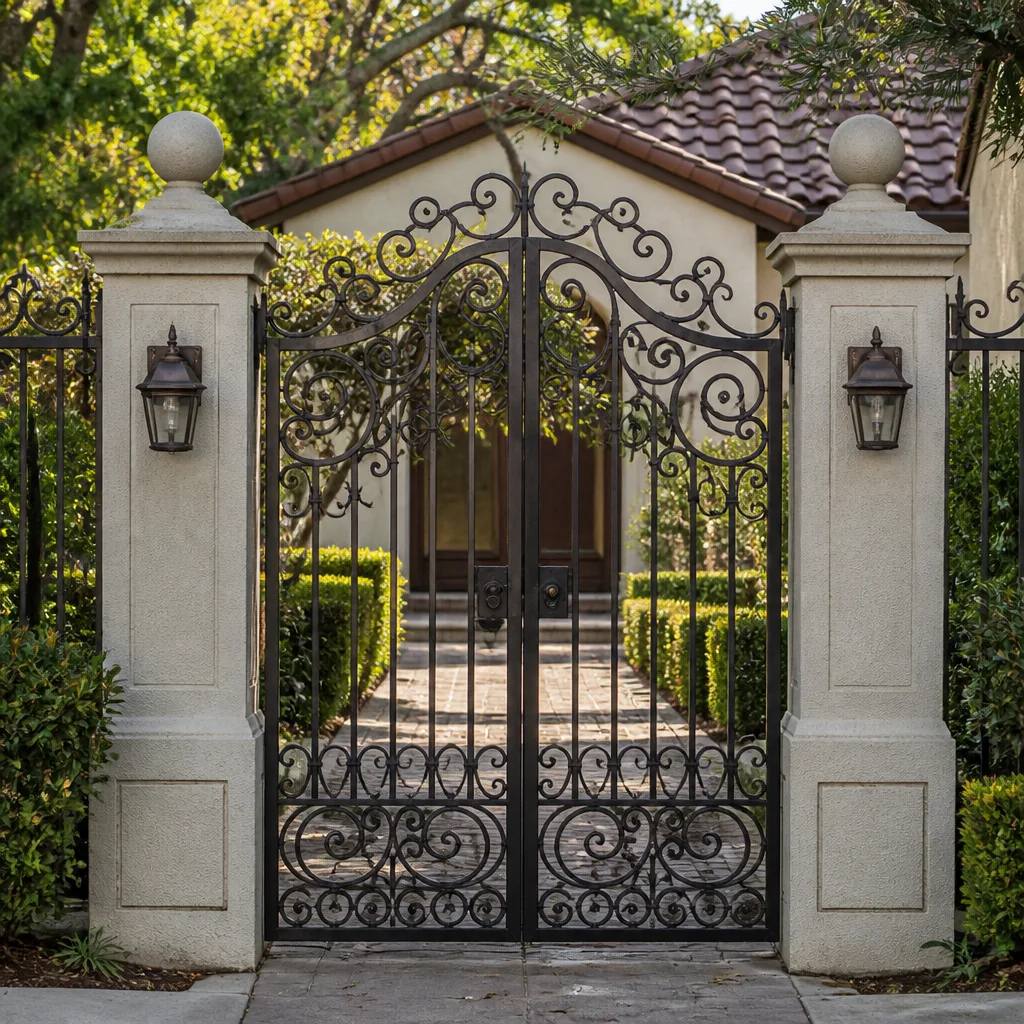 Wrought iron
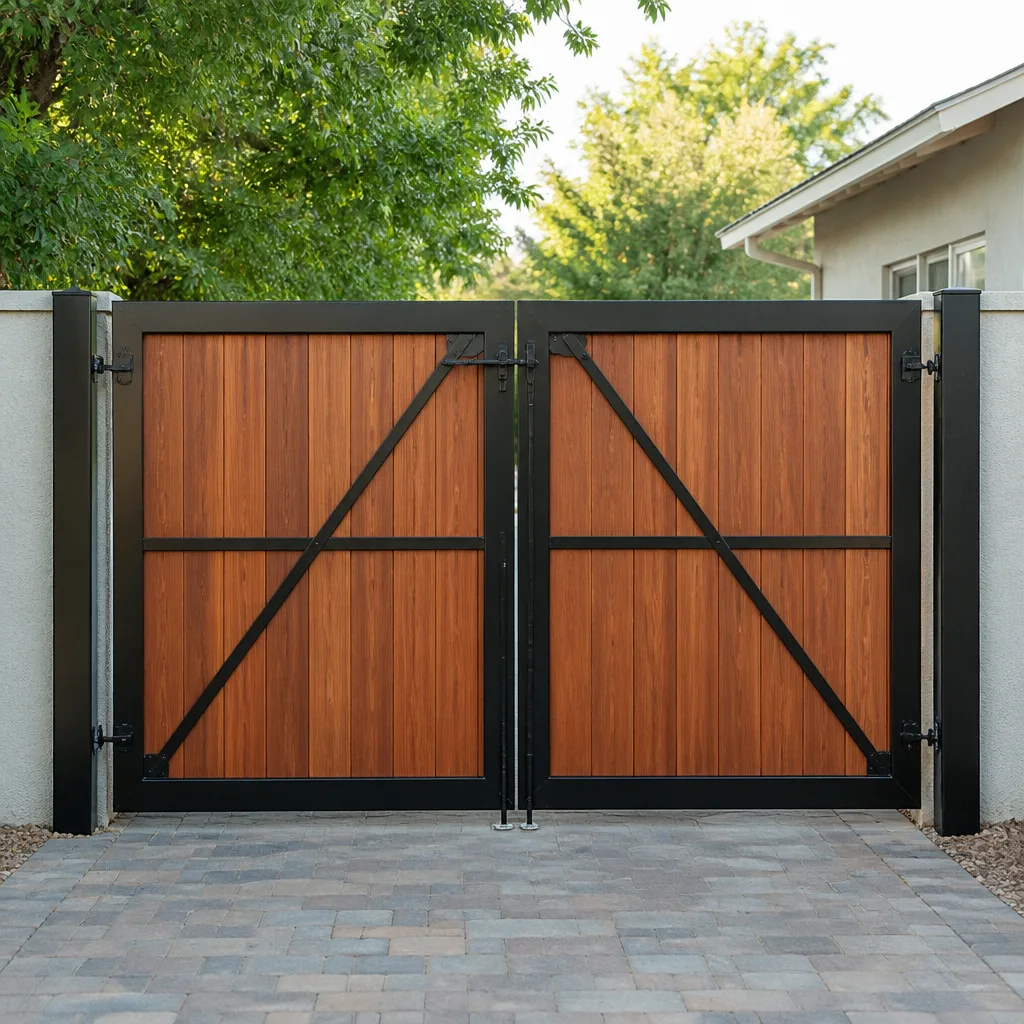 Wood & steel frame
 Farm & ranch
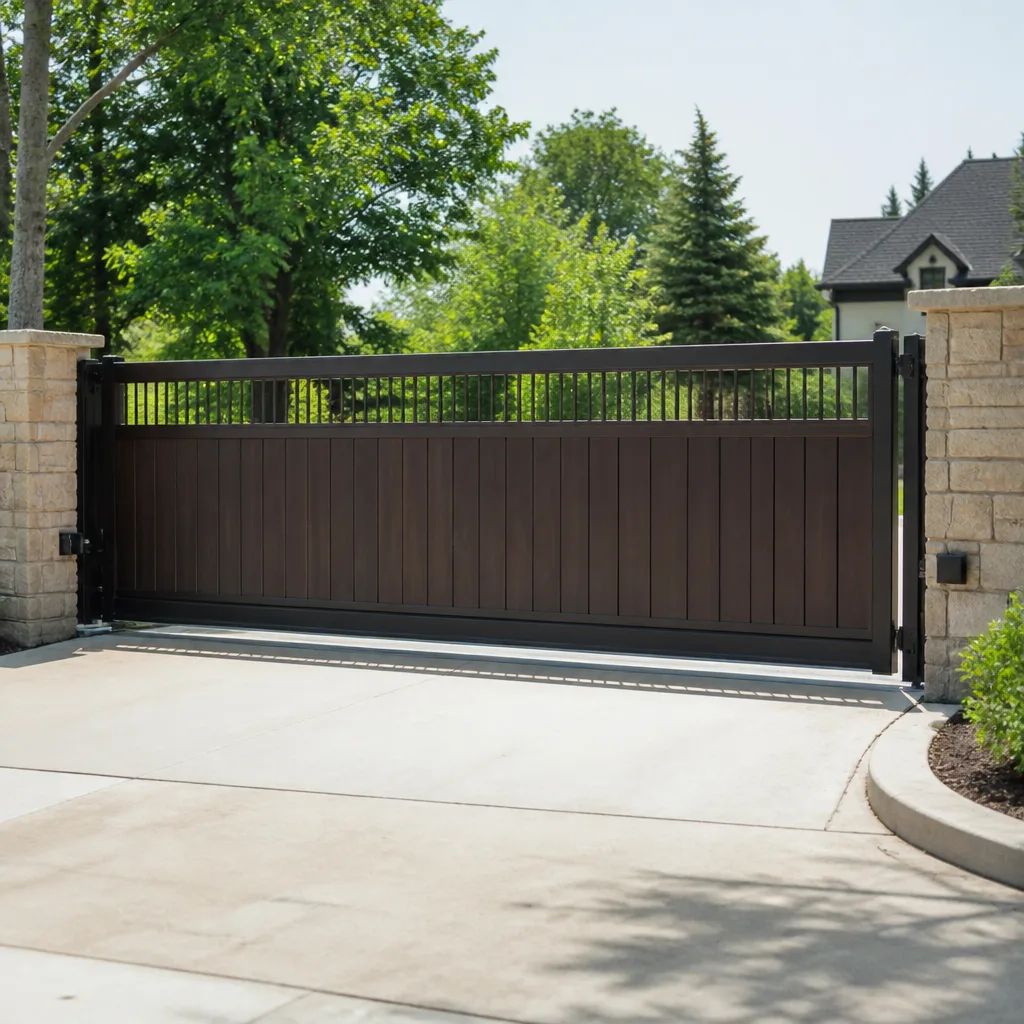 Sliding driveway gates
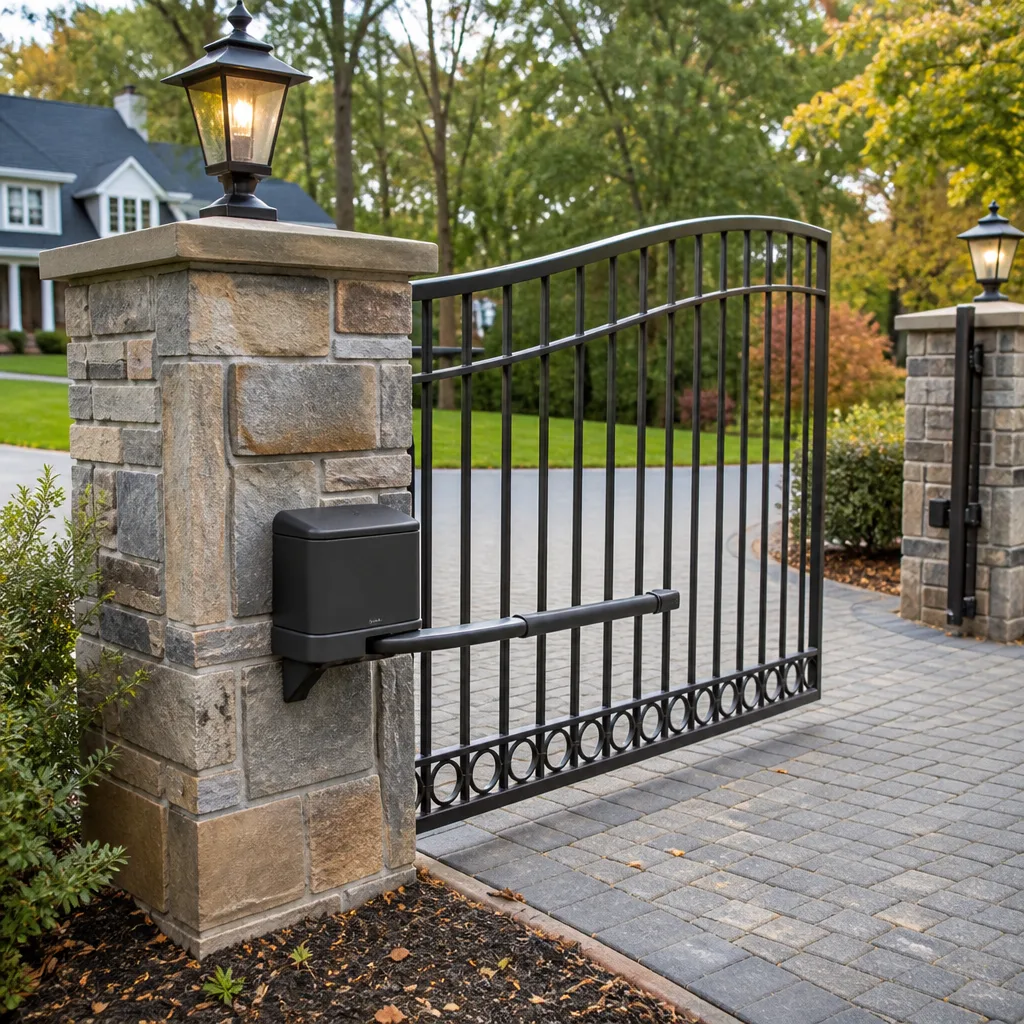 LiftMaster operators
Free on-site gate assessment - hinges, posts, and your LiftMaster or Nice gate operator checked before anything is quoted
The assessment is free and the quote is the invoice.
Get your free estimateThe Complete Guide to Gate Repair in Evergreen
Here is the thing most people in Evergreen do not realize until a gate stops closing: the repair path splits almost immediately based on what kind of gate you actually have. A swing gate and a slide gate can produce the same grinding noise, the same slow movement, the same refusal to latch fully. But the fix for one is often irrelevant to the other. This guide is built around that idea. We will walk through how to identify your gate’s drive system, how Evergreen’s hillside lots change the failure patterns, what a legitimate assessment should include, and when a repair-first approach beats a replacement quote. By the end, you will know what questions to ask before anyone touches the gate.
Quick Answer
Gate repair in Evergreen starts with identifying the gate type, drive system, and where the failure lives: mechanical, electrical, or operator-related. Most repair jobs hinge on that diagnosis, and the brands involved, LiftMaster, FAAC, BFT, or Linear, each diagnose differently. A proper assessment looks at hinges, tracks, motors, sensors, and the ground the gate sits on before any price is set.
Styles & brands we work with
- Wrought iron
- Wood & steel frame
- Farm & ranch
- Sliding driveway gates
- LiftMaster operators
Table of Contents
- How to Identify Your Gate Type Before Anyone Touches It
- Drive Systems: Hydraulic, Electromechanical, and Solar
- Why Evergreen’s Hillside Lots Stress Gates Differently
- What Brand-Specific Diagnosis Actually Means
- The Repair Decision Tree: Mechanical, Electrical, or Operator
- What a Legitimate Gate Repair Assessment Includes
- What Gate Repair Costs in Evergreen
- Common Mistakes to Avoid
- When to Call a Professional
- Frequently Asked Questions
How to Identify Your Gate Type Before Anyone Touches It
Walk outside and look at how your gate moves. If it swings inward or outward on hinges attached to a post or wall, you have a swing gate. If it rolls sideways along a track, parallel to your fence or wall, you have a slide gate. This distinction sounds basic, but it determines everything that follows. The motors are different. The failure points are different. The safety requirements are different. In Evergreen, where many properties sit on sloped or uneven ground, swing gates carry a particular burden, their entire weight hangs from the hinge side, and any settling in that post creates a cascade of symptoms that mimic motor failure.
Slide gates, by contrast, distribute weight along a track and a series of rollers or wheels. The most common slide gate complaints we see in Evergreen involve a gate that has begun to drag, or a gate that jerks mid-travel. Those symptoms usually point to one of three places: the track, the rollers, or the rack. The motor itself is often fine. A homeowner who knows this can ask a better question on the phone: not “why is my gate broken” but “is this a track or motor problem, and how do you tell the difference.”
For both gate types, note where the motor sits. Some Evergreen homes have an operator mounted on a pedestal. Others have an underground operator, especially on larger estate lots. Underground operators are cleaner-looking, but they are far more vulnerable to water intrusion and soil movement. If your gate is electric and automated, knowing the operator’s location and brand is the first piece of information any technician needs. Atlas Gate Repair works on gates across the full range, from simple residential swing gates to commercial-grade slide systems, and we start every call with these identification questions.
Drive Systems: Hydraulic, Electromechanical, and Solar
Automated gates in Evergreen run on one of three drive types. Electromechanical operators use a motor that turns a screw, chain, or belt. These are common on residential gates, particularly Mighty Mule and Ghost Controls systems, though those lighter operators serve a different segment than the heavier commercial units. Hydraulic operators use fluid pressure to move the gate. They handle heavier gates with smoother motion and typically appear on larger estate properties or commercial entrances where a FAAC, BFT, or Viking unit is installed. Solar-powered gates use photovoltaic panels to charge a battery bank that runs the operator. Solar is attractive in Evergreen because the area gets strong sunlight, but the entire system depends on battery health and panel orientation.
Each drive type fails differently. An electromechanical gate that has always worked fine and suddenly stops often points to a limit switch, a capacitor, or a gear. A hydraulic gate that moves slowly on a cold morning or a very hot afternoon often points to fluid viscosity or a failing pump seal. A solar gate that works in the afternoon but not the morning points to a battery that no longer holds a charge. Knowing this before a technician arrives helps you evaluate what they tell you. If someone quotes a motor replacement for a solar gate that simply needs new batteries, you will hear it in the diagnosis.
The repair process follows the drive type. For example, a BFT electromechanical operator uses a different control board logic than a LiftMaster unit. The motor test for a FAAC hydraulic system looks nothing like the motor test for a Linear chain-drive. At Atlas Gate Repair, we have spent years building familiarity across nine gate brands, LiftMaster, FAAC, BFT, Linear, Viking, Ghost Controls, DoorKing, Elite, and Mighty Mule, precisely because the diagnosis changes from system to system. We do not read the manual on your driveway. We arrive knowing the system.
Why Evergreen’s Hillside Lots Stress Gates Differently
Evergreen sits on varied terrain, with many homes built into hillsides where soil movement is a year-round reality, not a seasonal event. Winters are mild here, so we do not deal with freeze-thaw cycles buckling the ground. What we do deal with is slow, persistent soil shift. Over time, the ground under a gate post or along a slide track moves. The post that held a swing gate perfectly plumb five years ago is now leaning half a degree. That half degree translates into hinges carrying load they were never designed to carry.
The result looks like a motor problem but is not. A swing gate that has started to drag, or a swing gate that closes fine but will not open all the way, often sits on a post that has moved. The operator struggles against gravity. The homeowner hears the motor laboring and assumes it is failing. In many Evergreen cases, we have found the motor is fine and the post is the problem. The repair is then a hinge and post adjustment, not a new operator. A diagnosis that skips the post entirely leads to a new motor installed on the same failing foundation, which will also fail.
For slide gates, hillside soil shift shows up as a track that is no longer level. The gate slows at the same point every cycle, or the wheels grind. Evergreen properties with long driveways and substantial slope changes are particularly prone to this. The track may have settled, or a section of the rail may have lifted. When we assess a slide gate in Evergreen, we check the track first, not last. A contractor who jumps to the motor before checking the rail is guessing.
From residential driveways to commercial access control, we cover the full range of these conditions. The repair approach is not one-size-fits-all, and it should not be. An Evergreen gate on a flat lot and an Evergreen gate on a hillside lot will age differently, and the repair professional you hire should acknowledge that difference.
What Brand-Specific Diagnosis Actually Means
There is a popular assumption that all gate operators are essentially the same motor in different plastic housings. That is wrong in ways that cost homeowners real money. A LiftMaster residential operator uses a control board with a specific diagnostic flash sequence. A BFT unit uses a different sequence. A FAAC operator uses a different setup procedure for limit adjustments. If a technician shows up with a multimeter and a general understanding of “gates,” they may miss the fault code blinking quietly on the board, or misread it, or not know that the board is in a locked mode that requires a specific reset procedure.
Brand fluency means something specific. It means we recognize a Linear actuator by its housing before the panel comes off. It means we know the Ghost Controls receiver pairing sequence without consulting the manual. It means we can walk up to a DoorKing slide operator and check the V-belt tension in the first five minutes because that is a known wear point on that brand. This is the difference between a repair that takes forty minutes and a repair that takes three hours with a loose end left dangling.
Our electric gate repair work concentrates on this layer. The electrical repair is not just “checking the wires.” It is understanding what the board is supposed to communicate, what the limit switches are supposed to read, and what the safety sensor is supposed to interrupt. When a Gate A and Gate B both refuse to close, the actual fix depends on whether we are looking at a LiftMaster with a photo eye misalignment or a FAAC with a hydraulic pressure switch reading low. The brands are not interchangeable, and the diagnosis should not be either.
The Repair Decision Tree: Mechanical, Electrical, or Operator
Here is the decision tree we use on an Evergreen gate repair call. It is the same process we recommend homeowners run through before calling anyone. You do not need to fix anything yourself. You need to know which branch you are on, because that tells you what a fair repair looks like.
- Is the gate physically stuck, or does it move but behave strangely? If it is stuck, look at the hinges, rollers, track, and posts. A stuck gate is usually mechanical. If it moves but reverses at the wrong time, beeps oddly, or only works from one control, continue to step two.
- Does the operator have power? Check the breaker and any visible indicator light. If the operator is completely dead and the breaker is fine, the problem is electrical, often a board, a transformer, or a power wiring issue. If the operator has power but will not run, continue to step three.
- Does the operator try to move the gate? A humming noise without movement points to a capacitor, a gear, or a fluid issue depending on drive type. A clicking noise often points to a relay or a limit switch. No noise at all points to a control input problem, possibly the keypad, the receiver, or the safety loop.
- What changed between the last normal operation and now? This is the most useful question on the call. A new car in the driveway that blocks the safety edge. A rainstorm that flooded the low side of the track. A gardener who ran over the exit loop. The answer often collapses the diagnosis.
- Is the issue intermittent? Intermittent failures are the hardest to diagnose and the most likely to be misdiagnosed as a motor problem when they are actually a wiring connection, a low battery on a solar system, or a slightly misaligned sensor. A technician who tells you the motor must be replaced based on an intermittent failure, without testing the low-voltage side, is moving too fast.
This decision tree works because it separates the three failure domains: mechanical, electrical, and operator-related. In our experience, many Evergreen repair calls that arrive as “the gate is broken” are resolved in one of the mechanical branches, with no motor replacement at all. That is why a repair-first approach matters. We tell you honestly whether a fix or a replacement makes sense, and the decision tree is the tool that gets us there.
What a Legitimate Gate Repair Assessment Includes
A vague quote without system identification is a red flag. If you receive a number before the technician has looked at the brand, the drive type, the gate weight, and the ground conditions, the number is not a diagnosis. It is a guess dressed as a bid. Here is what a proper gate repair assessment in Evergreen should include.
The assessor should identify the operator brand and model, not just “an electric gate.” They should check the gate’s weight and balance by hand if the gate is a swing gate, because an unbalanced gate shortens the life of any motor. They should check the track and wheels on a slide gate, and the hinges and post alignment on a swing gate. They should test the safety features: the photo eyes, the safety edge, the loop detectors if present. They should open the operator and look for heat damage, water intrusion, and rodent activity, all three of which we see regularly in Evergreen, where the mild climate keeps pests active year-round and irrigation overspray finds operator housings.
The assessment should also include a plain-language explanation of what is wrong and what is not wrong. If the motor is fine, you should hear that. If the board is repairable, you should hear that. If the gate is failing because the post has moved, that is what you should hear, not a pitch for a new gate. Atlas Gate Repair is a gate-only specialist. We do gates, repair, electric systems, and installation, and we do not push replacement when a repair is the right call. The written estimate sets the final price, and the price is agreed before any work starts.
What Gate Repair Costs in Evergreen
Gate repair pricing depends on the failure point, the gate type, and the drive system. Here is a structured look at typical ranges for Evergreen, based on what we see across residential and light commercial properties. These are estimates, not fixed prices. The final price comes from the written estimate after a site visit.
| Repair Category | Typical Range |
|---|---|
| Hinge or post realignment (swing gate) | $200 – $600 |
| Track or roller adjustment (slide gate) | $180 – $500 |
| Control board replacement | $300 – $800 |
| Safety sensor or photo eye replacement | $150 – $400 per pair |
| Operator motor or gear replacement | $400 – $1,200 |
| Full operator replacement (parts and labor) | $1,200 – $3,500 |
| Solar battery replacement | $150 – $450 |
These ranges reflect the reality of Evergreen’s market, where estates with FAAC or BFT hydraulic operators sit alongside modest single-family homes with Mighty Mule or Ghost Controls systems. A replacement operator for a heavy hydraulic gate costs more than a motor for a light residential unit, and the labor differs accordingly. If a quote falls far below these ranges, ask what is included. Often a very low quote omits the operator, or the safety sensor work, or assumes a repair that has not been diagnosed. The estimate is free, the price is set per job, and we put the number in writing before any work begins.
Call (833) 589-9356 for an exact quote on your gate. We answer 24/7 and the estimate costs nothing.
Common Mistakes to Avoid
- Replacing the motor without checking the post or track. On an Evergreen hillside, a settled post or a shifted track often presents as motor strain. Replacing the motor fixes nothing until the foundation is corrected.
- Treating all operators as the same. A LiftMaster and a BFT are not interchangeable in their diagnostic steps. A technician who does not know your brand is guessing.
- Ignoring safety sensors. A gate that reverses on its own is often doing exactly what it is supposed to do, responding to a misaligned photo eye or a failing safety edge. Disabling the sensor to force the gate closed is dangerous.
- Choosing a replacement over a repair without understanding why. A repair-first approach saves money when the motor, board, or hinges can be fixed. A replacement is right when the operator is obsolete or the gate structure is unsafe. You should hear the reasoning for either path.
- Hiring a generalist for a specialized system. A handyman who plumbs, paints, and “does gates too” is not the same as a gate-only specialist. The diagnosis quality is visible on the first visit.
- Waiting until the gate fully fails. Slow movement, grinding, or a gate that jerks mid-travel are early warnings. A small hinge or roller issue is cheaper to fix than a burned-out motor caused by months of strain.
- Skipping the water and pest check. In Evergreen, irrigation overspray and year-round rodents find their way into operator housings. A technician should look inside the box, not just at the gate.
When to Call a Professional
Call a professional when the gate will not close securely, when it reverses without reason, when you hear grinding or loud humming, or when the gate has shifted visibly on its hinges or track. Also call if the gate works from the keypad but not the remote, or from the remote but not the keypad, or only works sometimes. Intermittent faults are hard to pin down and easy to misdiagnose. A gate that weighs hundreds of pounds, moving under motor power, is not a safe thing to leave half-diagnosed. If the problem involves wiring or the control board, leave that to the gate expert.
Atlas Gate Repair offers free estimates in Evergreen. Call (833) 589-9356. We answer 24/7, and we dispatch fast from 7am to 7pm, Sunday through Friday.
Frequently Asked Questions
Gate repair in Evergreen typically runs between $150 and $1,200 depending on the failure point, with full operator replacements running higher, between $1,200 and $3,500. The price is set by the written estimate after a site visit, not before, and the estimate itself is free. Call (833) 589-9356 for a precise quote on your specific gate.
We answer 24/7 and dispatch fast from 7am to 7pm, Sunday through Friday. Same-day service is available depending on the schedule and the repair. Call (833) 589-9356 and we will tell you the next opening.
Yes. Solar gate repair covers the panel, the charge controller, the battery bank, and the operator itself. Evergreen’s sunny climate makes solar a strong option, but battery health is the most common failure point we see. A proper diagnosis tests each component before recommending any replacement. Reach us at (833) 589-9356 for a free estimate.
That pattern usually points to the keypad itself, the keypad’s wiring, or the receiver channel it uses, not the motor or the gate. The fix is often simple, but it requires identifying the access control system and testing each input separately. Call (833) 589-9356 and we can diagnose it over the phone before sending anyone.
Yes. A full gate installation includes the operator, the safety features like photo eyes and edges, the control wiring, and the power connections. The work is measured, ordered, and scheduled, not rushed. We provide a free measure and a written price before any work starts. For a new gate installation in Evergreen, call (833) 589-9356.
Yes. We work across nine major gate brands, including LiftMaster, BFT, FAAC, Linear, Viking, Ghost Controls, DoorKing, Elite, and Mighty Mule. The diagnostic steps are brand-specific, and we already know the systems when we arrive. That is the Atlas difference. Call (833) 589-9356 for a free estimate in Evergreen.
The Bottom Line
Gate repair in Evergreen is not a generic handyman service. The gate type, the drive system, the brand, and the ground it sits on all shape the diagnosis. A swing gate with a settled post needs a hinge and post correction, not a motor. A slide gate dragging on a shifted track needs a rail adjustment. A BFT board failure and a LiftMaster board failure are not the same repair. Most gates can be repaired, not replaced, when the technician knows how to identify the actual fault.
Atlas Gate Repair is a gate-only specialist, serving Evergreen since 2017. We specialize exclusively in gates, repair, electric systems, and installation. From residential driveways to commercial access control, we cover the full range, and we tell you honestly whether a fix or a replacement makes sense. For a free estimate, call (833) 589-9356. We answer 24/7. Fast dispatch from 7am to 7pm, Sunday through Friday.
Written by the team at Atlas Gate Repair, serving Evergreen since 2017.
See the difference
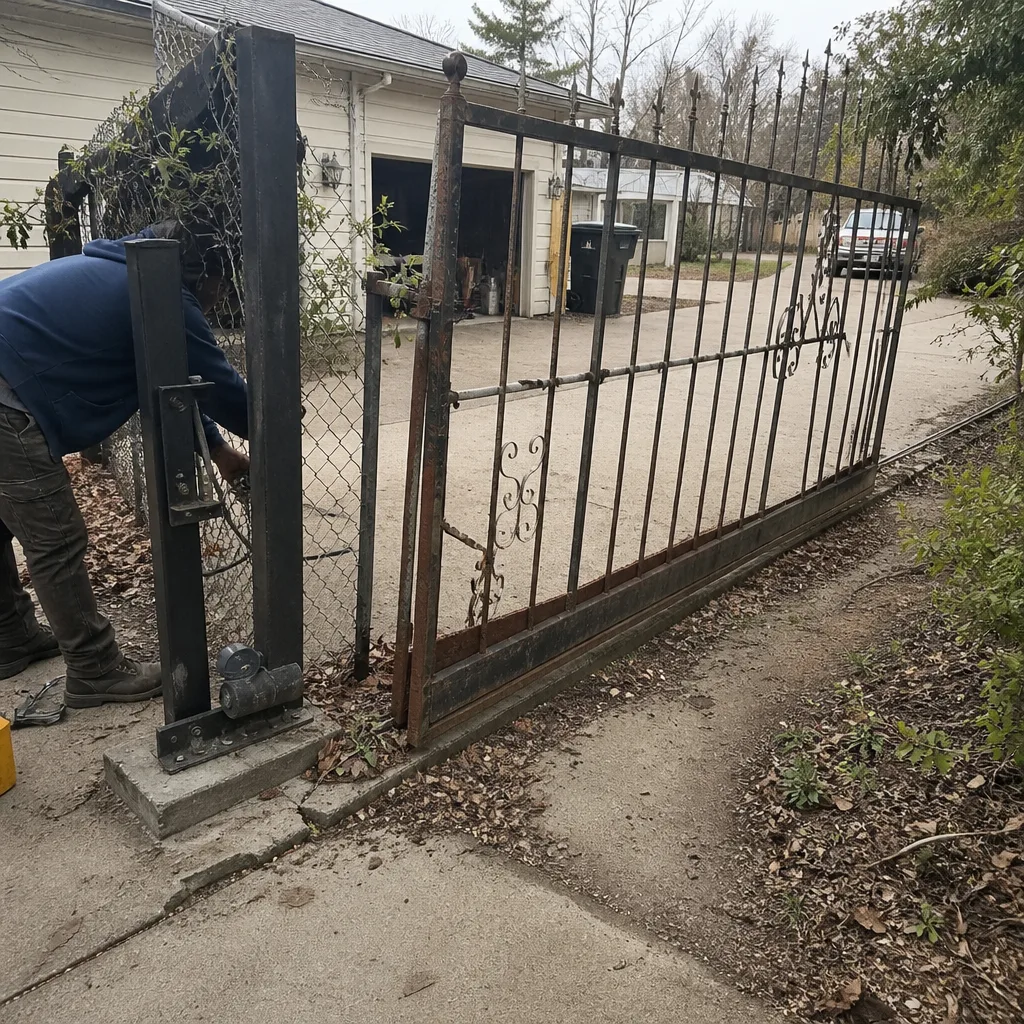 Before
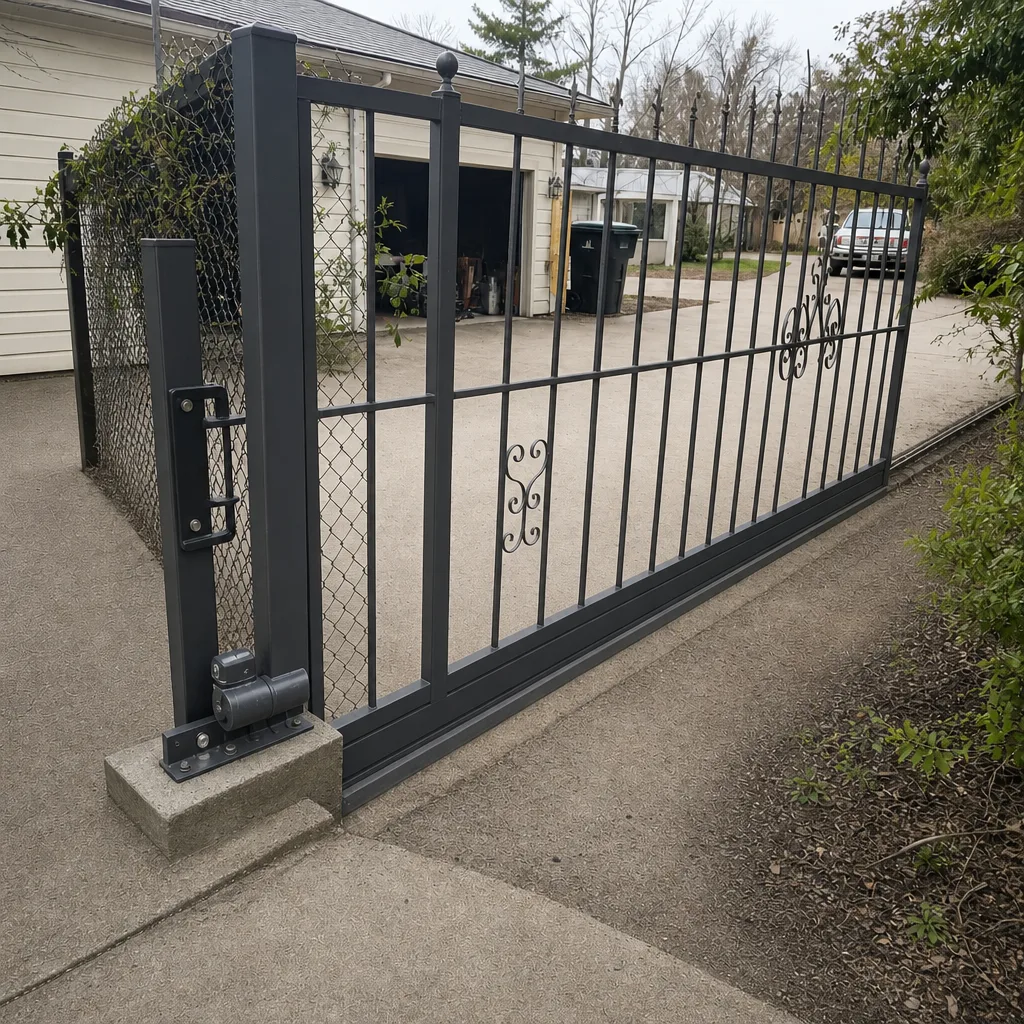 After
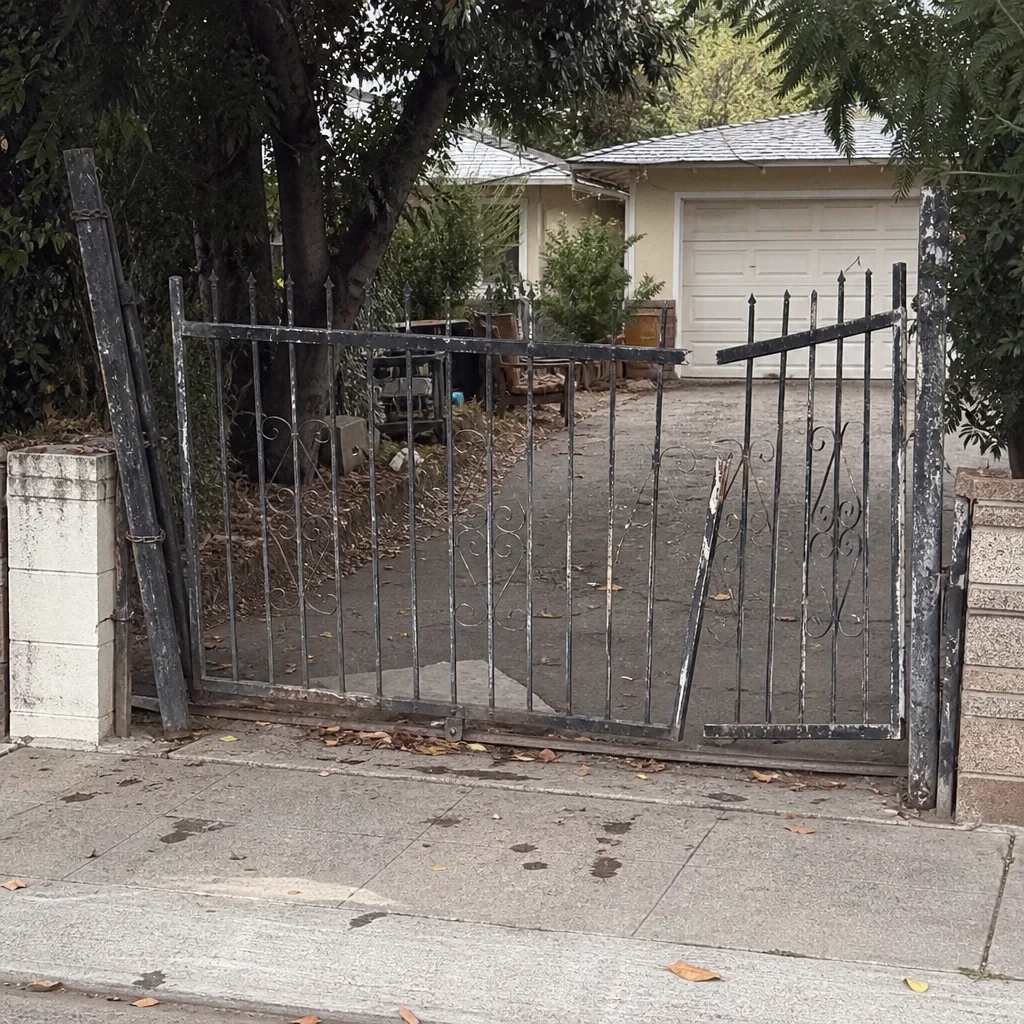 Before
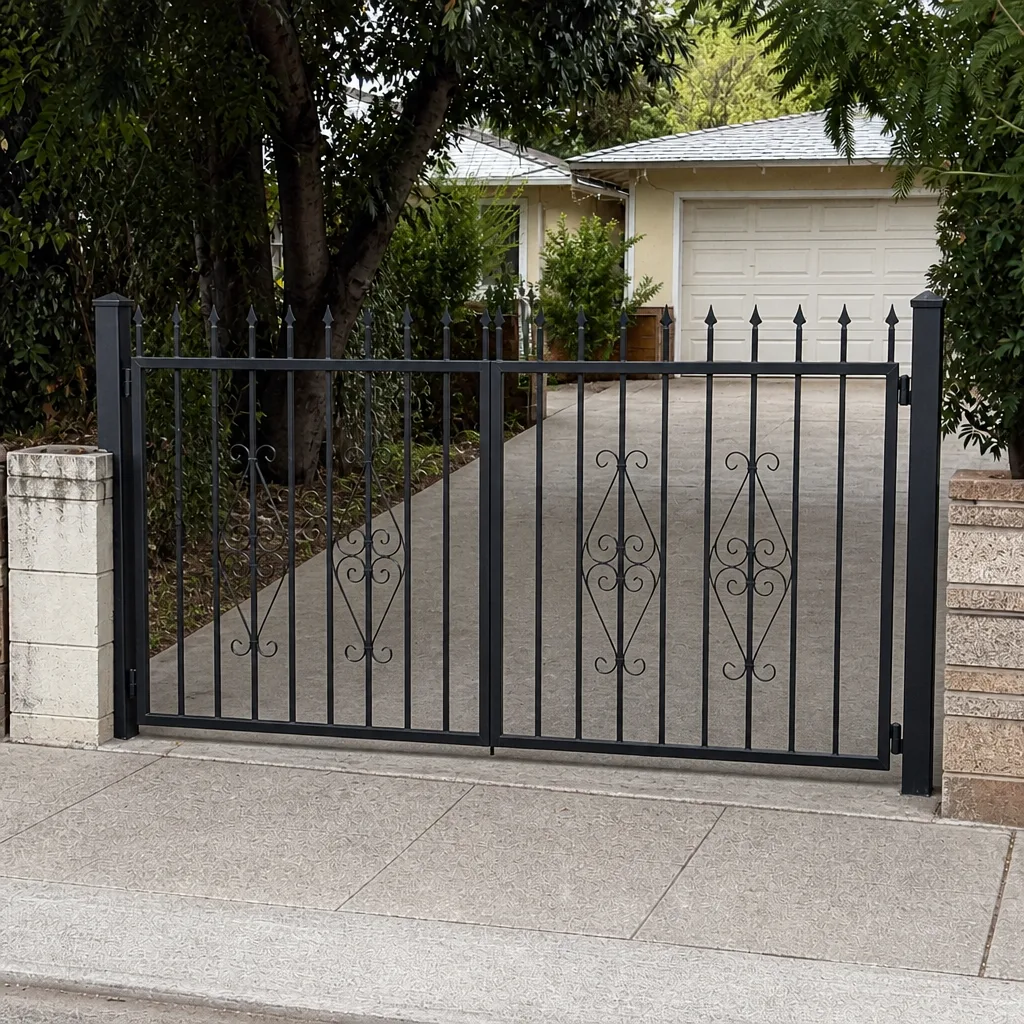 After
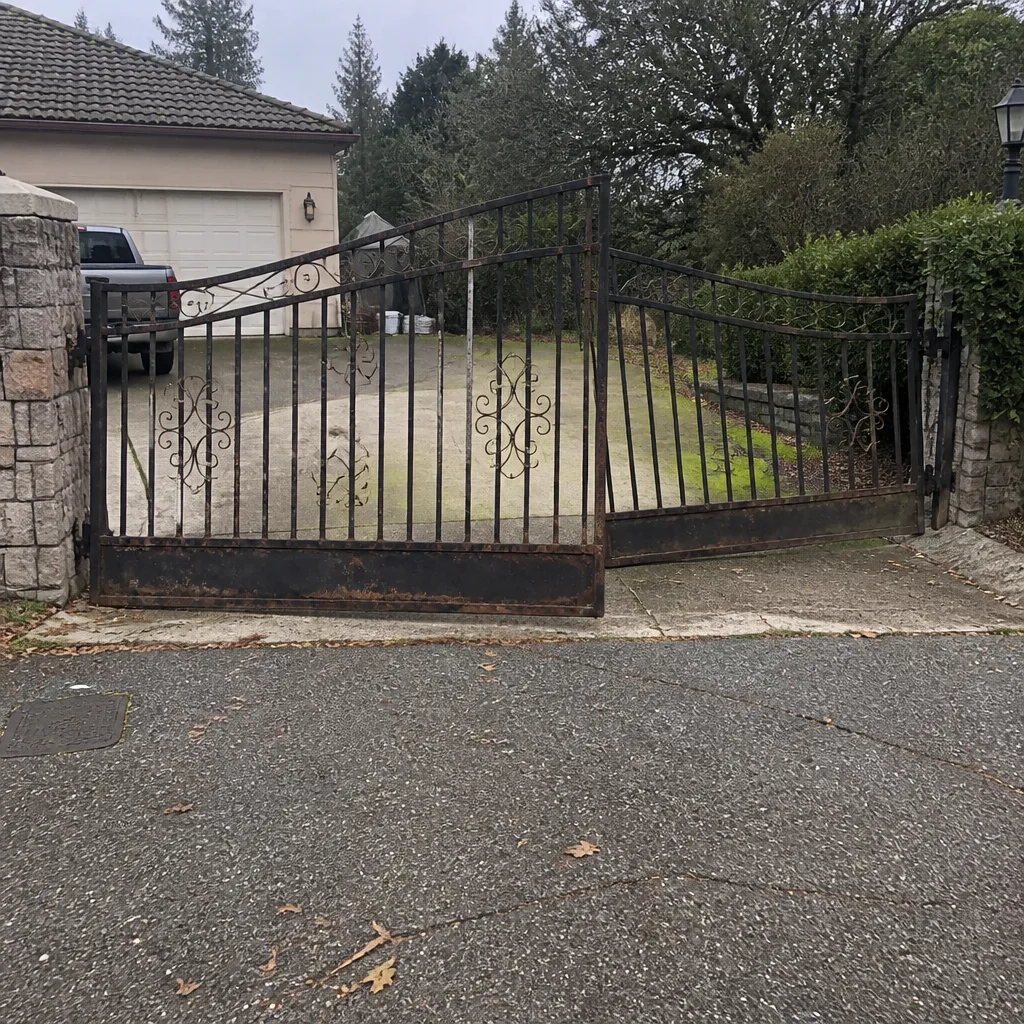 Before
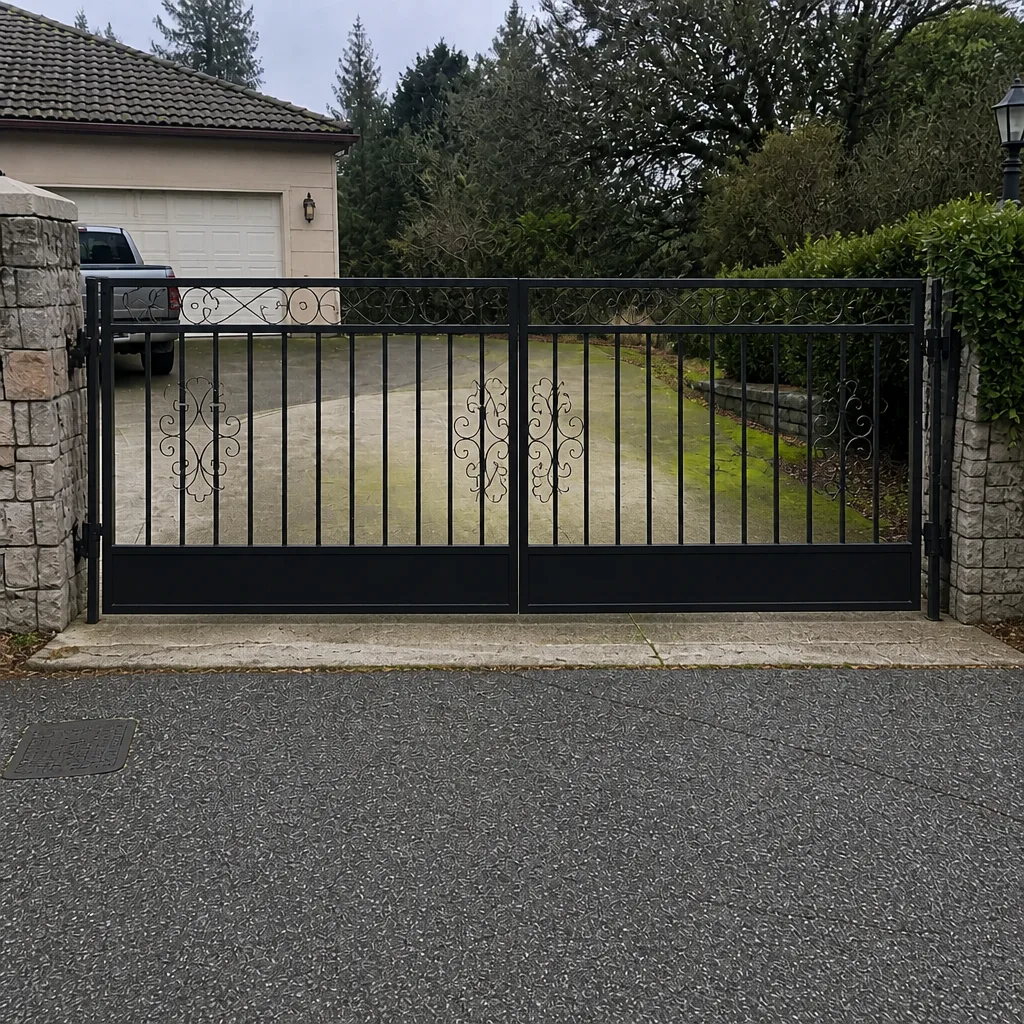 After