
Last updated November 4, 2026
 Wrought iron
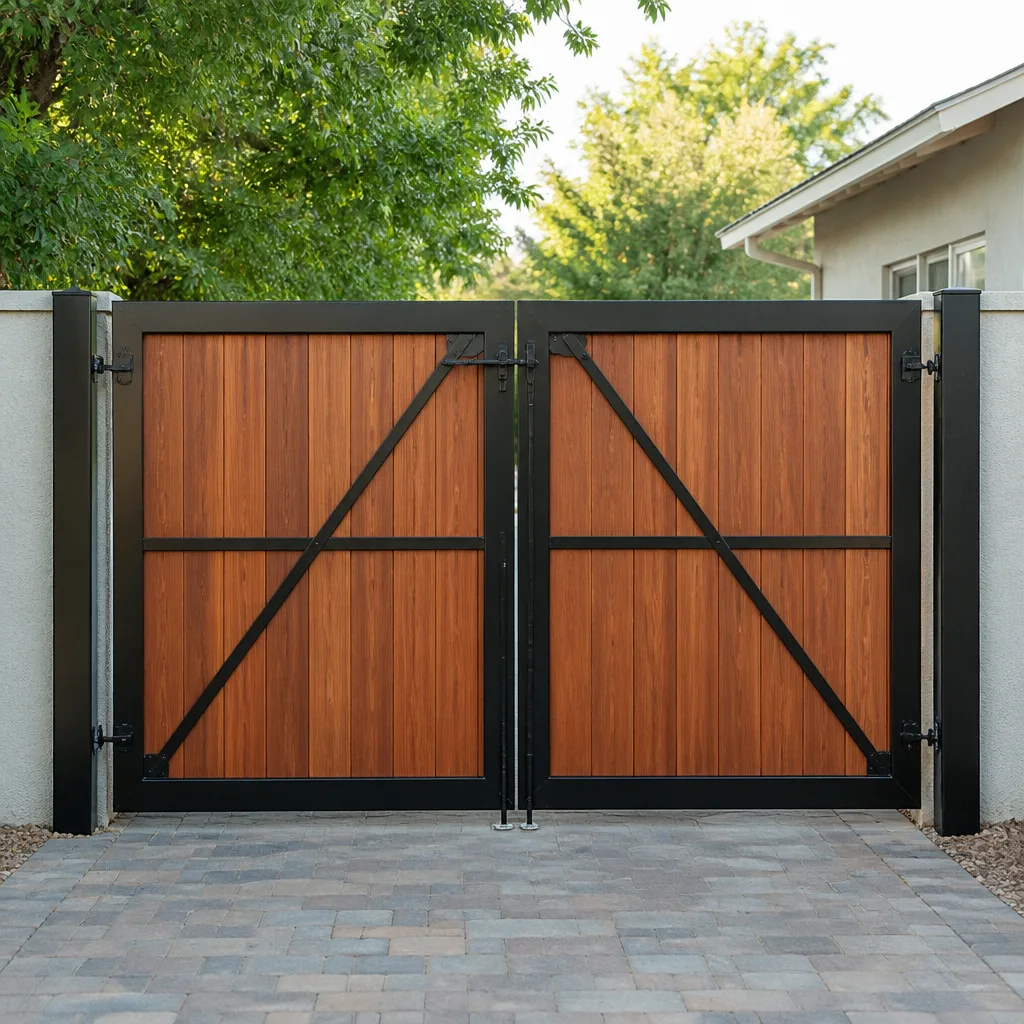 Wood & steel frame
 Farm & ranch
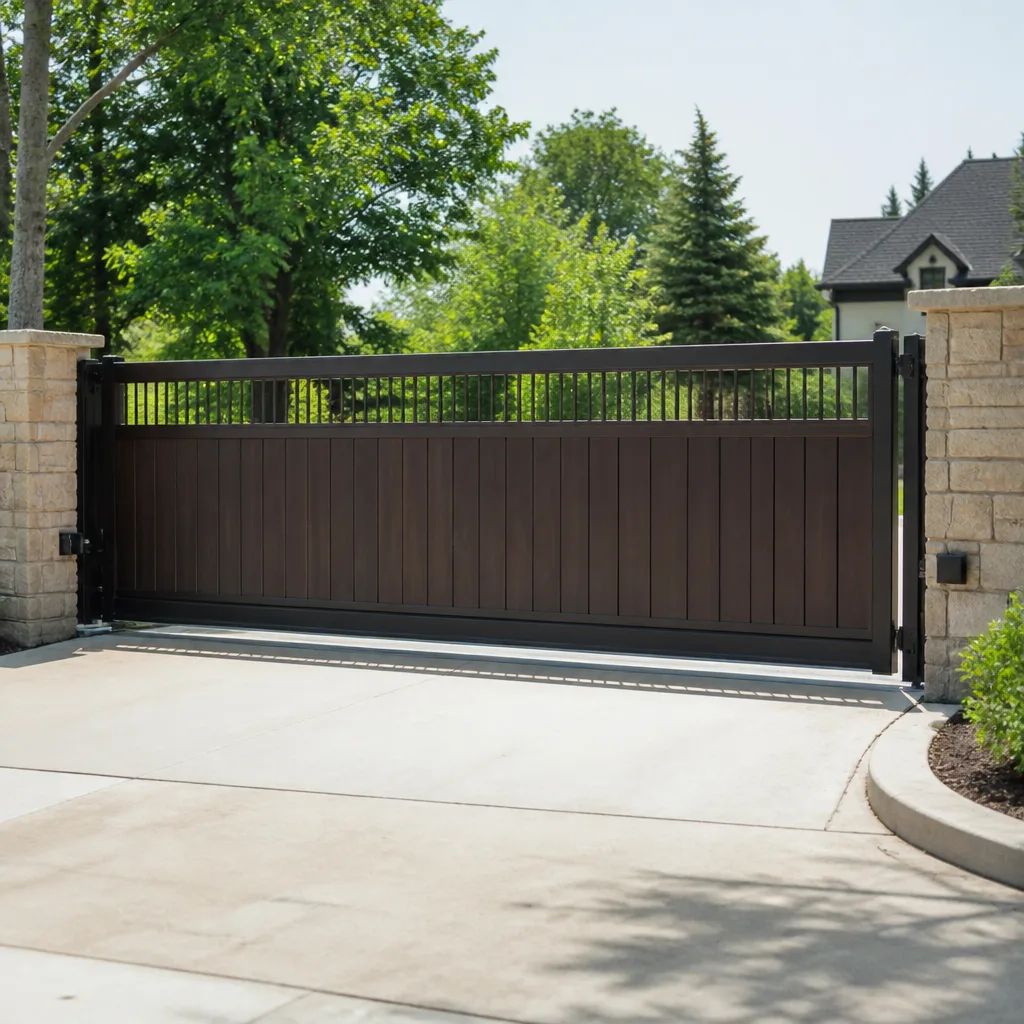 Sliding driveway gates
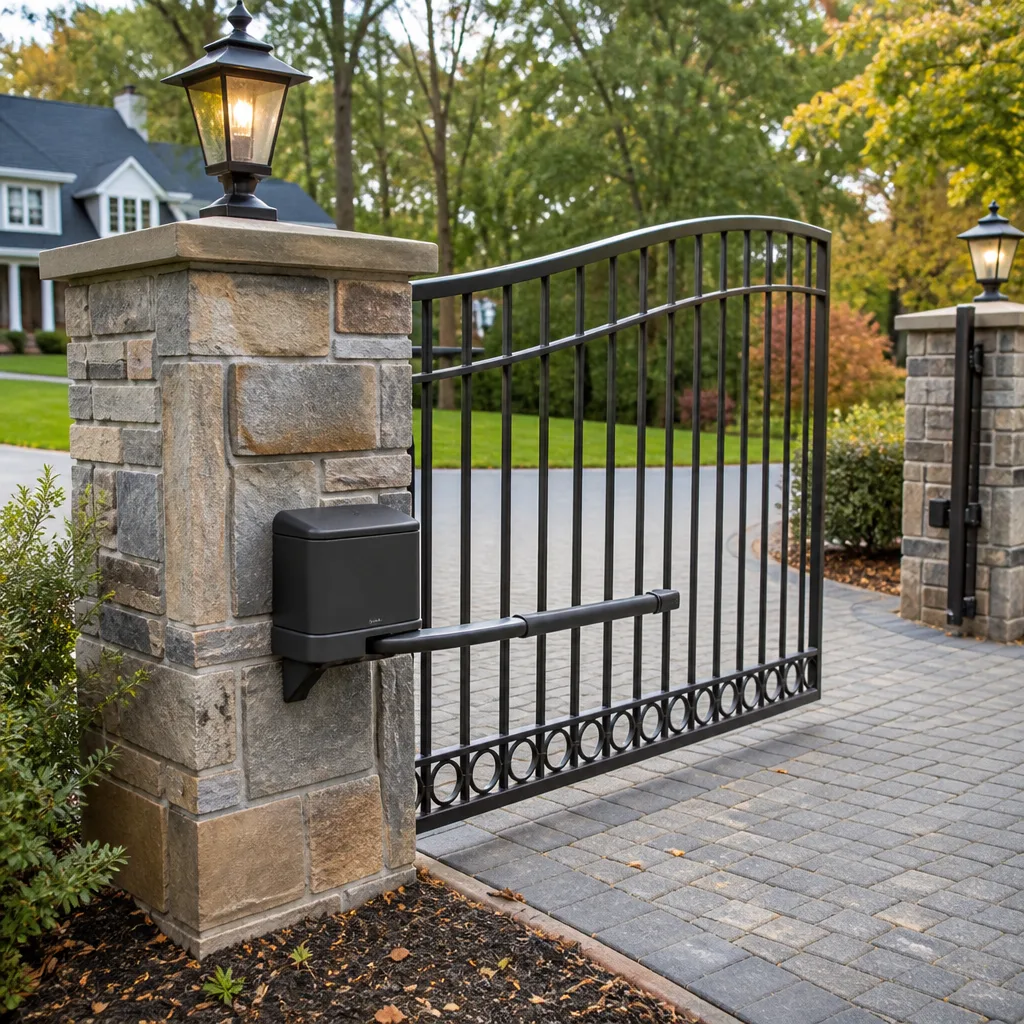 LiftMaster operators
Free on-site gate assessment - hinges, posts, and your LiftMaster or Nice gate operator checked before anything is quoted
The assessment is free and the quote is the invoice.
Get your free estimateGate Repair Emergency Preparedness Guide for Evergreen Homes
Every automated gate in Evergreen has a manual release mechanism. Walk outside right now and ask yourself: do I know where mine is, how it works, and whether I need a key, a lever, or a hex wrench to operate it? Most Evergreen homeowners we talk to can’t answer those three questions until the gate fails at the worst possible moment. This guide covers what actually happens when a gate system loses power or malfunctions, how to prepare for it in about thirty minutes, and what steps keep your property secure while you wait for repair. We’ll walk through the specific release procedures for the three operators we see most often in Evergreen residential installations, battery backup realities, and the information card that belongs next to every gate control panel.
Styles & brands we work with
- Wrought iron
- Wood & steel frame
- Farm & ranch
- Sliding driveway gates
- LiftMaster operators
Quick Answer
Gate repair emergencies in Evergreen come down to three prepared actions: know your operator’s manual release procedure before the power fails, keep a basic information card with your operator model and release type at the panel, and have a plan for securing the gate in either position. The manual release is different for LiftMaster, BFT, and FAAC systems, so the preparation that works for one won’t help with another. Call (833) 589-9356 for a free estimate on any gate repair in Evergreen, and read through the operator-specific sections below to understand your system before you need it.
Table of Contents
- Locating and Operating Your Manual Release
- LiftMaster Manual Release: Step by Step
- BFT Manual Release: What’s Different
- FAAC Manual Release: Estate and Long-Driveway Systems
- Battery Backup: What It Saves You From, and What It Won’t
- The Gate Stuck Open Protocol
- Power Outage Preparation for Gate Systems
- The Information Card Every Evergreen Homeowner Should Post
- Common Mistakes to Avoid
- When to Call a Professional
- Frequently Asked Questions
- The Bottom Line
Locating and Operating Your Manual Release
The manual release on an automated gate disengages the operator from the gate leaf so you can push or pull the gate by hand. That’s the whole function. It doesn’t reset anything, it doesn’t diagnose the problem, and it doesn’t lock the gate in place. It simply lets you move a gate that the motor can no longer move. On most residential systems in Evergreen, the release sits either on the operator housing itself, on a chain-driven carriage, or in a separate lockbox mounted on the gate frame. The location and the tool required vary by brand, which is precisely why a generic internet search for “gate manual release” often sends Evergreen homeowners in the wrong direction.
Before you need it, stand at your gate with a flashlight and find the release. Confirm whether you need a key, a screwdriver, or nothing at all. Test the release once with the gate closed and the power on, just long enough to confirm you can move the gate by hand, then re-engage it and verify the operator takes back control. That ten-minute exercise on a Sunday afternoon is the single most effective preparation we know for a gate emergency in Evergreen.
LiftMaster Manual Release: Step by Step
LiftMaster gate operators are among the most common systems we service in gate repair calls across Evergreen. These operators typically use a pull-chain or a release lever mounted directly on the operator or on the chain rail. On a pull-chain system, you pull straight down on the chain until you feel the carriage disengage, then slide the gate by hand. On a lever system, pull the lever outward and down, then hold it in the released position while you move the gate. Some LiftMaster models include a keyed release cylinder; if yours does, that key should live on the same ring as your house key, not in a drawer somewhere.
Re-engaging is just as important as releasing. After the power returns or the operator is repaired, pull the chain or push the lever back to its original position and jog the gate slightly by hand until the carriage clicks back into the drive. Listen for that click. If you don’t hear it, the gate will run free the next time you press the remote, and you’ll be standing there wondering why the motor runs but the gate doesn’t move.
BFT Manual Release: What’s Different
BFT operators show up frequently in Evergreen because they’re a staple on larger residential and some gated community entrances. The manual release on a BFT is typically a triangular or square keyed mechanism built into the operator’s housing. You insert the key, turn it counterclockwise until it stops, and the gearbox disengages. The gate then moves by hand with moderate effort. This is not a pull-chain system. If you’re looking for a chain on a BFT installation, you’ll be looking for a long time.
One thing to know about BFT releases: the key often fits a small metal cover that must be pried open first. In the dark, that cover is easy to miss. Find it now, open it, and confirm the key turns smoothly. A little silicone spray on a sticky key cylinder helps. Re-engagement works the same way in reverse: turn the key clockwise until it stops, then move the gate an inch or two by hand until the drive re-engages. BFT systems are known for being fussy about the re-engagement position, so don’t force anything; if it doesn’t catch, move the gate half an inch and try again.
FAAC Manual Release: Estate and Long-Driveway Systems
FAAC operators are built for heavier gates and longer run times, and Evergreen has plenty of estate properties where those conditions apply. The FAAC release mechanism is usually a lever or a keyed cylinder mounted directly on the hydraulic or electromechanical operator. On a lever-style FAAC release, you lift the lever up and rotate it to the open position, which unseats the hydraulic bypass valve or the gear drive. The gate then moves freely. On keyed FAAC systems, the release is deliberate and mechanical, with a firm stop at both ends of the key’s rotation.
Heavier FAAC-driven gates move differently under manual operation. A gate that feels light when the motor runs can be surprisingly heavy by hand, especially if it’s long or if the hinges haven’t been lubricated in a while. Two people are sometimes needed to move a large FAAC gate manually. Don’t wait until an emergency to find out how heavy your gate is. Test the release once, with a helper nearby, and note how much effort it takes. If Evergreen’s summer heat has dried out your gate hinges, the manual release test will reveal that too.
Battery Backup: What It Saves You From, and What It Won’t
A battery backup system on a gate operator is not an uninterruptible power supply for your entire gate. It’s a set of sealed batteries wired into the operator’s control board, designed to run the gate for a limited number of cycles when main power goes out. Most residential battery backup systems in Evergreen support somewhere between ten and thirty open-close cycles, depending on gate weight, battery age, and how hard the operator works on each cycle. That’s enough for a brief outage, not for running the gate for a week.
Here’s what battery backup won’t save you from: a failed control board, a blown fuse, a stripped gear, a bent gate leaf, a dead remote, or a blown limit switch. When those things happen, the battery is irrelevant. The gate won’t move with power, and it won’t move on battery either. The manual release is still the answer. Battery backup also won’t hold up under heavy use. If the power goes out the same week your backup batteries have quietly aged past their useful life, the first cycle may be the last.
Verify your battery backup now. Most operators have a battery status indicator or a test button on the control board. Open the panel, check for corrosion on the battery terminals, and note the manufacturer’s date if one is visible. If your operator has a battery indicator that reads low or the batteries are more than three years old, plan on replacing them. In our experience on electric gate repair calls across Evergreen, dead backup batteries are one of the most common surprises homeowners discover during a power outage.
The Gate Stuck Open Protocol
A gate that fails in the open position is a different security problem than a gate that fails closed. When the gate sits open, the property is exposed. The driveway leads straight in. Every Evergreen homeowner should have a plan for this scenario that goes beyond calling for repair. The first step is to disengage the manual release and push the gate closed by hand. On most systems, the gate will stay closed once you move it to the fully closed position, but it won’t latch. The operator’s latch is part of the motorized cycle, and with the release disengaged, the latch doesn’t engage.
That brings us to the second step: temporary mechanical security. A heavy-duty chain and padlock around the gate frame and the fence post keeps the gate closed when the automatic latch can’t. A gate drop rod, if your system has one, provides a second point of anchoring. For a sliding gate, a heavy-duty pipe clamp on the track is the quickest temporary stop. These are low-cost items that belong in a small bin near the gate panel before you need them. Keep a length of chain, a padlock, and a pipe clamp sized to your track. If an Atlas Gate Repair technician arrives in Evergreen and these items are already on hand, the repair call goes faster and the property was never left unsecured.
Power Outage Preparation for Gate Systems
A whole-home generator will not automatically power your gate operator. That’s a fact that surprises a lot of Evergreen homeowners after a long outage. The gate operator usually runs on a dedicated circuit that may or may not be included in the generator’s essential load panel. If your electrician never specified the gate circuit as part of the generator’s covered loads, your gate won’t run on generator power no matter how large the whole-home unit is. Even when the gate circuit is on the generator, there’s a delay between loss of main power and generator startup, during which the operator’s control board may reset or fault out.
A dedicated battery backup integrated into the operator solves a different problem than a whole-home generator. The integrated backup kicks in immediately, without the startup delay, and runs the gate on DC power. If your generator already covers the gate circuit, the integrated battery backup is still useful for that gap between outage and generator start. If the gate isn’t on the generator, the battery backup is your only automated option. Either way, the manual release remains the fallback that works regardless of any electrical system on the property.
The Information Card Every Evergreen Homeowner Should Post
When a gate fails and you’re standing at the panel with a flashlight, you don’t want to be digging through paperwork for the operator manual. The fix is a laminated card posted inside the control panel door or on the wall next to it. The card should list four things: the operator brand and model, the location of the control board, the manual release type and tool required, and the service phone number. That’s it. Four lines, laminated, mounted where you can read it in the dark.
Here’s what that card should look like:
- Operator: LiftMaster LA400, BFT Rigel 5, FAAC 400, or whatever your system actually is. Write down the model from the data plate, not from memory.
- Control board location: “Inside the operator housing, left side” or “In the gray box on the north fence post.” Be specific to your installation.
- Manual release: “Pull chain under operator cover” or “Triangle key on the housing face, key hangs below the panel.” Note the tool.
- Emergency contact: Call (833) 589-9356. We answer 24/7. Fast dispatch from 7am to 7pm, Sunday through Friday.
Laminate the card and mount it with two screws or heavy-duty tape. Evergreen’s dry summer heat and occasional high winds will destroy a paper card in one season. This exercise takes fifteen minutes and it’s the closest thing to a guarantee that your next gate emergency resolves quickly.
Common Mistakes to Avoid
- Never operating the manual release until the gate is broken. The release mechanism may be stiff, the key may be missing, or the gate may be too heavy to move by hand. Finding that out during an emergency turns a simple repair into a long ordeal.
- Assuming a whole-home generator powers the gate. As covered above, the gate circuit may not be on the generator’s panel, and even if it is, the startup delay can fault the operator. Test it before you trust it.
- Forcing the gate when the operator is still engaged. Pulling hard on a chain-driven gate without first disengaging the release can damage the gearbox and turn a minor issue into a full operator replacement. Evergreen’s heavier estate gates make this mistake more costly.
- Ignoring hinge maintenance between emergencies. A gate that hasn’t been lubricated in two years will fight you when you try to move it manually. The operator masks stiff hinges until the day the power fails.
- Mounting sensitive electronics in direct summer sun. Control boards and battery backups last longer when they’re shaded. Evergreen’s summer temperatures bake unprotected electronics, and the failure usually happens on the hottest afternoon, not on a mild day.
- Using the wrong manual for your operator. A LiftMaster release procedure doesn’t work on a BFT, and a BFT key won’t fit a FAAC. The information card solves this permanently.
- Waiting until the gate fails to write down the service number. When the gate is stuck closed and you’re late for something, the last thing you want is to search for a phone number. Post it on the card.
When to Call a Professional
Call a professional when the gate fails to move after you’ve disengaged the manual release, when the operator runs but the gate doesn’t, when you see obvious damage to the gate leaf or the track, or when the control board shows an error code you can’t identify. Electrical work on a gate operator is not a DIY project; the control board, capacitor, and wiring carry enough voltage to hurt you. A gate that comes off its track while you’re moving it by hand can also cause serious injury. Atlas Gate Repair offers free estimates in Evergreen. Call (833) 589-9356 to schedule a visit. We answer 24/7. Fast dispatch from 7am to 7pm, Sunday through Friday. The price is quoted and agreed before any work starts, so there are no surprises when the job is done.
Frequently Asked Questions
The procedure depends on your operator brand. LiftMaster systems typically use a pull chain or lever, BFT systems use a triangular or square keyed release on the operator housing, and FAAC systems use a lever or keyed cylinder that releases the hydraulic or gear drive. Find your release mechanism now, test it once, and post the procedure on your information card.
Most residential battery backup systems support ten to thirty open-close cycles depending on gate weight, battery age, and cycle load. The actual number for your gate depends on the specific operator and battery condition. Verify your backup now by checking the battery status indicator and looking for corrosion before an outage tests it.
Disengage the manual release and push the gate closed, then secure it with a chain and padlock, a gate drop rod, or a pipe clamp on a sliding gate’s track. These temporary measures keep the property secure while you wait for a technician. Call (833) 589-9356 to schedule a repair.
Not automatically. Your gate operator runs on a dedicated circuit that may not be included in the generator’s essential load panel. Check your generator’s covered circuits, and consider an integrated battery backup on the operator for the gap between power loss and generator startup.
Post a laminated card with four items: operator brand and model, control board location, manual release type and tool, and the emergency service phone number. Assemble this before you need it. It takes fifteen minutes and prevents a long delay during an emergency repair.
We answer 24/7 and dispatch technicians from 7am to 7pm, Sunday through Friday. Most Evergreen gate repairs are scheduled on the first available opening. Call (833) 589-9356 for a free estimate and the next available dispatch window.
The Bottom Line
Emergency preparedness for an automated gate in Evergreen comes down to one principle: know the system before it fails. Locate the manual release, identify whether it’s a LiftMaster pull chain, a BFT keyed cylinder, or a FAAC lever, and test it once. Post the information card with the operator model, board location, release procedure, and service number. Verify the battery backup and know its limits. Keep a chain, padlock, and track clamp for securing an open gate. Do these things now, in daylight, with no urgency, and the next gate failure becomes a thirty-second procedure rather than a thirty-minute scramble. Call (833) 589-9356 for a free estimate on any gate repair or preparation work in Evergreen. We answer 24/7, and the price is always agreed in writing before any work begins.
Written by the team at Atlas Gate Repair, serving Evergreen since 2017.
See the difference
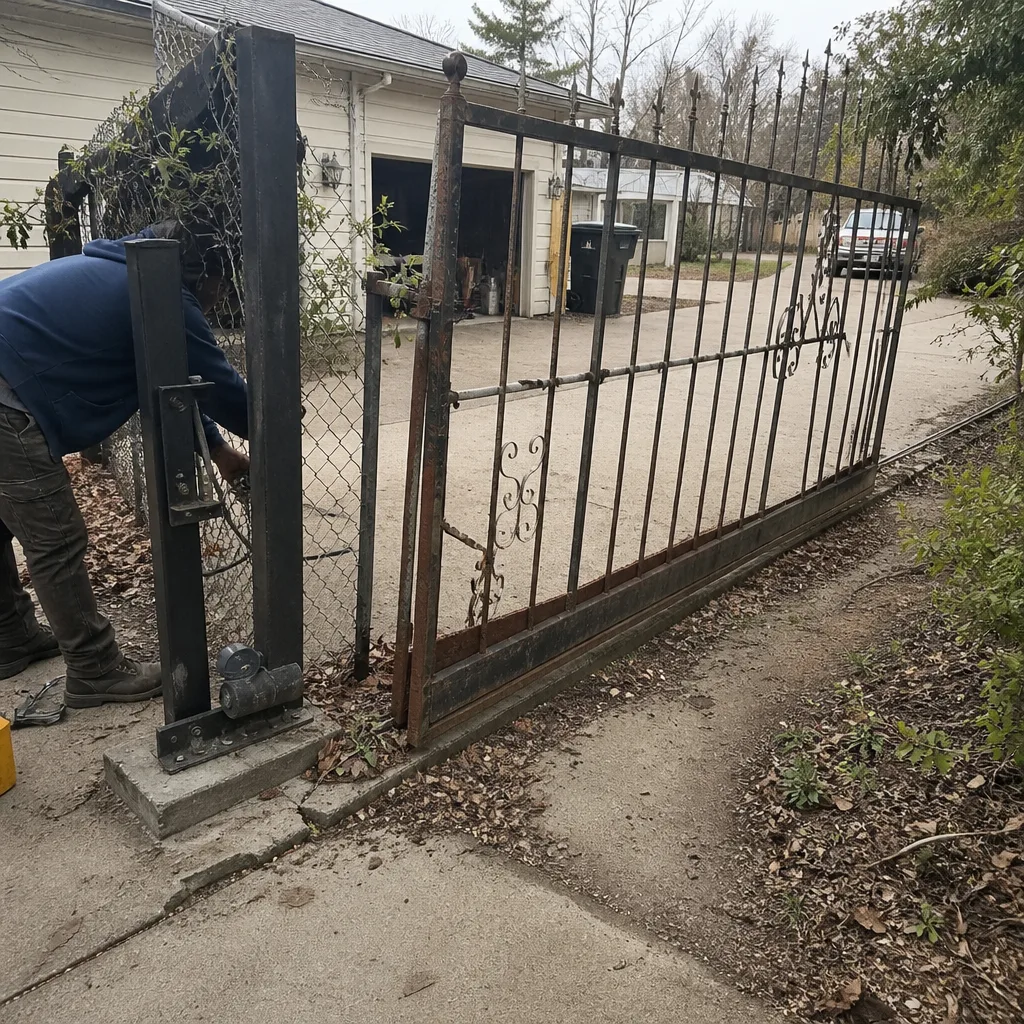 Before
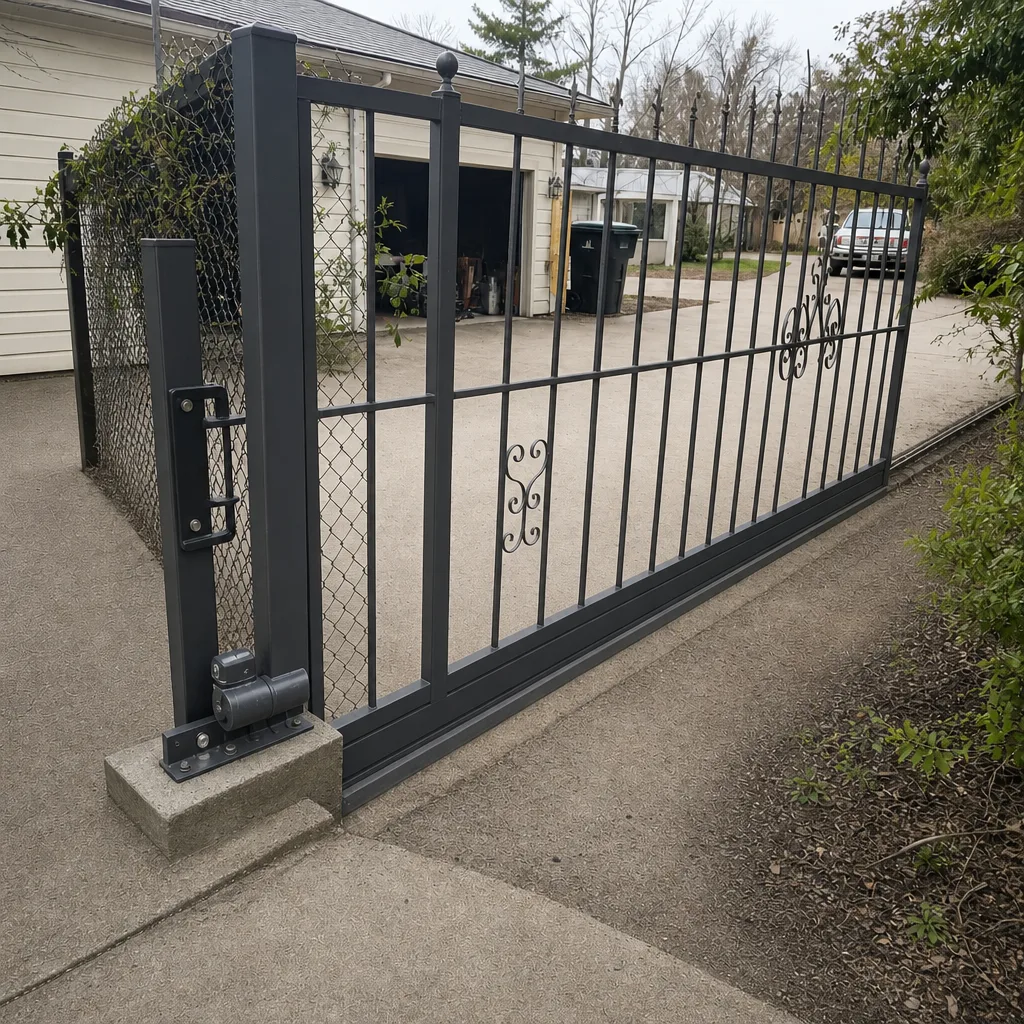 After
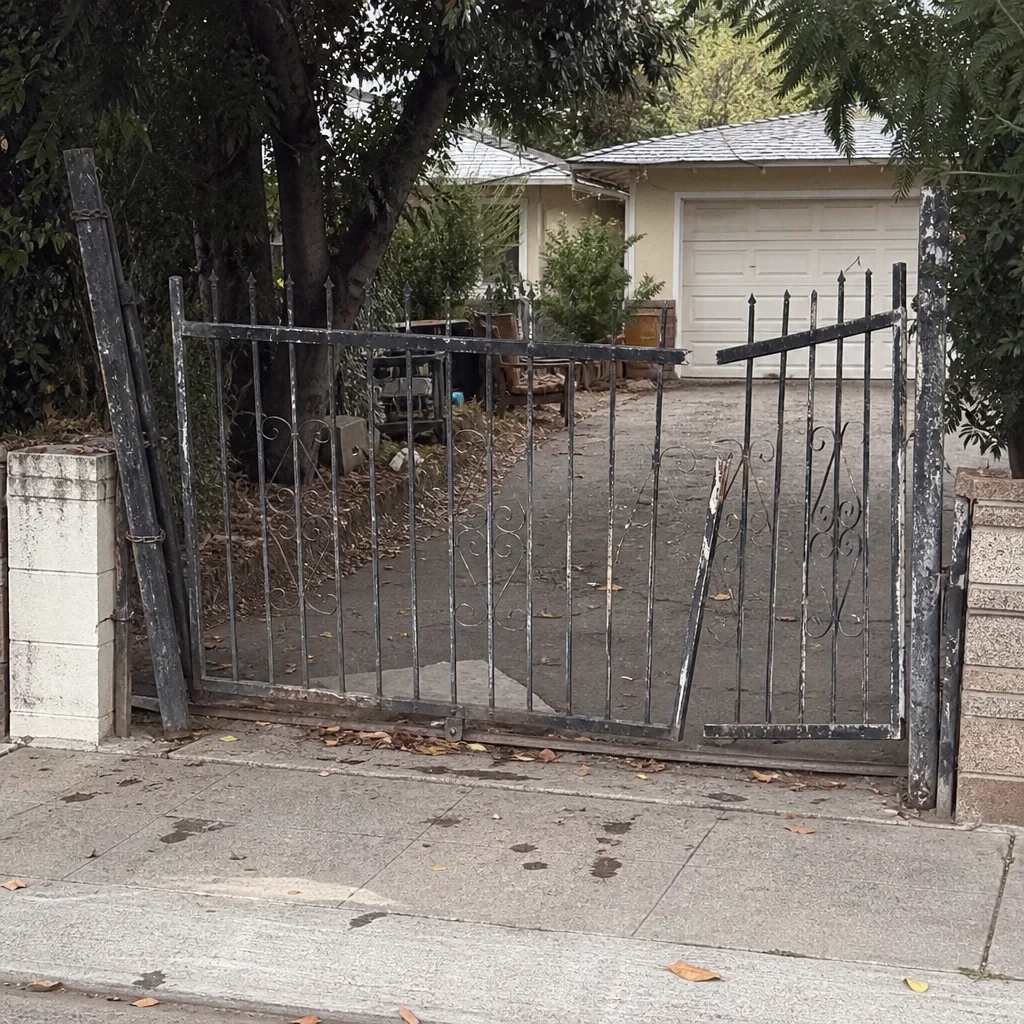 Before
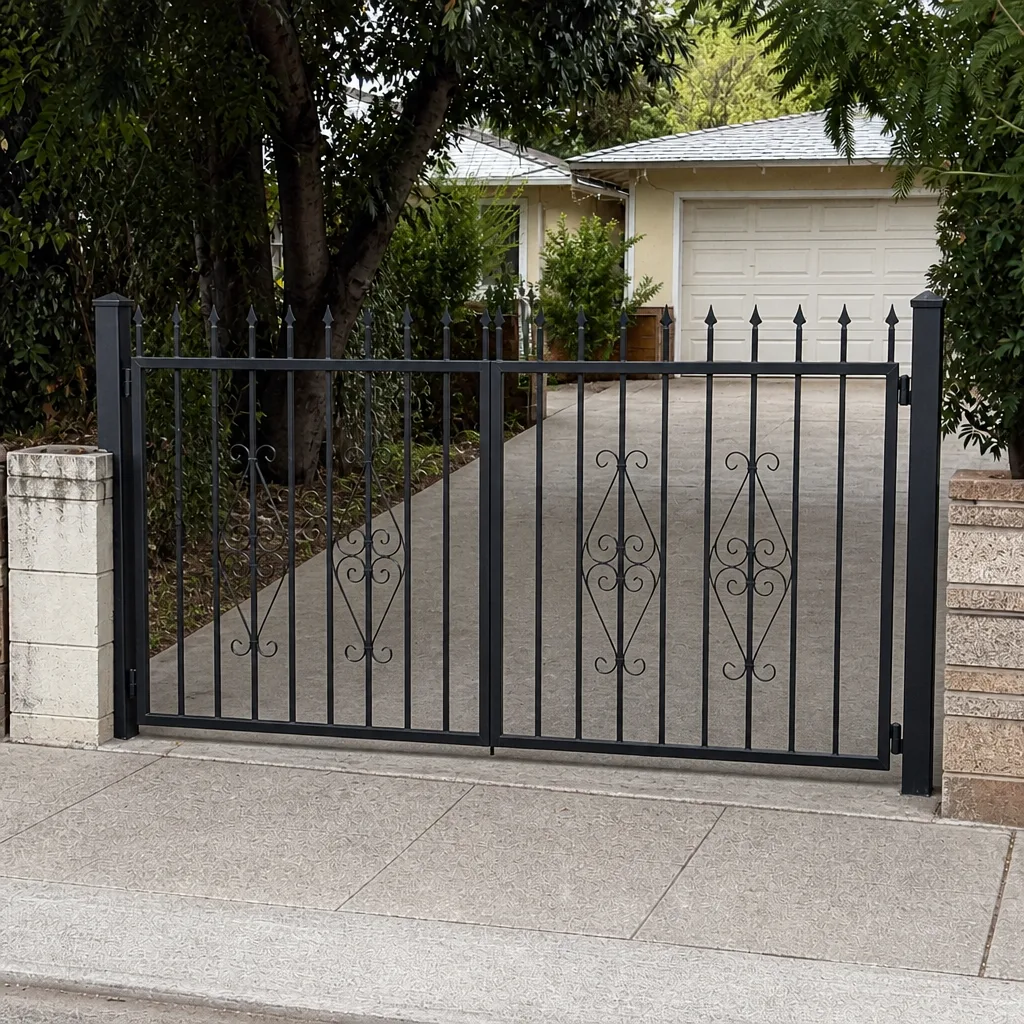 After
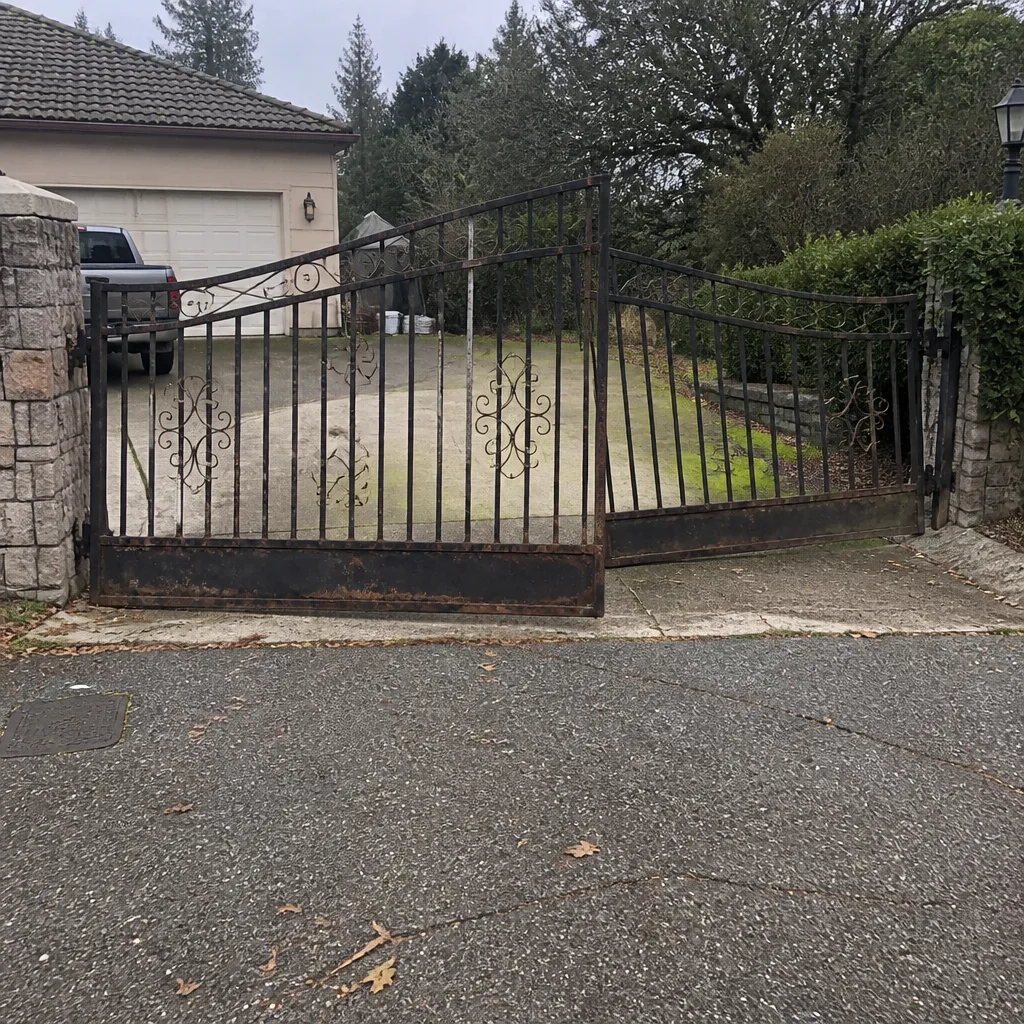 Before
 After