
Last updated November 4, 2026
 Wrought iron
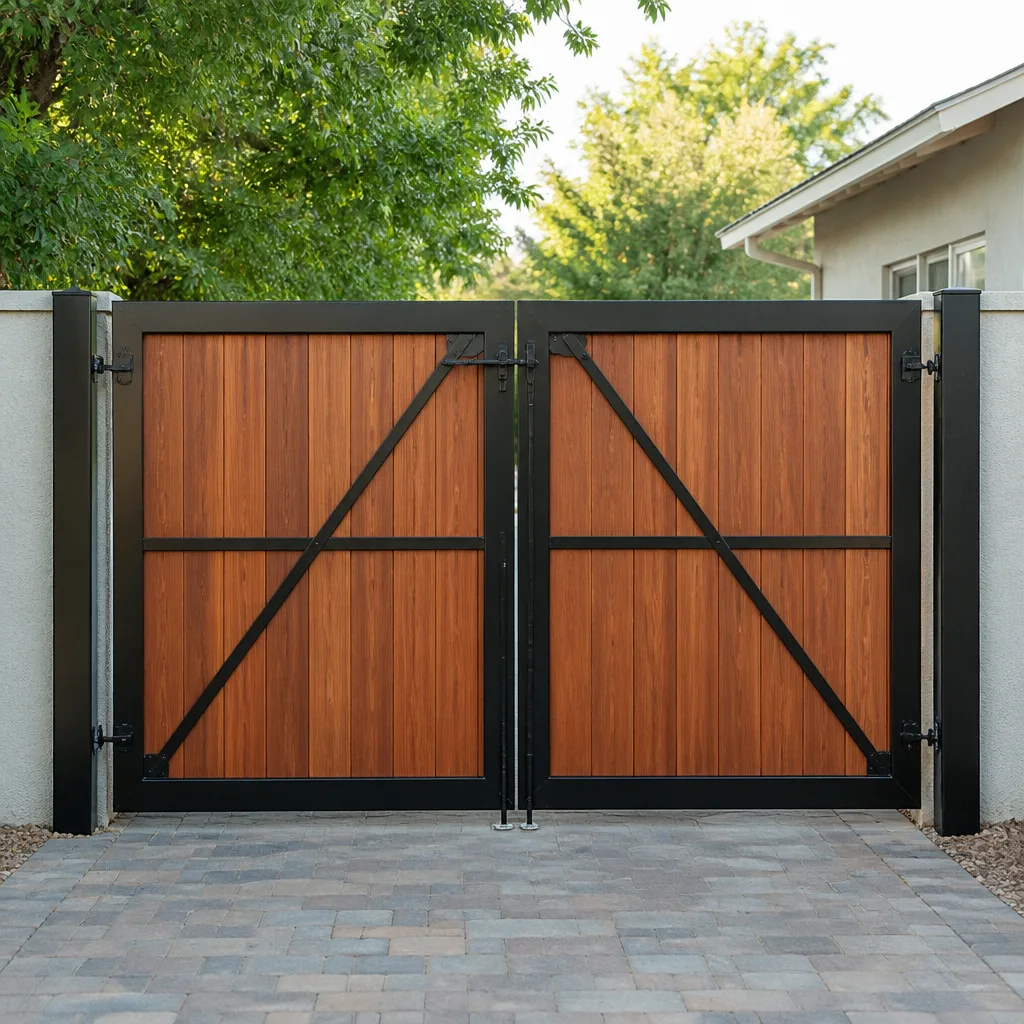 Wood & steel frame
 Farm & ranch
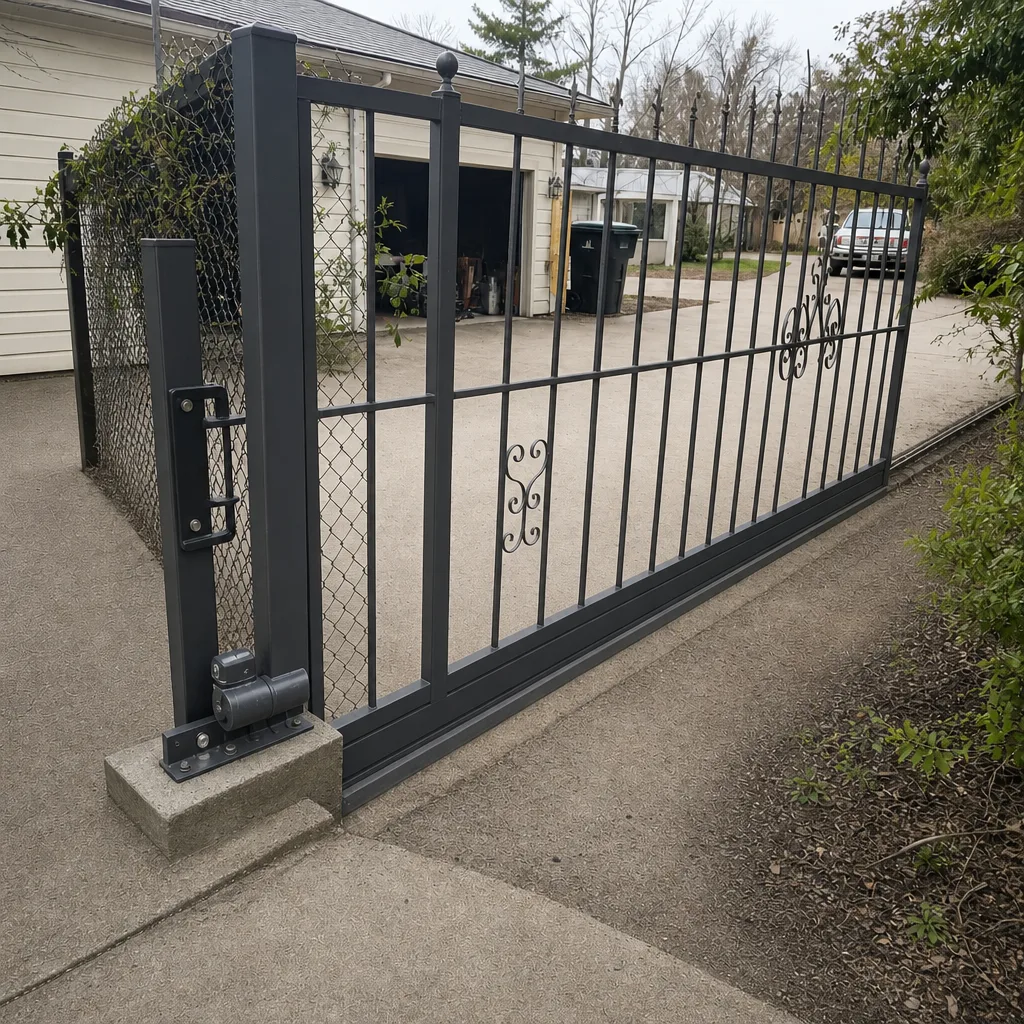
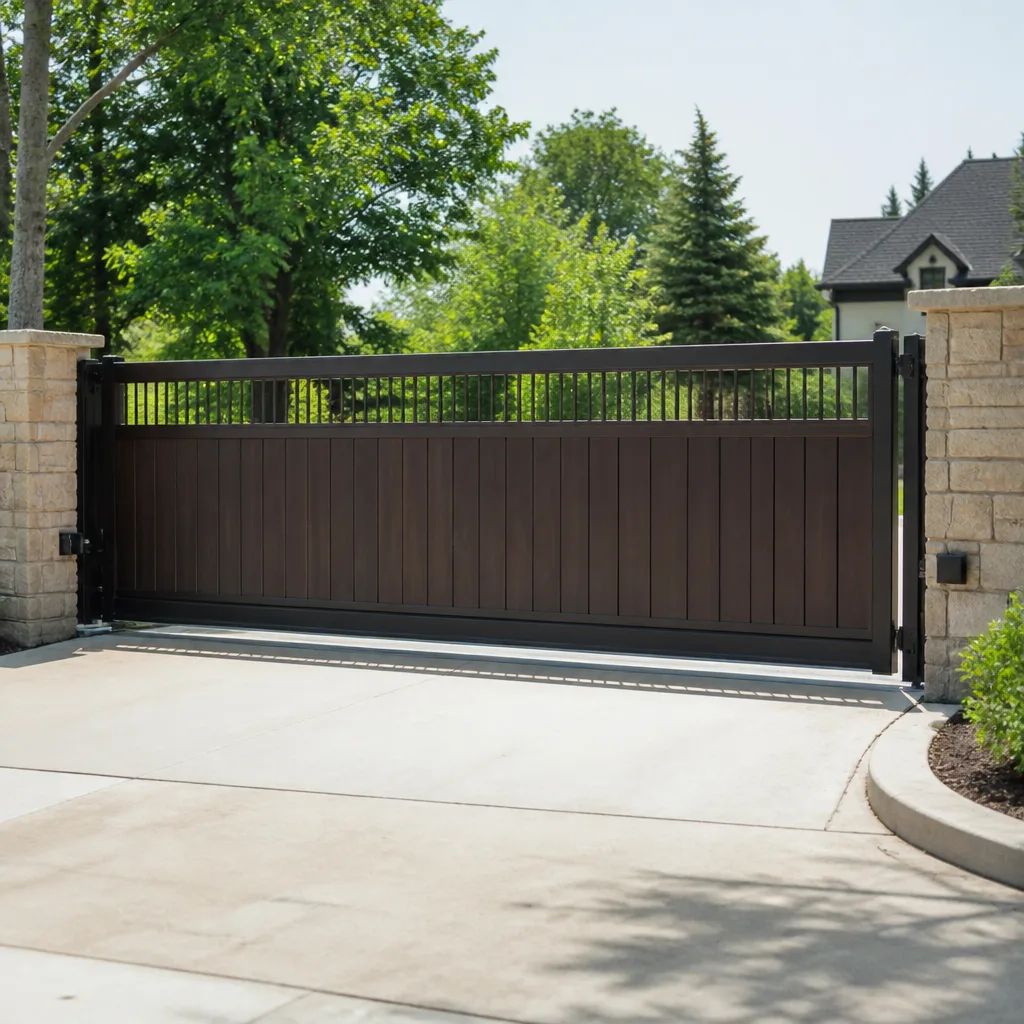 Sliding driveway gates
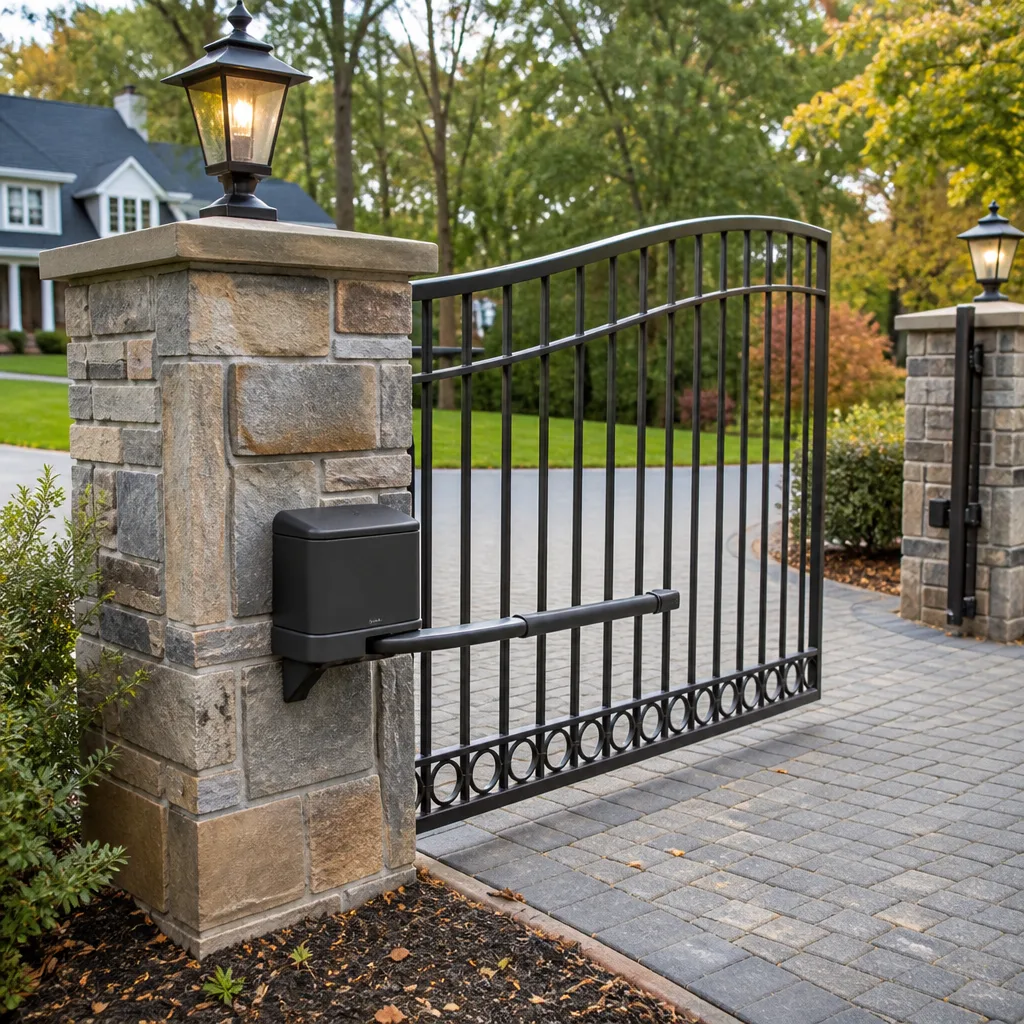 LiftMaster operators
Free on-site gate assessment - hinges, posts, and your LiftMaster or Nice gate operator checked before anything is quoted
The assessment is free and the quote is the invoice.
Get your free estimateGate Repair Maintenance Checklist for Evergreen Homeowners
Lubricating a rack-and-pinion slide gate the same way you’d lubricate a swing gate arm is a maintenance mistake that accelerates wear instead of preventing it. Most generic checklists don’t distinguish between the two, and that’s exactly where expensive failures begin. This guide is built around the specific gate hardware common in Evergreen properties, from residential swing operators to commercial slide systems. You’ll learn what to inspect, how often, and which components actually fail when maintenance gets skipped.
Styles & brands we work with
- Wrought iron
- Wood & steel frame
- Farm & ranch
- Sliding driveway gates
- LiftMaster operators
Quick Answer
A proper gate maintenance routine for Evergreen homeowners means monthly visual inspections of hinges, tracks, and safety sensors; quarterly lubrication of brand-specific moving parts; and an annual professional check of motor torque, limit switches, and safety loops. The most important habit is logging what you find so small drift doesn’t become a breakdown. Most emergency repairs we see trace back to five inspectable components that almost nobody checks until the gate stops moving.
Table of Contents
- Operator-Specific Inspection: Why Brand Matters
- The Five Components That Cause Most Emergency Calls
- Monthly Maintenance Checklist
- Seasonal Maintenance Checklist
- Annual Maintenance Checklist
- How to Test Safety Loops and Photoeyes
- The Documentation Habit Professionals Use
- Common Mistakes to Avoid
- When to Call a Professional
- Frequently Asked Questions
- The Bottom Line
Operator-Specific Inspection: Why Brand Matters
A LiftMaster LA500 does not fail the same way a BFT Icaro does. A FAAC 391 has different weak points than a Ghost Controls swing arm. If you’re working from a generic checklist that says “inspect the operator,” you’re missing the specific failure patterns that each brand develops over time. This is where brand-fluent maintenance pays for itself.
Here’s what to check on three common operator types found on Evergreen properties:
- LiftMaster LA500 (residential swing): Listen for grinding at the worm gear. Check the manual release key for stiffness. Inspect the battery backup terminals for corrosion, especially if the unit sits in direct sun against a south-facing wall.
- BFT Icaro (residential/light commercial slide): Check the limit switch roller for flat spots. Inspect the chain tension every three months; Icaro units wander out of spec gradually, and a loose chain eats sprockets. Look at the capacitor housing for heat discoloration.
- FAAC 391 (commercial swing): Watch the hydraulic fluid level and look for weeping at the cylinder seals. Listen for air in the system when the gate reaches full open. Check the anti-crush torque adjustment; it drifts on units that cycle more than 40 times a day.
If you don’t know which operator sits on your gate, take a photo of the motor housing and any label plate. That identification is the first thing a technician needs, and it’s the first thing we ask for when an Evergreen homeowner calls about electric gate repair. Knowing the brand up front means the diagnostic starts before the truck rolls.
The Five Components That Cause Most Emergency Calls
In our experience working on automated gates across Evergreen, a small set of components accounts for the overwhelming majority of breakdowns. These are rarely on a generic homeowner checklist, and that’s the point. If you inspect these five things on a schedule, you catch most problems while they’re still cheap to fix.
- Photoeye alignment and lens condition. Dust, spider webs, and afternoon sun glare knock photoeyes out of alignment constantly. A misaligned photoeye doesn’t just stop the gate; it can make the operator behave erratically, and homeowners often misdiagnose it as a motor problem.
- Safety loop sensitivity. Underground loops detect vehicles. When sensitivity drifts, the gate either ignores a waiting car or, worse, closes on one. Most Evergreen driveways have loop layouts that were tuned once at installation and never touched again.
- Limit switch drift. Over hundreds of cycles, mechanical limit switches move by fractions of a turn. The gate starts over-traveling or under-traveling. You’ll see it in the gate slamming at full open or not closing fully against the post.
- Chain or belt tension on slide gates. A chain that’s too loose wears sprockets and jumps teeth. Too tight destroys motor bearings. Either way, the failure is gradual and then sudden.
- Hinge wear on swing gates. A sagging gate leaf puts load on the operator that it was never designed to carry. The operator fights gravity on every cycle, and eventually the motor or gearbox gives out. Checking hinge play takes 30 seconds and prevents a four-figure repair.
None of these items require specialized tools to inspect. They require knowing where to look and what “normal” looks like on your specific gate. That’s the gap this checklist closes.
Monthly Maintenance Checklist
Monthly checks are about catching visible change. You’re not adjusting anything; you’re looking for the difference between this month and last month. Each item below takes under two minutes.
- Visual sweep of the gate travel path. Clear debris, check for new scratches on the gate or posts, and look for anything that has shifted since last month.
- Photoeye inspection. Wipe the lenses with a dry cloth. Check alignment by blocking one beam and watching the operator response. If nothing happens, the photoeye circuit needs attention.
- Hinge and roller check. Look at hinge pins for rust or movement. On slide gates, watch the rollers as the gate moves; wobble means a bearing is wearing.
- Operator noise check. Run the gate once and listen. New grinding, clicking, or hesitation is data. Write it down even if it seems minor.
- Safety edge test (if equipped). Press the rubber safety edge while the gate is closing. The gate should reverse. If it doesn’t, stop using the automatic close feature until it’s inspected.
Evergreen’s mild winters mean you don’t have to worry about freeze cycles, but the dry summer heat does accelerate plastic and rubber deterioration. Hoses, seals, and photoeye housings all age faster here than in coastal climates. Monthly visual checks catch that before it becomes a failure.
Seasonal Maintenance Checklist
Quarterly maintenance adds lubrication and adjustment to the monthly visual routine. This is where the “generic checklist” problem really shows up, because lubrication requirements vary by gate type and operator brand.
For swing gates:
- Lubricate hinge pins with a dry PTFE spray. Do not use grease on hinges that carry a GateCraft or Viking operator; grease attracts dust and forms a grinding paste in Evergreen’s dry summers.
- Check the operator arm mounting bolts for tightness. Vibration loosens them over time.
- Inspect limit switch cams for wear, especially on mechanical units.
For slide gates:
- Lubricate the chain with a light machine oil if it’s a chain drive. Wipe off excess immediately.
- For rack-and-pinion systems, leave the rack dry. Grease on a rack collects grit and accelerates pinion wear. This is one of the most common maintenance mistakes we fix.
- Check the tension on the chain or belt. Deflection should match the manufacturer’s spec, typically 1/4 to 1/2 inch at the midpoint.
For all gate types:
- Test the battery backup if your operator has one. Unplug the main power and run the gate through a cycle. If it won’t complete the cycle, the battery needs replacement.
- Inspect wiring connections at the operator. Look for loose terminal screws, corrosion, or insect nests inside the control box. In Evergreen, ants and mud wasps find their way into control boards more often than you’d expect.
- Check the gate’s balance manually. Disengage the operator and move the gate by hand. A properly adjusted gate should move smoothly without binding or free-falling.
Annual Maintenance Checklist
The annual check is where professional attention earns its cost. This is not a “do it all yourself by reading a blog post” list. Some of these items require a multimeter, torque wrench, and the manufacturer’s service manual for your specific operator.
- Motor torque and amp draw test. A rising amp draw is the earliest warning sign of a failing motor or binding gate. Catch it at annual service and you replace a capacitor or bearing. Miss it and you replace a motor.
- Limit switch calibration. If the gate has drifted even a few degrees from perfect open and close positions, the switch needs adjustment. Confirm both open and close limits, then run three cycles to verify consistency.
- Safety loop sensitivity test. This requires a loop tester or a metal object of known size. The loop should trigger at the correct height for a vehicle chassis, not a stray bicycle.
- Gearbox oil change (where applicable). Some commercial operators, including several FAAC models, specify gearbox oil changes at service intervals. Skipping this is how gearboxes die young.
- Capacitor replacement (preventive). Start and run capacitors are wear items. If your operator is more than five years old and hasn’t had capacitors replaced, plan for it. A failed capacitor is what most homeowners think of as a “dead motor.”
- Full safety system verification. Every safety device should be tested: photoeyes, safety edges, loops, and any intercom or keypad tied into the system. Verification means testing, not just presence-checking.
Most Evergreen homeowners schedule this annual service during spring or fall, when temperatures are comfortable and the gate isn’t cycling heavily for daily school runs or summer vacation traffic. The annual check usually takes 60 to 90 minutes for a professional technician, depending on the system’s complexity.
How to Test Safety Loops and Photoeyes
Testing safety devices without disabling them is straightforward, and every homeowner should know the basics between professional visits. The key is testing behavior, not removing or bypassing anything.
Photoeye alignment test, step by step:
- With the gate fully open, verify the photoeyes are clean and facing each other directly.
- Block one photoeye with your hand while the gate is stopped. The operator’s diagnostic LED, if present, should change state.
- Start the gate closing, then break the beam with your hand. The gate should stop and reverse.
- If nothing happens, the photoeyes may be misaligned, dirty, or failing. Do not attempt to rewire them yourself.
Safety loop sensitivity test:
Underground loop detectors sense changes in inductance when a vehicle passes over. A typical residential loop should detect the chassis of a car or small SUV but not a bicycle or a person walking across it. To test without special equipment, drive a car slowly over the loop and watch the gate behavior. If the gate begins to close while your car is still on the loop, sensitivity is set too low. If a person walking over the loop triggers the gate, it’s too high. Adjusting loop sensitivity is a professional job, but observing it is a homeowner’s job.
Never disable a safety loop or photoeye to make the gate “work better.” The gate is working correctly when it refuses to close on something. A gate that fights safety features has a wiring, alignment, or settings problem, and that’s a repair call, not a tweak.
The Documentation Habit Professionals Use
The single highest-value maintenance habit costs nothing and takes 30 seconds per month. Keep a small notebook or a notes file on your phone, and log three things every time you inspect the gate: the date, the motor cycle count (if your operator displays one), and anything unusual you noticed or adjusted.
Professional gate technicians keep service logs for exactly this reason. A motor that was drawing 4.2 amps in March and 4.8 amps in September tells a story. Without the March number, the September number means nothing. Cycle counts work the same way. A LiftMaster LA500 that cycles 20 times a day will wear differently than one on a commercial property in Evergreen cycling 150 times a day, and the cycle count tells you which maintenance schedule actually applies to your gate.
When you call a professional, that log is valuable diagnostic data. Instead of “the gate is making a noise,” you can say “the noise started after the last quarterly lubrication, and it’s worse when the gate opens against the wind.” That kind of history shortens diagnostic time and typically shortens the repair bill.
Common Mistakes to Avoid
- Lubricating a rack-and-pinion slide gate with grease. Grease on a rack traps dust and grit, which grinds the pinion gear down faster than running it dry. Rack systems in Evergreen’s dry climate should stay clean and dry.
- Using WD-40 on hinges and chains. WD-40 is a solvent, not a lubricant. It washes away existing lubrication and leaves parts vulnerable. Use a dry PTFE spray on hinges and light machine oil on chains, and know which one your system calls for.
- Ignoring a gate that “still works” but moves slower. A gate losing speed is a gate under load. The cause is usually a mechanical problem, not a motor problem, and waiting makes it more expensive. Slow gates are talking to you.
- Over-tightening the chain or belt. Tight is not better. An over-tensioned chain destroys motor bearings and shortens sprocket life. Follow the manufacturer’s deflection spec exactly.
- Bypassing a photoeye that keeps triggering. If the photoeye keeps stopping the gate, something is blocking or misaligning it. Removing or rewiring the photoeye doesn’t fix the problem; it removes the safety layer. The problem is the alignment or the wiring, not the photoeye’s existence.
- Running a gate that struggles against a sagging leaf. If the operator has to lift the gate rather than swing it, the hinges are worn or the post has shifted. Every cycle shortens the operator’s life.
When to Call a Professional
Some maintenance items are owner tasks. Others are not. Call a professional when the gate fails a safety device test, when the motor trips the breaker more than once, when you smell burning plastic or ozone near the operator, or when the gate starts moving erratically in ways you can’t trace to a visible cause. A gate that reverses for no reason, runs past its limits, or hums without moving is telling you that something inside the operator or its wiring needs diagnosis.
Atlas Gate Repair offers free estimates in Evergreen. We work with LiftMaster, FAAC, BFT, Linear, Viking, Ghost Controls, DoorKing, Elite, and Mighty Mule systems, and our gate repair approach starts with diagnosis, not replacement. Call (833) 589-9356. We answer 24/7. Fast dispatch from 7am to 7pm, Sunday through Friday.
Frequently Asked Questions
Quarterly is the right interval for most Evergreen gates, but only with the correct lubricant for your system. Swing gate hinges take a dry PTFE spray. Chain drives take light machine oil. Rack-and-pinion slide gates take nothing on the rack, which means the answer depends on the operator type. If you’re unsure which lubrication your gate calls for, call (833) 589-9356 and we’ll walk you through it. The estimate is free.
The most common signs are slower movement than usual, grinding or screeching sounds during operation, a gate that stops midway, reverses unexpectedly, or doesn’t fully open or close against the posts. Any of these means something changed. That change is data. Note when the symptom started and what the gate was doing right before it appeared, then call (833) 589-9356 for a diagnosis. We answer 24/7.
You can handle monthly visual inspections, photoeye cleaning, hinge checks, and operator noise tracking without professional help. Lubrication is a homeowner task when you know your operator’s requirements. Limit switch adjustment, loop sensitivity tuning, torque adjustment, and any electrical work are professional tasks. The line is simple: if it involves a screwdriver on the inside of the control box, leave it to a technician who knows your brand.
Professional gate maintenance in Evergreen is priced per job by written estimate. A thorough annual service on a residential operator typically involves 60 to 90 minutes of inspection, testing, and adjustment, and the final price reflects the time and any wear parts replaced. The estimate is free, and the price is agreed before any work starts. Call (833) 589-9356 to schedule an on-site look.
Yes. We maintain and repair Ghost Controls residential operators and DoorKing commercial systems, along with LiftMaster, FAAC, BFT, Linear, Viking, Elite, and Mighty Mule. If your Evergreen gate runs one of those brands, we already know the failure points and the service intervals. Call (833) 589-9356 and give the operator model if you have it handy, though we can identify it on site.
A gate that slams at full open has usually drifted past its limit switch or lost its deceleration setting. The permanent fix is recalibrating the limit and checking for any mechanical play that lets the gate travel beyond the intended stop. This is a professional adjustment, not a DIY one. Call (833) 589-9356 before the slamming causes damage to the operator or the posts.
The Bottom Line
Evergreen gates fail in predictable ways, and a checklist that knows your operator is worth ten generic ones. Monthly visual checks, quarterly brand-aware lubrication, and annual professional service will catch most problems before they strand you outside your own driveway. Log what you observe. Test your safety devices every month. And when something changes in how the gate sounds, moves, or stops, call a specialist who knows the system by brand. That’s the difference between a hundred-dollar adjustment and a thousand-dollar replacement.
Written by the team at Atlas Gate Repair, serving Evergreen since 2017.
See the difference
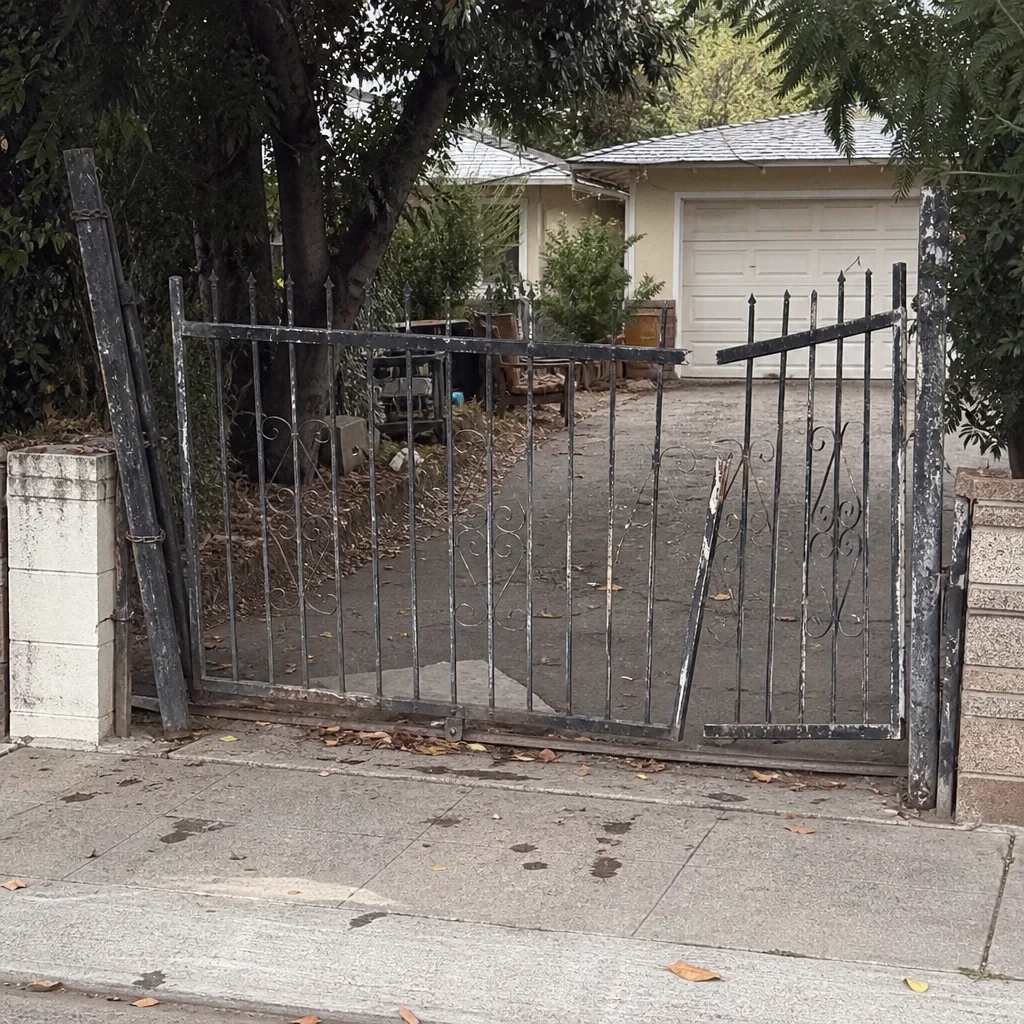
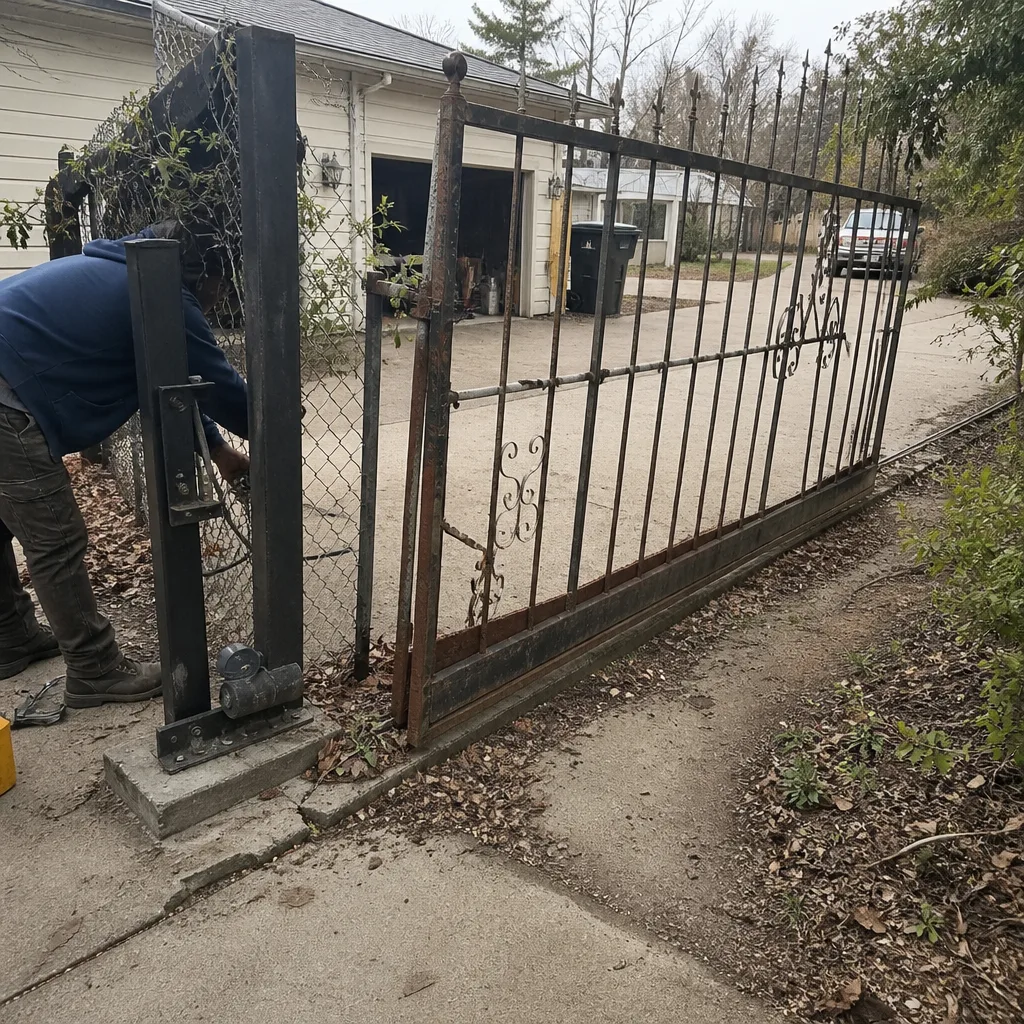 Before
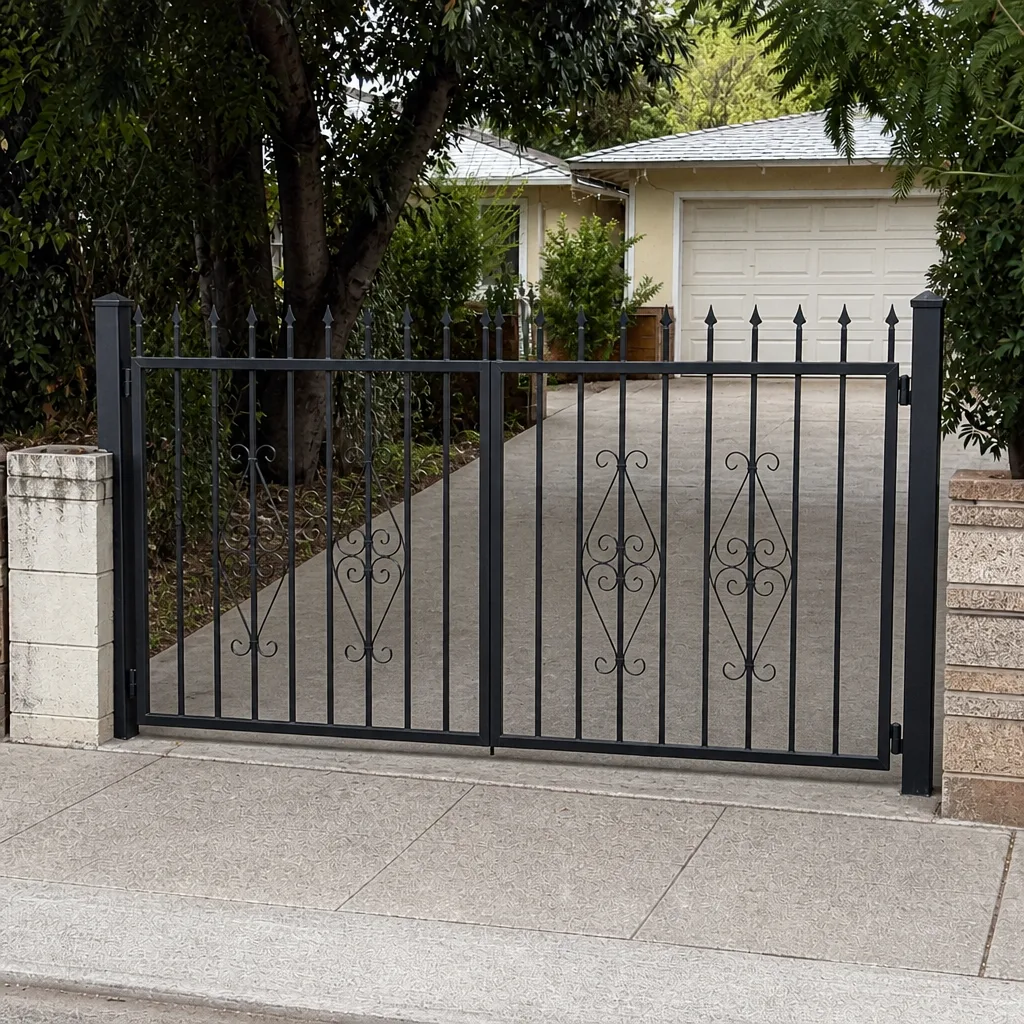
 After
 Before
 After
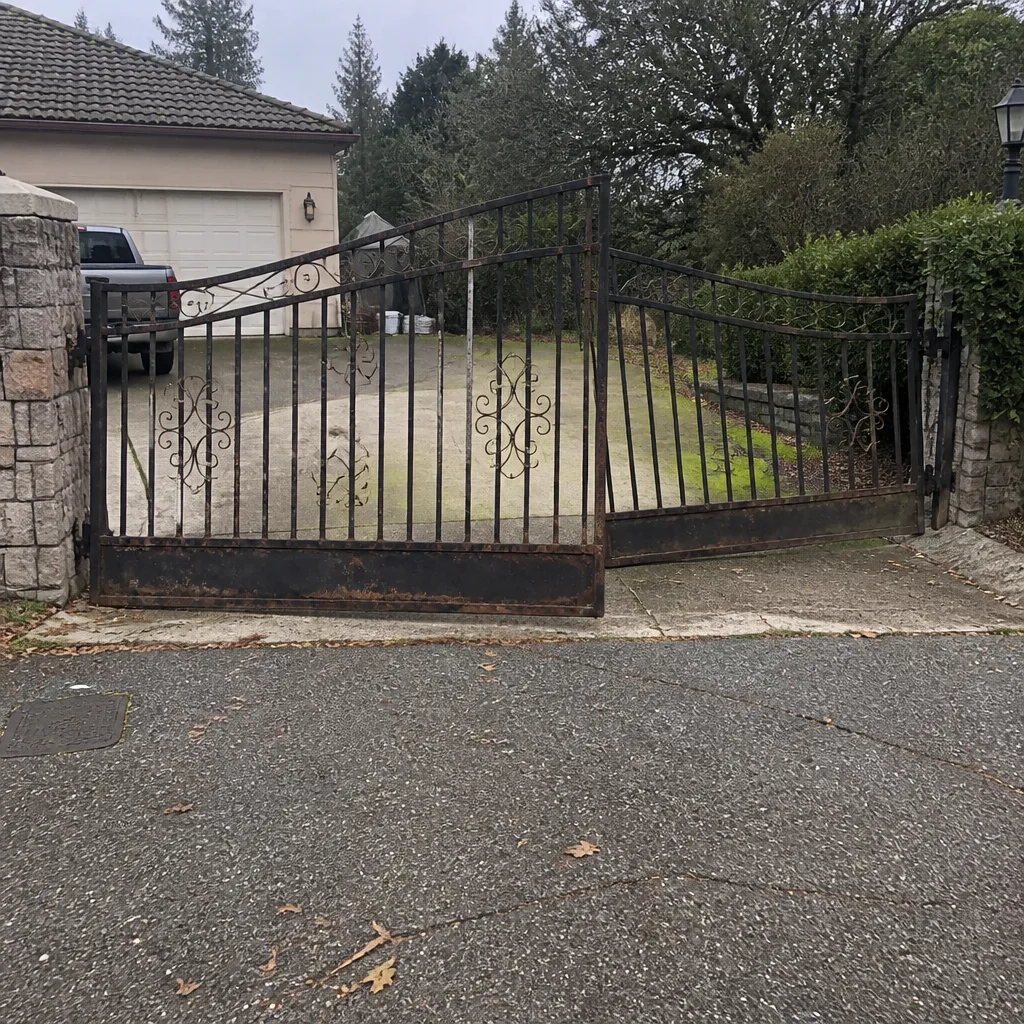 Before
 After