
Last updated November 4, 2026
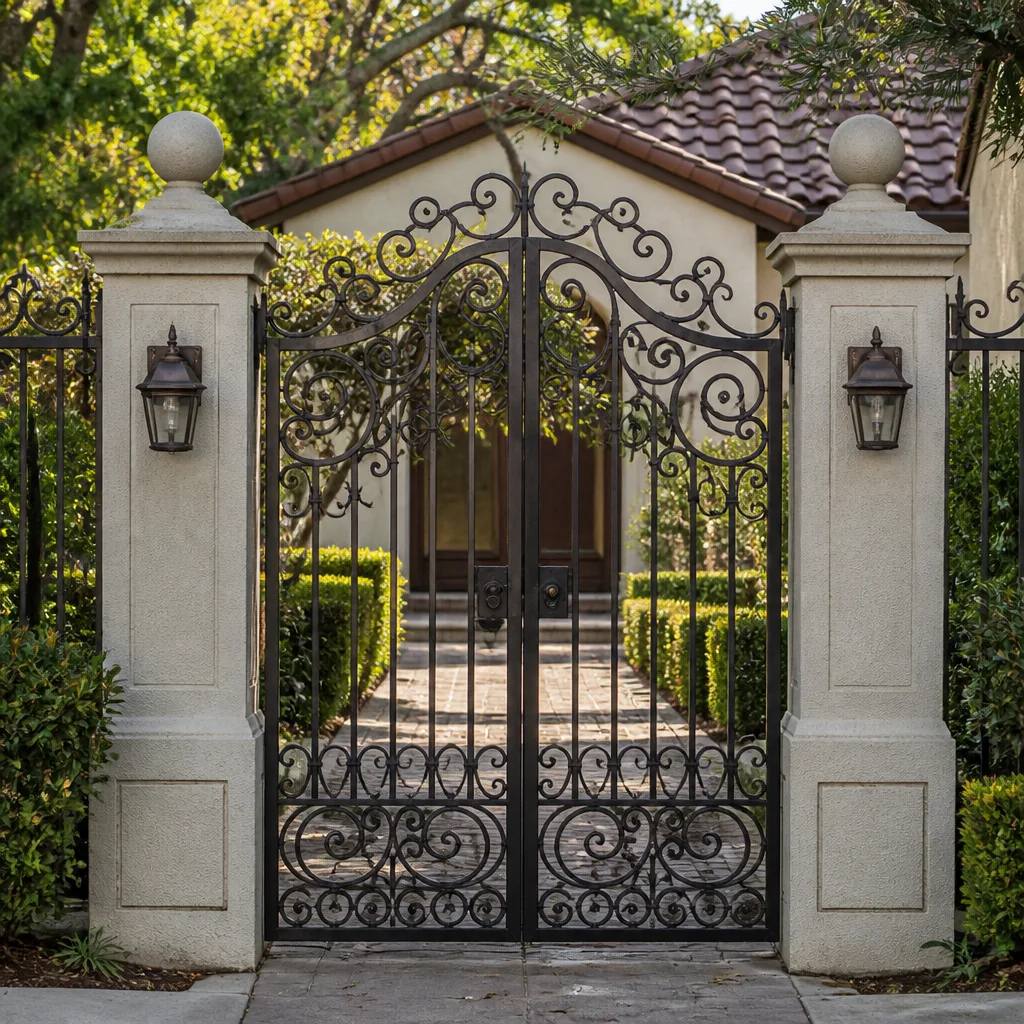 Wrought iron
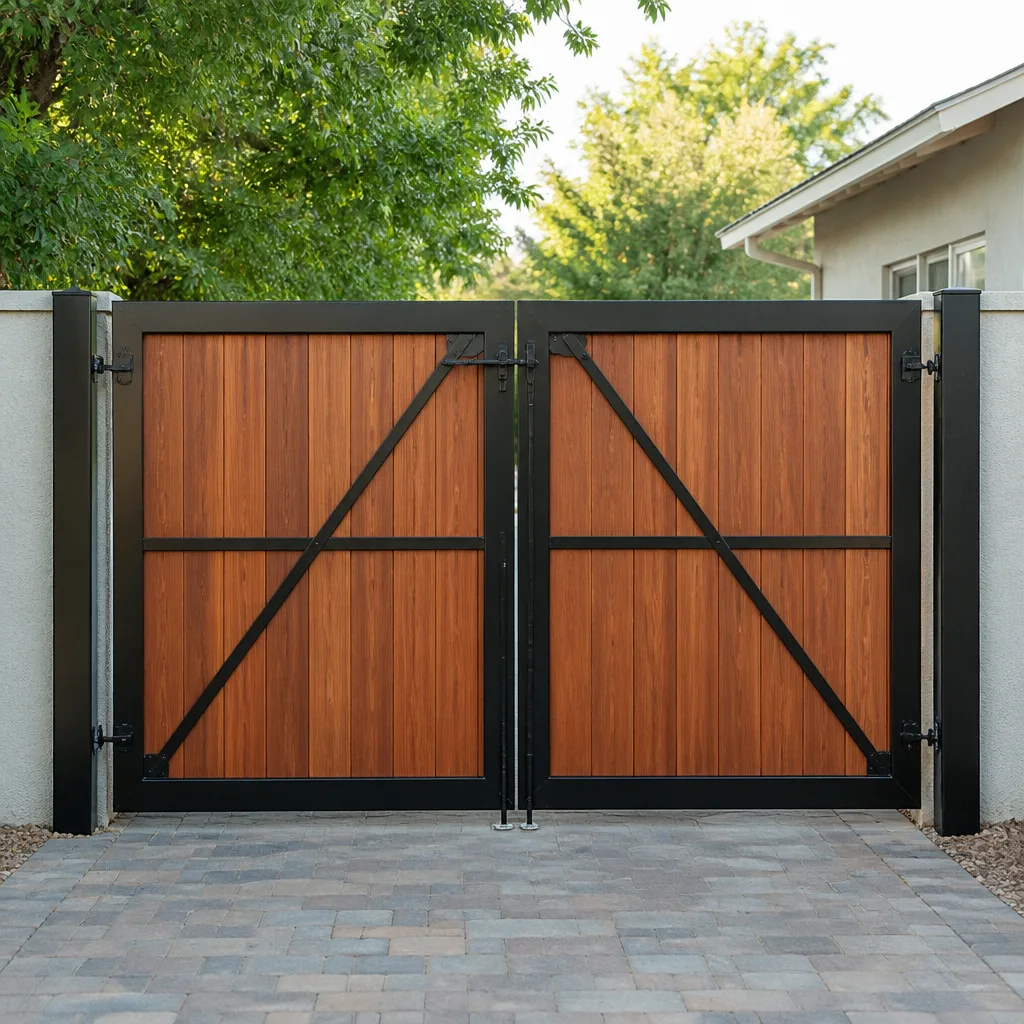 Wood & steel frame
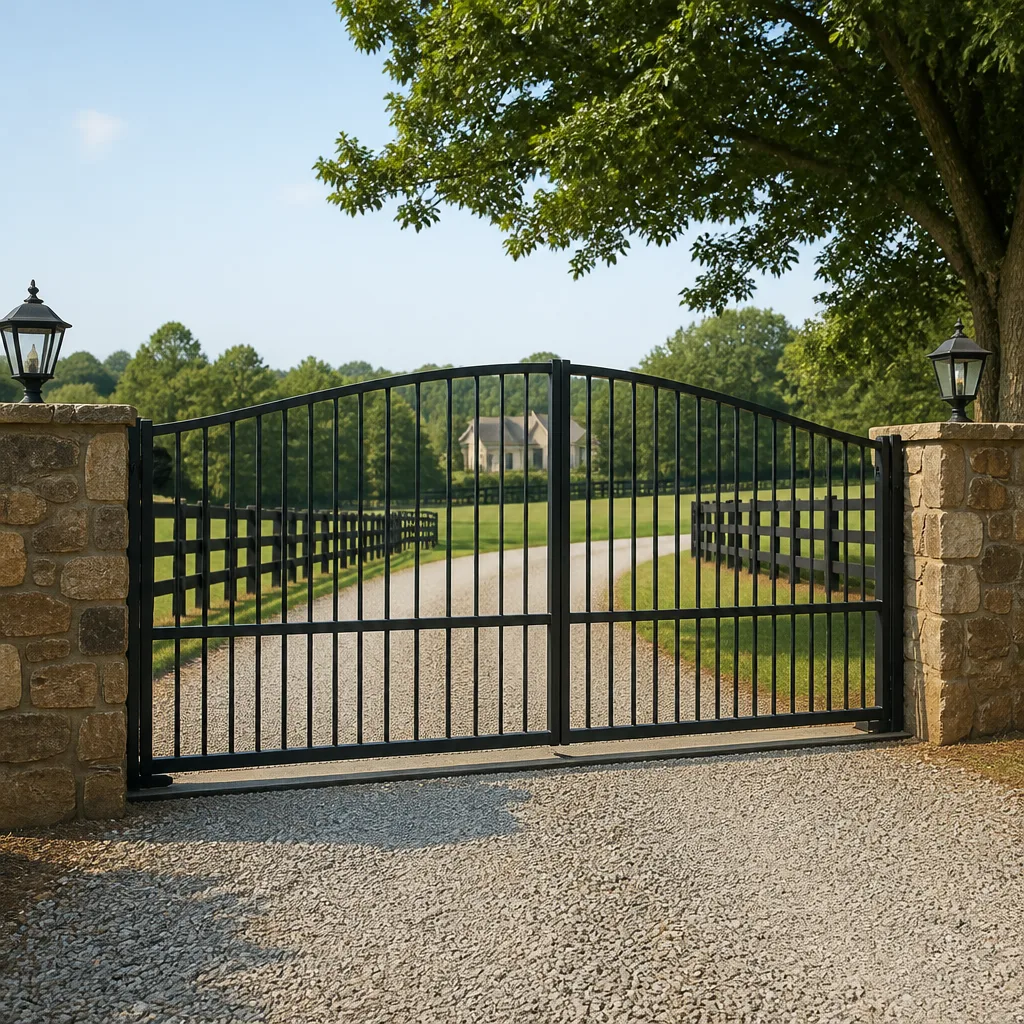 Farm & ranch
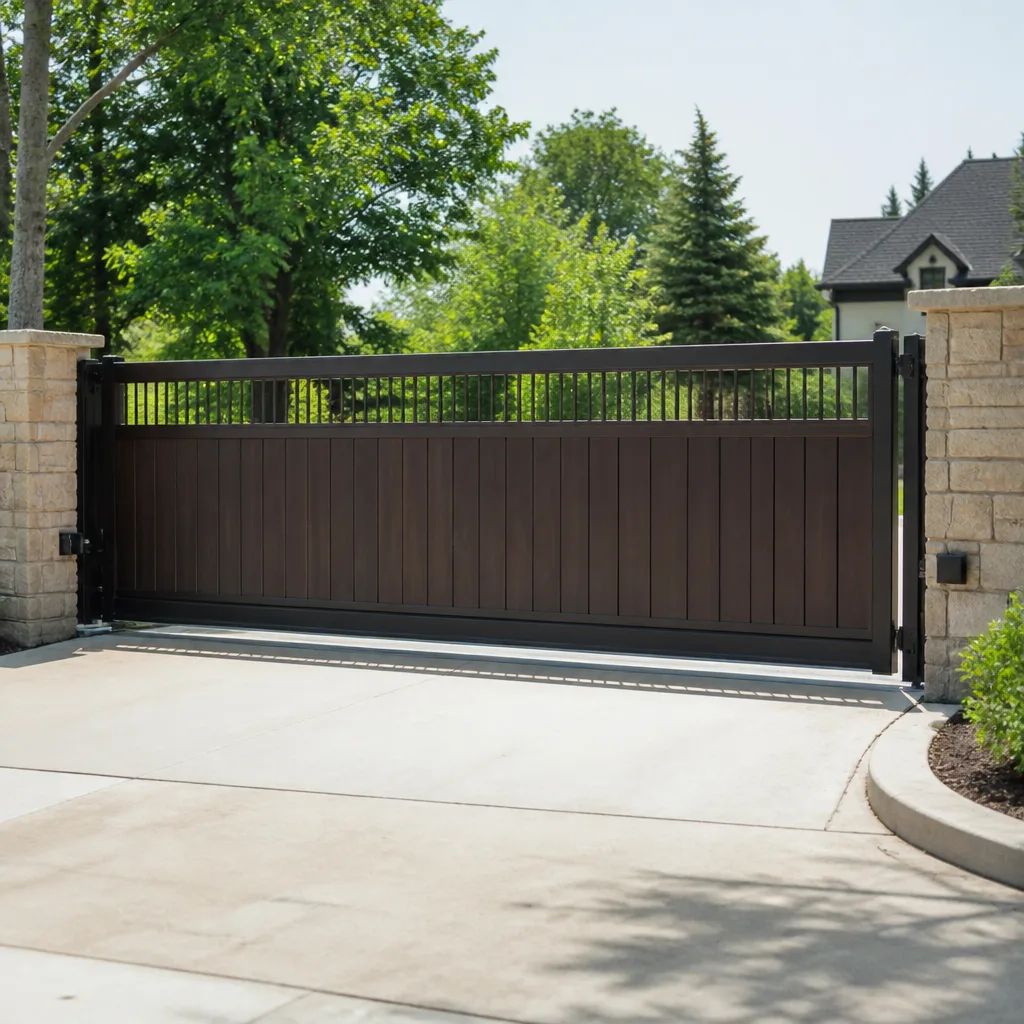 Sliding driveway gates
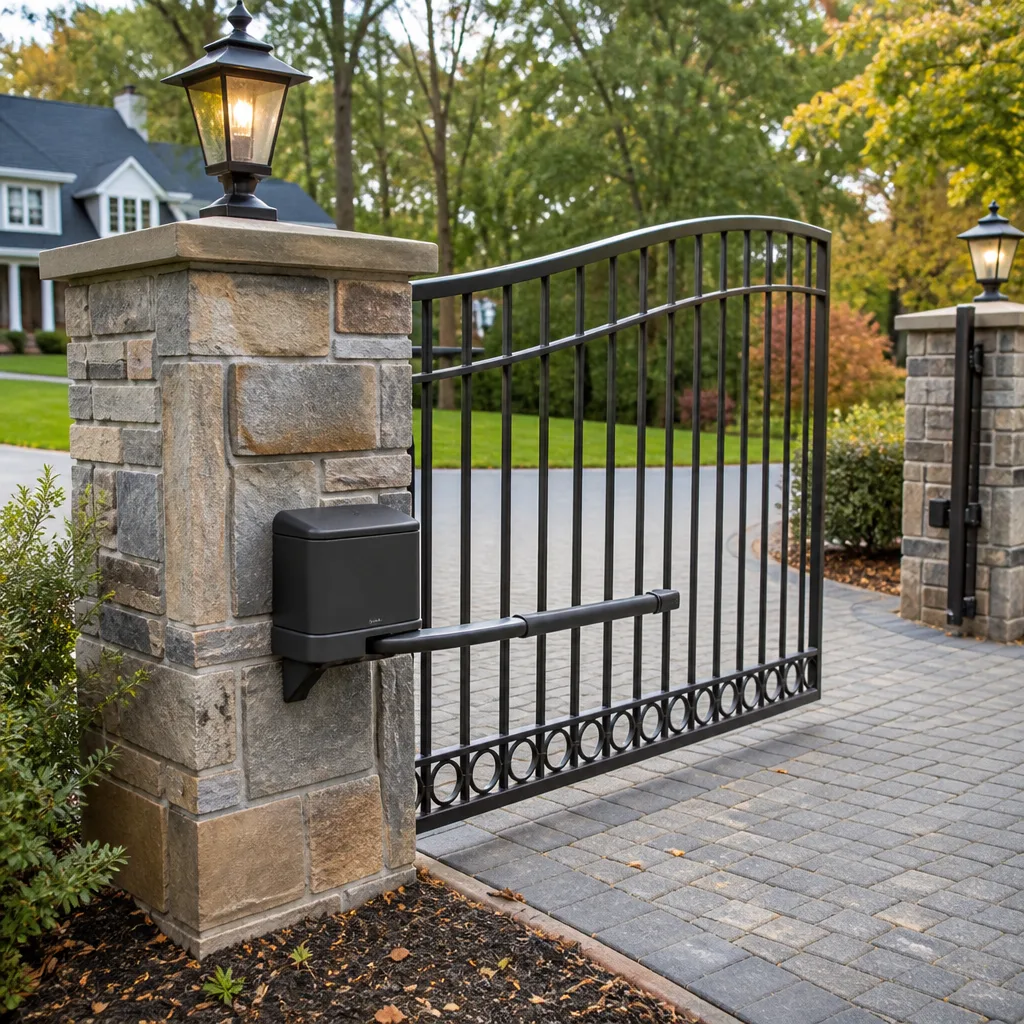 LiftMaster operators
Free on-site gate assessment - hinges, posts, and your LiftMaster or Nice gate operator checked before anything is quoted
The assessment is free and the quote is the invoice.
Get your free estimateGate Repair Warning Signs: An Evergreen Homeowner’s Reference Guide
A gate that reverses for no apparent reason isn’t malfunctioning randomly. It’s detecting an obstacle or reading a force limit it can’t overcome, and those two causes require opposite fixes. Calling them the same problem wastes a service visit. This guide decodes symptoms by gate type so Evergreen homeowners can accurately describe what’s happening before picking up the phone.
Styles & brands we work with
- Wrought iron
- Wood & steel frame
- Farm & ranch
- Sliding driveway gates
- LiftMaster operators
Quick Answer
The most common gate warning signs are grinding or clicking noises from the operator, slow or jerky movement, a gate that reverses mid-cycle, sagging hinges, worn rack teeth, and control board indicator lights flashing in patterns. A grinding noise from a swing gate points to mechanical resistance at the hinge or operator arm. The same noise from a slide gate usually means rack-and-pinion wear. Either way, accurately reporting the sound and the gate type gets you a faster, more accurate diagnosis.
Table of Contents
- Symptom Translation: What Each Noise Means by Operator Type
- Why Your Gate Moves Slowly: Mechanical Resistance vs. Operator Programming
- Intermittent Failures: Why a Gate That Works Most of the Time Is the Most Urgent Warning
- Visual Inspection Signs Every Homeowner Can Identify
- The Escalation Threshold: Same-Week vs. Same-Day Service
- Brand-Specific Warning Signs: Linear, Viking, Ghost Controls, and DoorKing
- Common Mistakes to Avoid
- When to Call a Professional
- Frequently Asked Questions
- The Bottom Line
Symptom Translation: What Each Noise Means by Operator Type
Most gate failures announce themselves audibly weeks before they become full stops. The challenge for Evergreen homeowners is that identical sounds carry entirely different meanings depending on the operator type and gate style. A humming sound from a hydraulic operator is often the pump running without building pressure. The same hum from an electromechanical unit typically indicates the motor spinning against a stripped gear or a bound chain. Knowing which system you have is the first diagnostic step, and it’s the main reason our gate repair process starts with identifying the make and model rather than guessing.
Here is the symptom translation table we use when homeowners call us in Evergreen:
- Grinding from a swing gate: mechanical resistance at the hinge, a failing operator arm bearing, or the arm mounting plate pulling loose from the post.
- Grinding from a slide gate: rack teeth wearing against a misaligned pinion, or debris packed into the V-track rollers.
- Clicking with no movement: the control board is sending a start signal but the capacitor or motor can’t engage. Common on older electromechanical arms.
- Humming with no movement: hydraulic systems mean low fluid or a bypassing pump. Electromechanical systems mean a stripped gear or a seized drive shaft.
- Silence when you press the remote: power loss, a dead battery in the transmitter, a blown control board fuse, or the photo eye misaligned and blocking the command.
- Rapid clicking or chattering: often a relay on the control board cycling, or a limit switch that has drifted out of position so the board can’t tell where the gate is.
Evergreen’s dry summers and mild winters mean the mechanical components of your gate face less weather stress than they would in harsher climates, but that doesn’t mean wear doesn’t happen. Dust and fine grit from dry spells work into bearings and rollers, accelerating the same wear patterns you’d see anywhere else. When a homeowner calls and says “it grinds but still opens,” we know to look for a specific failure point before anything else.
Why Your Gate Moves Slowly: Mechanical Resistance vs. Operator Programming
A gate that has gradually slowed over months is telling you something specific. The question is whether the resistance is physical or programmed. Getting this wrong leads to the most common expensive mistake in the industry: replacing a motor when the actual problem is a binding hinge or a dry roller.
Here’s how to tell the difference. A mechanical resistance problem almost never appears suddenly. It builds. The gate opens a little slower each week. You might hear a low groan or feel resistance if you try to push the gate manually (with the operator disengaged). The motor is working harder because something is physically fighting it. Common Evergreen culprits include hinge bosses that have shifted out of alignment on stone columns, V-track wheels that have worn flat spots from years of use, and rack sections that have settled unevenly on a concrete pad.
A programming issue behaves differently. The gate moves at a consistent speed, but that speed is just slow. It doesn’t get progressively worse. The motor isn’t straining. The movement is smooth, just unhurried. This happens when the speed settings on the control board were configured for a different gate weight or length, or when a new board was installed and never properly calibrated to the gate’s travel. Some operators also have a “soft start” and “soft stop” feature that, when misconfigured, makes the entire travel sluggish.
Replacing a motor for a programming issue solves nothing. The new motor will run at the same misconfigured speed. Replacing a motor for a mechanical resistance issue might work temporarily, because the new motor is stronger than the old worn one, but it will burn out faster than the original. The repair-first approach we take at Atlas Gate Repair means we check the physical movement first, then the board settings, and only then consider component replacement.
Intermittent Failures: Why a Gate That Works Most of the Time Is the Most Urgent Warning
A gate that is completely dead is actually easier to diagnose than one that works most of the time. When nothing moves at all, the failure is consistent, and a technician can trace it methodically. An intermittent failure is a ghost. It appears, disappears, and resists capture. It is also the most common precursor to a gate that locks a family out of their driveway or, worse, fails in the open position and leaves a property unsecured overnight.
Intermittent failures break down into a few predictable categories. The most common is a failing limit switch. These switches tell the control board where the gate is in its travel. When they wear, the gate might stop six inches short of the closed position, reverse unexpectedly, or refuse to respond on the first remote press but work on the third. A second category is a loose or corroding wire connection, often at the terminal strip inside the operator housing. Vibration from daily use loosens the screws, and the circuit opens and closes randomly. A third category is heat. On hot Evergreen afternoons, an aging capacitor can overheat and temporarily fail, then work again once it cools in the evening.
The urgency here is real. An intermittent limit switch can fail permanently at the worst moment. A loose wire can arc and damage a control board that would have cost a fraction of that to prevent. If your gate misbehaves in a way you can’t reproduce on command, that is not a reason to wait. It is the specific signal that the failure is about to become permanent.
Visual Inspection Signs Every Homeowner Can Identify
You don’t need to be a technician to read your gate’s body language. Some of the most useful diagnostic information comes from a two-minute visual check before you call for electric gate repair. Here are the signs we ask homeowners to look for when they call us in Evergreen.
- Hinge gap geometry: Look at the gap between the gate leaf and the post at the hinge side. It should be uniform top to bottom. If the gap is wider at the top than the bottom, the gate is sagging and the hinge or the post is failing. If the gap is wider at the bottom, the gate is riding up, which usually means the bottom hinge is worn.
- Rack wear patterns: On a slide gate, crouch down and look at the rack teeth along the bottom rail. Healthy teeth have flat tops and crisp edges. Worn teeth look sharp or pointed, or they have a polished groove on one side. If you see metal shavings on the ground near the rack, that is active wear happening right now.
- Control board indicator lights: Most modern operators, including Linear, Viking, Ghost Controls, and DoorKing units, have diagnostic LEDs on the board. A steady green light usually means power is good. A blinking red light is often a fault code. The pattern of the blink matters. Note the color and the blink count before you call us, and the diagnosis goes faster.
- Roller and track condition: For slide gates, check the V-track wheels. Flat spots cause a rhythmic thump during travel. Check the track itself for packed dirt or debris, especially after our dry, dusty summer stretches.
- Operator arm mounting: On swing gates with an articulated arm operator, look at where the arm bolts to the post and the gate. Any gap between the mounting plate and the surface, any cracked weld, or any visible movement when the gate runs is a warning that the mount is failing.
- Battery and power indicators: If your system has battery backup, look for a low-battery indicator. A battery that no longer holds a charge will cause intermittent failures that are often blamed on the remote or the board.
These checks take minutes. They don’t replace a professional diagnosis, but they give you the vocabulary to describe what’s happening accurately. A homeowner who calls and says “the green light is solid but the gate hit the close limit and reversed” gives us a head start before we even dispatch to Evergreen.
The Escalation Threshold: Same-Week vs. Same-Day Service
Not every warning sign is an emergency. But some are, and knowing the difference helps you prioritize correctly and avoid turning a repair into a replacement.
Same-week service is appropriate for: a gate that moves slowly but consistently; clicking that happens occasionally; worn rack teeth that are visible but not yet causing misalignment; sagging that has developed gradually; and remote range that has shortened over months. These issues are real, they will get worse, and they should be scheduled without delay, but they don’t create an immediate safety or security problem.
Same-day service is warranted for: a gate that stays open and won’t close; a gate that closes but won’t latch or fully seat; a gate that reverses violently and unpredictably; any sign of sparking, burning smell, or smoke from the operator; an entrapment event where the gate closed on a person, pet, or vehicle; or a gate that the property relies on for security that has failed. In these cases, waiting a week isn’t just inconvenient. It’s a genuine security gap or a safety hazard.
Entrapment risk deserves special emphasis. If your gate has ever reversed and then continued anyway, even once, that is a force limit problem and it is an emergency. The force limit is the safety mechanism that tells the operator to stop and reverse when it hits resistance. If that mechanism is failing, the gate can close with enough force to injure someone. This is a same-day call, no exceptions. Call (833) 589-9356. We answer 24/7. Fast dispatch from 7am to 7pm, Sunday through Friday.
Brand-Specific Warning Signs: Linear, Viking, Ghost Controls, and DoorKing
Different brands fail in different ways, and knowing your brand helps narrow the diagnosis before a technician ever arrives. Our technicians are familiar with nine major gate brands, including the four most common in Evergreen.
Linear operators are common on residential slide gates. We see the same failure patterns repeatedly in Evergreen: limit switches that drift, causing the gate to stop short or overrun; relay chatter on the control board as the unit ages; and capacitor failure in hot weather. A Linear unit that starts and then stops after a few inches is classically a limit switch or a capacitor, not a motor failure.
Viking operators are heavier-duty, often found on commercial or estate properties. The warning signs we see most are hydraulic fluid leaks (look for a dark stain on the operator pad), pressure switch failures that cause the gate to reverse before it reaches the limit, and bushing wear on the drive arm. A Viking that hums and doesn’t move is often low on hydraulic fluid or has a bypassing pump.
Ghost Controls makes popular DIY-friendly residential swing gate operators. The most common warning sign is a gate that stops mid-travel and beeps or flashes a code. This is frequently a battery voltage issue or a force setting that needs recalibration. Ghost Controls units are also sensitive to a gate that has drifted out of level, which increases the force required to move it and triggers the safety stop.
DoorKing is the workhorse of commercial and multi-family access control in Evergreen. We see aging control boards with failing relays (the gate clicks but nothing happens), worn chain sprockets on slide gate models, and worn limit switches on older units. DoorKing systems often serve HOA communities, which means a failure affects dozens of residents, not just one family. The warning signs are the same as residential, but the urgency is multiplied.
Whether your system runs Linear, Viking, Ghost Controls, or DoorKing, we already know it. That’s the difference between a general handyman who shows up and reads the manual on your driveway and a specialist who arrives with the diagnostic pattern already in mind.
Common Mistakes to Avoid
- Ignoring a slow gate because it still works. A gate that moves slowly is working against resistance. The resistance is wearing components faster than normal operation would. Every week you wait adds weeks of wear.
- Replacing the remote before checking the operator. A gate that doesn’t respond to the remote is usually not a remote problem. The remote’s battery is a $2 check. The operator’s receiver board is a more likely and more expensive culprit. Test with a second remote before assuming anything.
- Spraying lubricant into the operator housing. Grease and oil inside the operator attract dust, and Evergreen has plenty of fine dust in the dry months. That dust becomes an abrasive paste on the gears and electronics. Operators are designed to run with internal lubrication at the factory. Adding more from the outside is rarely correct.
- Pushing a gate manually without disengaging the operator. If you force a swing gate against a still-engaged operator arm, you can bend the arm or strip the internal gear. Most operators have a manual release lever. Use it before pushing.
- Ignoring a gate that sags but still opens. Sag is a structural warning, not a cosmetic one. A sagging gate puts uneven load on the operator, wears hinges asymmetrically, and eventually binds completely. The fix is smaller than you think early on and bigger than you want later.
- Thinking a gate that works “fine” after a failure doesn’t need attention. The failure happened. That means a component reached a failure threshold once. It will reach it again, and the gap between failures will shorten. A gate that fixed itself didn’t fix anything.
When to Call a Professional
Call a professional when your gate makes a sound it didn’t make before, moves differently than it did last month, or fails in a way you can’t explain. Don’t wait for the full stop. The repair is almost always smaller and cheaper when the warning sign is fresh. If your gate has failed in the open position, if it closes with excessive force, or if you see or smell electrical burning, don’t wait at all. Those are same-day situations. Atlas Gate Repair offers free estimates in Evergreen. Call (833) 589-9356. We answer 24/7. Fast dispatch from 7am to 7pm, Sunday through Friday. The estimate is free, and the price is set by the written estimate before any work starts.
Frequently Asked Questions
Gate repair costs vary by the system and the failure, so we quote per job after we look at the gate. A limit switch replacement or remote reprogramming is typically less than a full operator replacement or a hinge rebuild. The estimate is free. Call (833) 589-9356 for a written price.
We answer 24/7. Fast dispatch from 7am to 7pm, Sunday through Friday. A gate stuck open is a security issue, so we treat it as a priority in Evergreen. Call (833) 589-9356 and describe what’s happening, and we’ll book you into the next opening.
We specialize in nine major gate brands, including LiftMaster, FAAC, BFT, Linear, Viking, Ghost Controls, DoorKing, Elite, and Mighty Mule. Whether your system is residential or commercial, we already know the brand-specific failure patterns. We don’t learn on your gate.
We do both. Our focus is repair-first, which means we tell you honestly whether a fix is the right call or whether a replacement makes more sense for the age and condition of the gate. We never push a replacement when a repair will do.
A gate that closes too hard has a force limit or safety edge problem, and that is an entrapment risk. Don’t keep using the gate. Call (833) 589-9356. We answer 24/7. This is a same-day issue.
Electric gate repair is a core specialty, not an add-on. We cover the full spectrum of automated and access-control systems, from control boards and photo eyes to battery backup and operator arms. Electric gate repair is where most of our Evergreen service calls start.
The Bottom Line
Gate failure rarely comes without warning. The warning is in the noise, the speed, the sag, and the little inconsistencies that are easy to dismiss. Learn to read those signals. Note the sound, the gate type, and the conditions when it happens. Call when the warning is fresh, not when the gate has fully failed. The difference is almost always a smaller repair and a shorter disruption. Atlas Gate Repair serves Evergreen with a repair-first approach and free estimates. Call (833) 589-9356. We answer 24/7. Fast dispatch from 7am to 7pm, Sunday through Friday.
Written by the team at Atlas Gate Repair, serving Evergreen since 2017.
See the difference
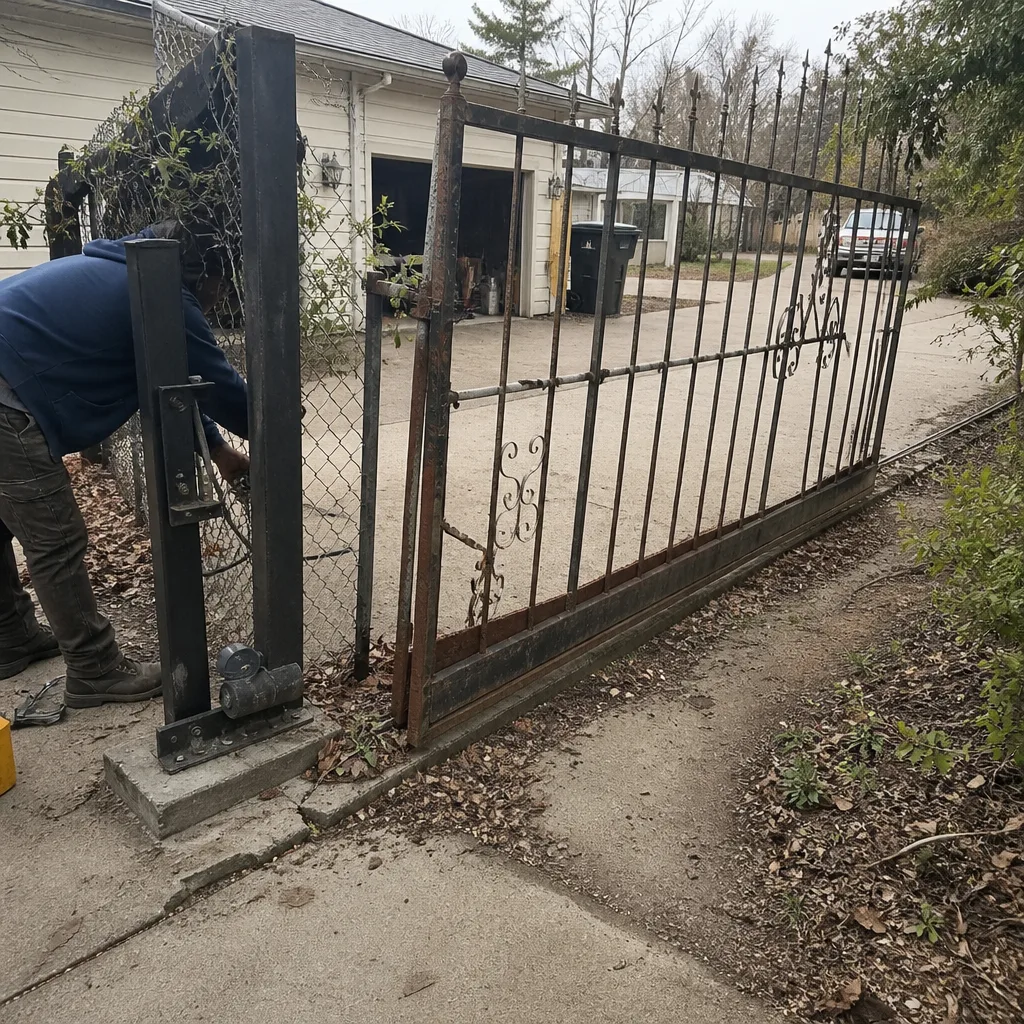 Before
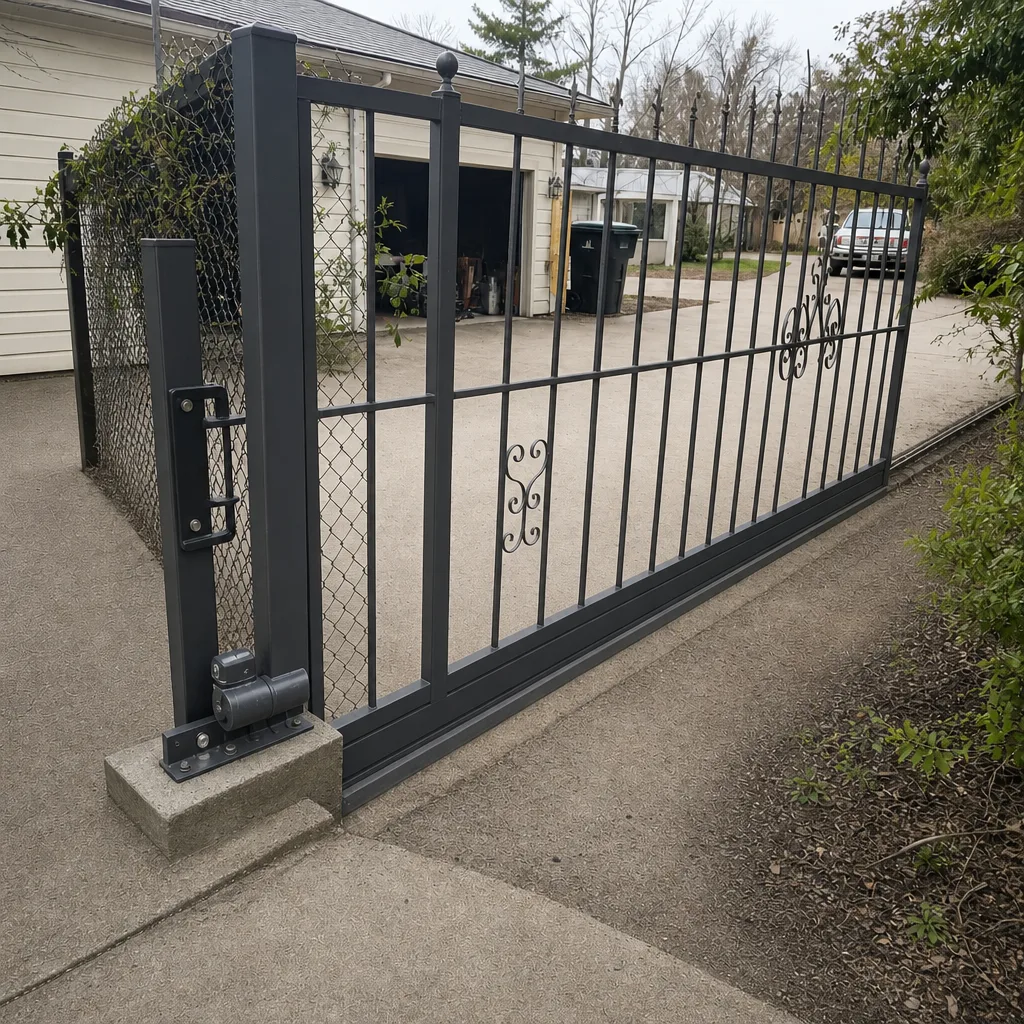 After
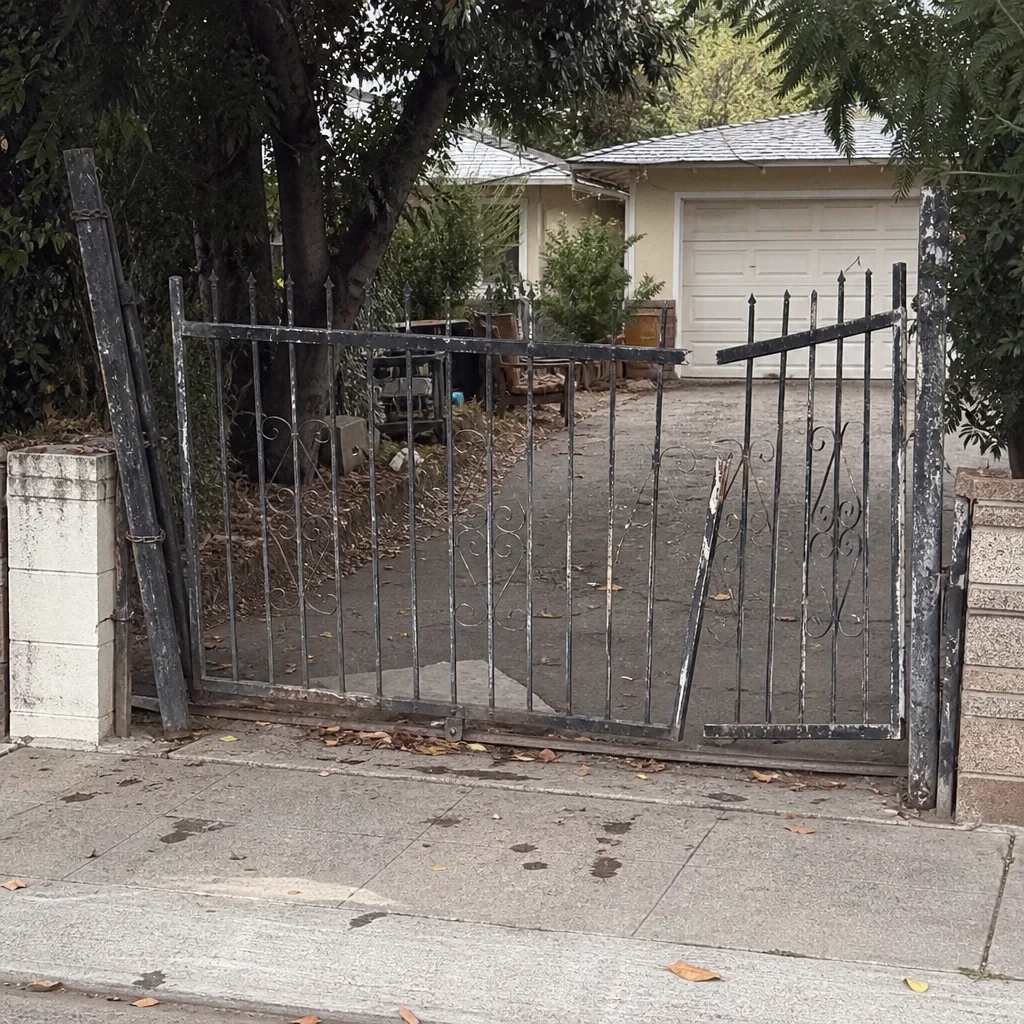 Before
 After
 Before
 After