
Last updated November 4, 2026
 Wrought iron
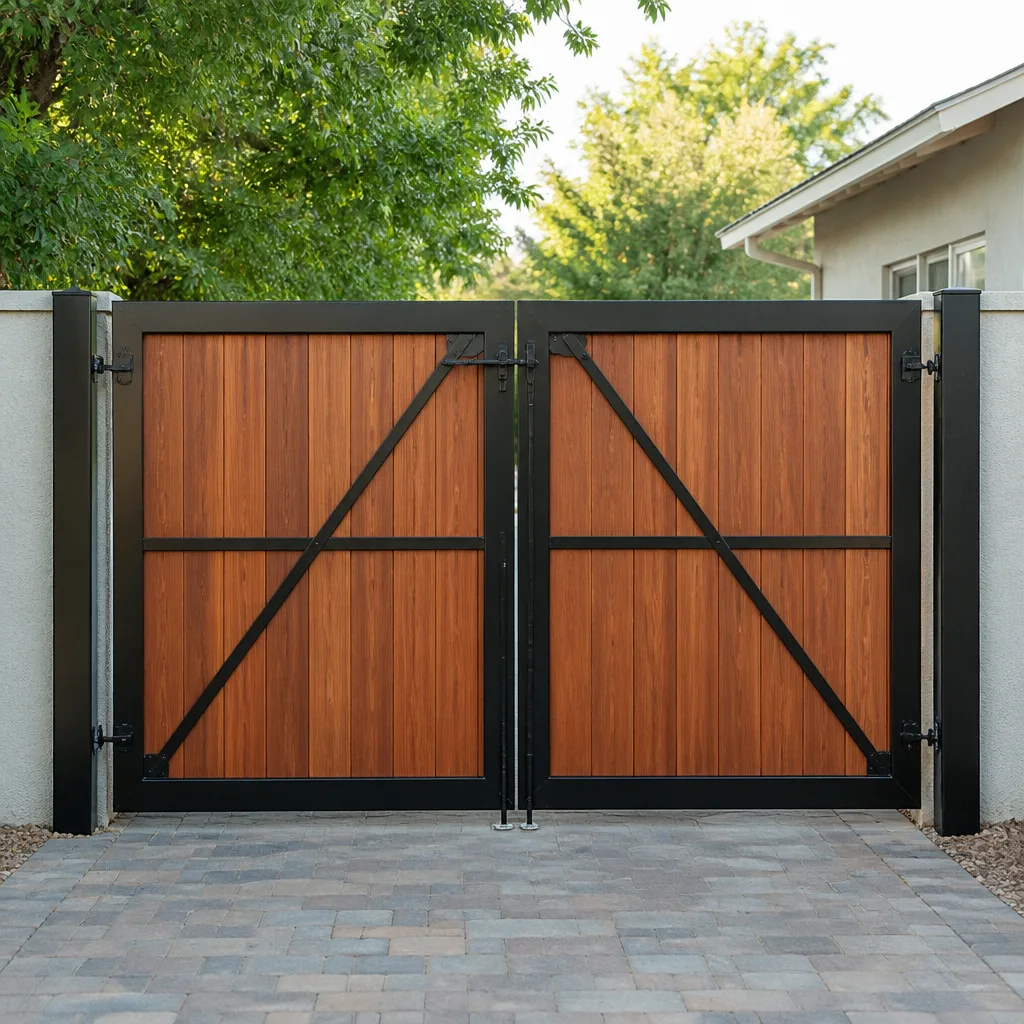 Wood & steel frame
 Farm & ranch
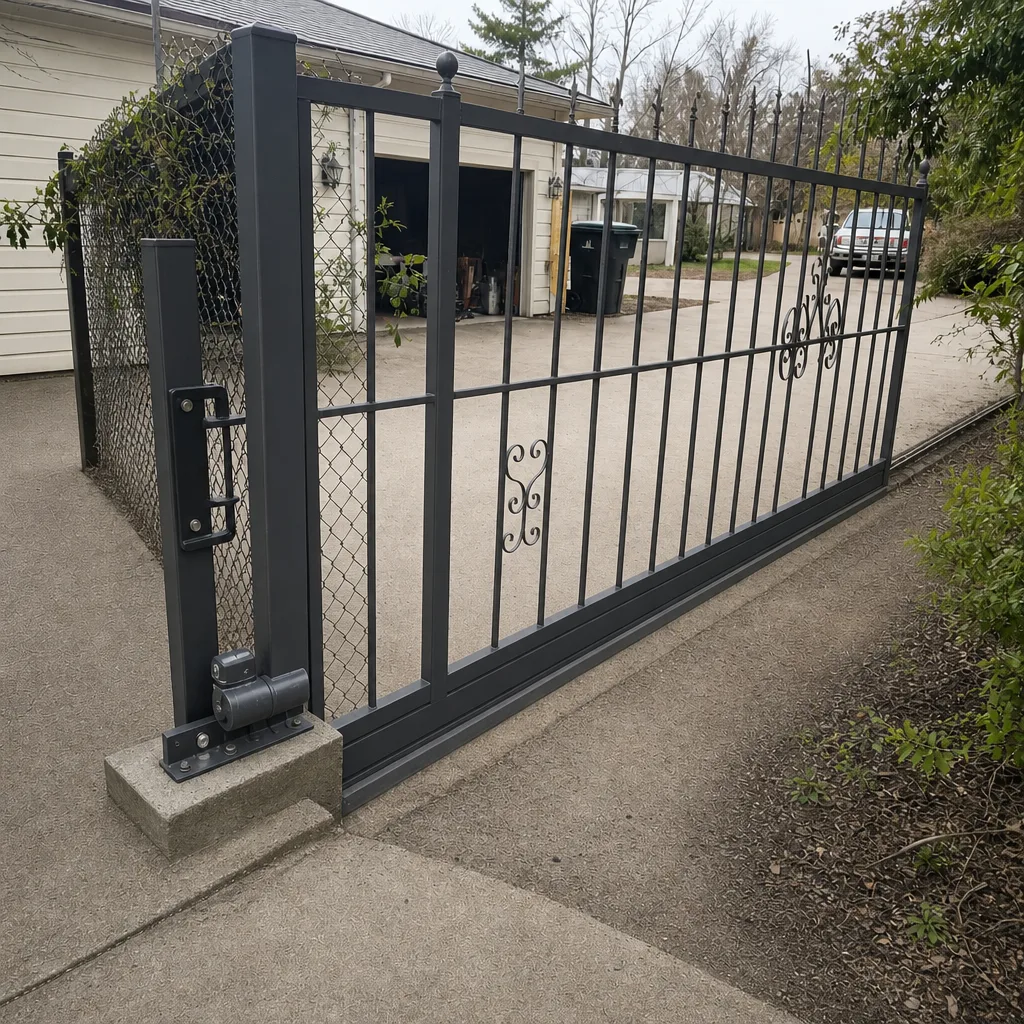
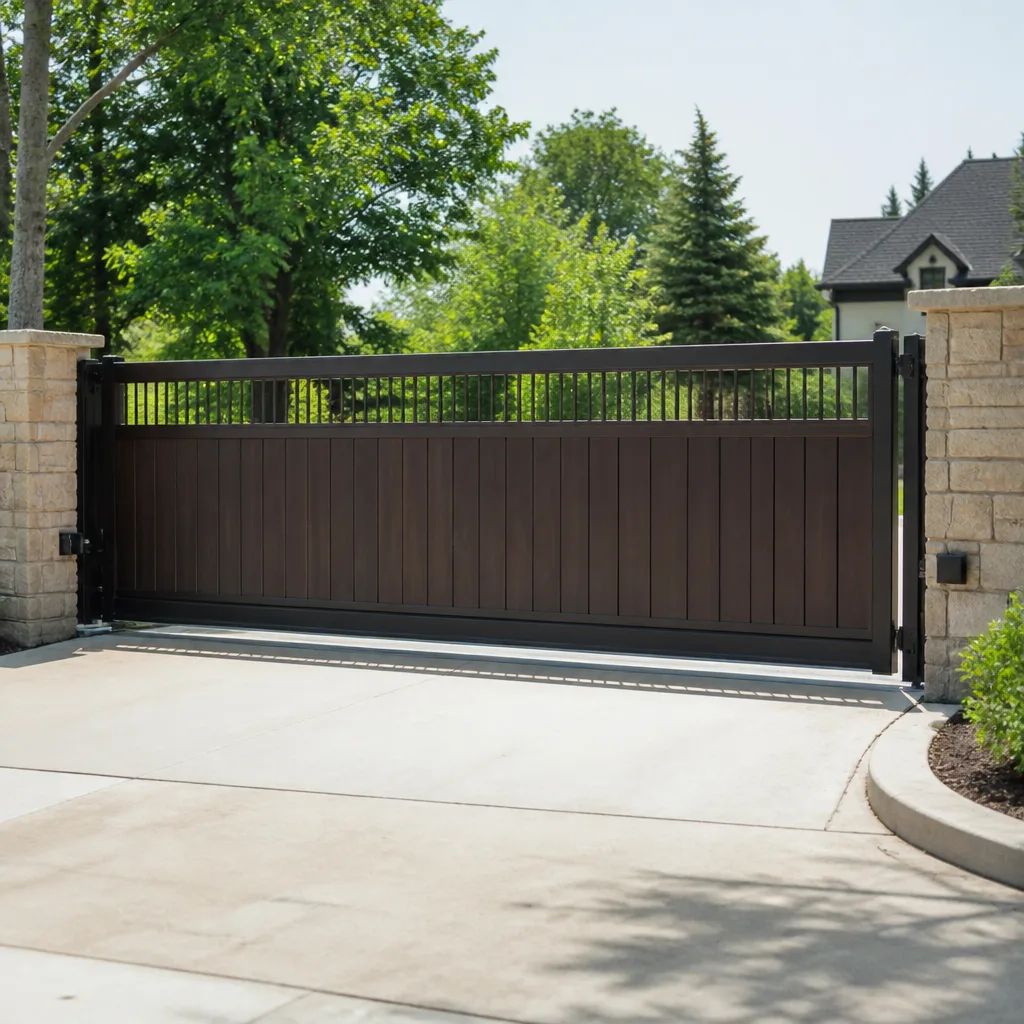 Sliding driveway gates
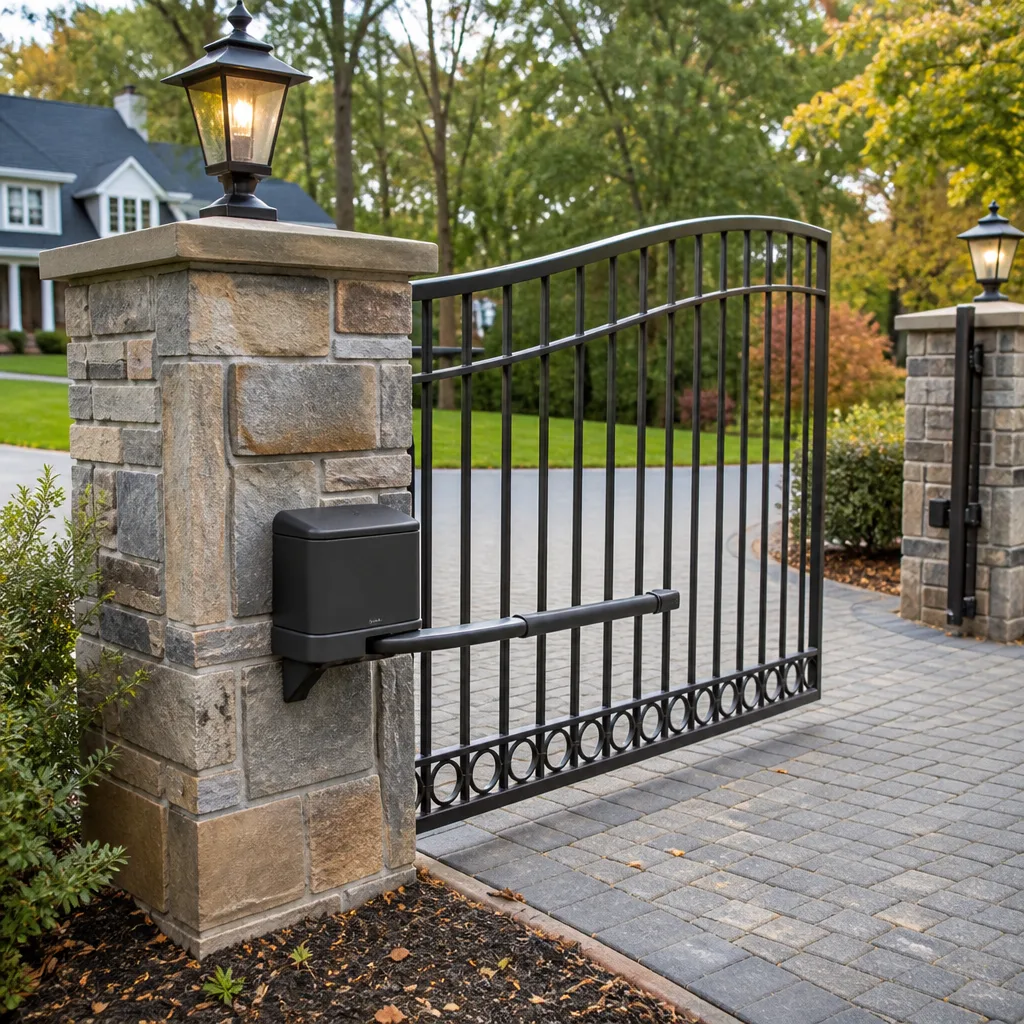 LiftMaster operators
Free on-site gate assessment - hinges, posts, and your LiftMaster or Nice gate operator checked before anything is quoted
The assessment is free and the quote is the invoice.
Get your free estimateSeasonal Gate Repair Care for Evergreen: Year-Round Homeowner’s Guide
The gate that runs perfectly in October often fails by January in Evergreen. The cause isn’t usually a sudden mechanical breakdown. It’s the slow shift of clay-heavy soil as winter rains saturate the ground, moving a post by as little as a quarter inch. That tiny movement is enough to bind a latch, scrape a slide gate against its track, or throw a swing gate out of alignment with its operator. Most homeowners don’t discover this until the gate refuses to open on a rainy Tuesday morning. This guide maps the specific seasonal pressure points on your gate system and the maintenance actions that prevent each one. By the end, you’ll know exactly what to check each season in Evergreen, what you can handle yourself, and what needs a trained hand.
Quick Answer
Seasonal gate care in Evergreen means aligning maintenance with two distinct pressure seasons: wet winters that swell clay soil and shift post foundations, and dry summers that bake rubber seals and wire insulation. In fall, clear debris from slide gate tracks and check safety sensors. In winter, watch for binding hinges and shifting posts after heavy rain. In spring, do a full alignment and torque check on every mounting bolt. In summer, inspect and protect exposed wiring and seals. The single most overlooked annual task is recalibrating the gate operator’s force limits and obstacle detection sensitivity after seasonal post movement, because a gate that binds slightly will trip sensors or, worse, push through with too much force.
Styles & brands we work with
- Wrought iron
- Wood & steel frame
- Farm & ranch
- Sliding driveway gates
- LiftMaster operators
Table of Contents
- Evergreen’s Seasonal Clock: Why Gates Fail on a Schedule
- Winter: Clay Soil Expansion and the Quarter-Inch Killer
- Spring: Post-Rain Assessment Protocol
- Summer: UV Degradation on Seals and Wire Insulation
- Fall: The Overlooked Debris Season for Slide Gates
- The Annual Task Most Evergreen Homeowners Skip: Force Limit Recalibration
- Common Mistakes to Avoid
- When to Call a Professional
- Frequently Asked Questions
Evergreen’s Seasonal Clock: Why Gates Fail on a Schedule
Gate failures in Evergreen don’t happen randomly. They cluster around two seasons because the local microclimate pushes gate components through predictable stress cycles. Summers here are dry, which desiccates rubber and plastic parts. Winters bring rain, which changes the very ground your gate is anchored to. Understanding this rhythm is the foundation of effective seasonal gate care.
The soil in much of Evergreen is clay-heavy. Clay absorbs water and expands when wet, then contracts and cracks when dry. In winter, saturated soil expands and shifts. A gate post set in that soil can move. The post itself doesn’t fail; it tilts or sinks by a fraction of an inch. That fraction is enough to transfer stress into the gate leaf, the hinges, the latch, and the operator’s mounting bracket. In summer, the opposite happens. The soil dries, contracts, and leaves small voids around the post. The gate may feel loose, and the operator works against changing geometry.
This is not a flaw in your gate. It’s a condition of the place. Evergreen homes with automated gates need a seasonal maintenance rhythm that accounts specifically for clay soil movement and prolonged dry heat. The good news is that a homeowner who knows what to watch for each season can catch most problems before they become calls for emergency repair.
We’ll walk through the calendar, season by season, focusing on the failure modes that actually occur here. This guide is written from our experience as a gate repair specialist serving Evergreen, and it reflects what we see across residential driveway gates and commercial access systems in this area.
Winter: Clay Soil Expansion and the Quarter-Inch Killer
Winter in Evergreen is mild but wet. Rain saturates the clay soil. That soil expands, and it expands unevenly. A post on one side of your driveway may sit in slightly different drainage conditions than the post on the other side. One moves. The other stays put. The gate no longer closes square.
The specific failure depends on your gate type.
Swing Gates and Post-Mounted Operators
A swing gate with a post-mounted operator, common with residential brands like Mighty Mule and Ghost Controls, transfers all its torque through the mounting post. When the post tilts even slightly, the operator’s arm applies force at an angle. The gate leaf drags or binds at the latch. The operator’s motor works harder. Over weeks, this burns out capacitors, strips gears, or trips the force limit repeatedly. Homeowners often replace the operator, but the operator was never the problem. The post moved.
What to check in winter:
- Open and close the gate manually. Feel for resistance that wasn’t there in October.
- Look at the gap between the gate leaf and the latch post. If it narrows at the top or bottom, the post has tilted.
- Listen to the operator. A labored sound, a change in pitch, or a pause before reversal is a sign of added load.
- Check the post base after heavy rain. Look for a visible gap between the post and the concrete collar or soil, or water pooling at the base.
Slide Gates and Pad-Mounted Motors
A slide gate operator typically sits on a concrete pad, separate from the gate track. If the concrete pad is sound, the motor stays aligned even when the soil shifts. The slide gate itself rolls on wheels along a track. When the track shifts with soil movement, the gate rides up, scrapes, or comes off the track entirely. Winter is when we see slide gates in Evergreen bind hardest.
What to check:
- Watch the gate move along its full travel. Does it wobble, scrape, or hesitate at any point?
- Check the wheels. Are they all contacting the track evenly, or is one floating or pressed hard?
- Inspect the track for a slight kink or a section where the gate rides up on the rail.
- Rain debris can wash fine clay onto the track. Wipe the track clean, but don’t lubricate it. A clean, dry track is what you want.
If you notice binding in either gate type, don’t force the gate. Operating a binding gate under power puts the full stress on the operator, the hinges, and the track. A small alignment correction early costs far less than replacing a burned-out motor later.
Spring: Post-Rain Assessment Protocol
Spring in Evergreen is the right time for a full seasonal inspection. The soil has absorbed the winter rain. Any movement that was going to happen has happened. The days are drying out, and the ground is settling back. This is the window to catch misalignment before summer heat adds its own stress.
Here is a step-by-step evaluation we follow on gate systems after a wet Evergreen winter:
- Check every hinge. Look for sag, play, or a hinge pin that has worked its way partially out. Swing gate hinges carry the entire weight of the leaf. A loose hinge accelerates wear on every other component.
- Inspect ground anchors. If your gate uses a ground anchor at the closed position, make sure the bolt seats cleanly. After soil saturation, an anchor that was set flush may sit proud or misaligned.
- Torque operator mounting bolts. The bolts that hold a gate operator to its post or pad can loosen as the post shifts. A loose mounting bolt lets the operator vibrate, which destroys gears and electronics faster than almost anything else.
- Check gate leaf gaps. Open and close the gate and watch the gap between the moving leaf and the fixed posts. A gap that changes through the arc of travel means the post has moved out of vertical.
- Test safety sensors. Block the path with a box or a trash can and close the gate. It should stop and reverse. If it doesn’t, the obstacle detection system needs recalibration or repair.
- Inspect the ground loop if you have one. A ground loop sensor detects a vehicle’s metal mass and holds the gate open. If the loop wire was disturbed by soil movement, the gate may close on a car or refuse to open as you approach.
Spring is also the season to address drainage at the gate posts. In Evergreen, where winter rain runs off hard-packed clay, water accumulates at low points around post bases. Standing water against a steel post accelerates rust. It also keeps the surrounding clay saturated longer, delaying the soil’s return to its dry-season state. If you find water pooling at the base of a post after a rain, grade the soil away or add a small drainage channel.
Summer: UV Degradation on Seals and Wire Insulation
Evergreen summers are dry and sunny. The sun here is the enemy of any polymer part. In our experience, the components that fail first in summer are the ones most homeowners never look at: rubber seals, plastic bushings, and the insulation on low-voltage wiring.
A gate operator’s wiring runs from the motor to the control board, to safety sensors, to the keypad or intercom. Wire insulation degrades under UV exposure. When the jacket cracks, moisture enters. Moisture plus electricity means corrosion, short circuits, and intermittent faults that are maddening to diagnose.
Seals fare no better. Weather stripping on the gate edges, rubber boots around limit switches, and the small gaskets that keep dust out of the operator housing all harden and split in extended sun exposure. Once a seal fails, dust and insects get into the operator. Dust clogs gears and reduces the lifespan of the motor. Insect nests, particularly from small wasps that favor warm enclosures, can short a control board.
What to check each summer:
- Run your hand along exposed wiring. If the insulation feels brittle, cracked, or powdery, schedule replacement before it shorts.
- Inspect the operator housing. If dust or debris is accumulating inside, the lid gasket may have failed. Clean the housing gently with compressed air and replace the gasket.
- Check all rubber boots and edge seals on the gate and around the operator.
- Look for corrosion on wire terminals, especially on low-voltage safety sensor connections.
- If your gate has a keypad, check that the face membrane hasn’t blistered from heat. A blistered keypad will eventually fail to register presses.
Heat also affects the operator’s duty cycle. On a 95-degree Evergreen afternoon, the motor runs hotter. Many residential operators are rated for intermittent duty. If the gate gets heavy use, summer is when thermal overload protection kicks in and the gate stops working until it cools down. If that happens regularly, the operator may be undersized for the weight and frequency of use, or the gate may be out of alignment and loading the motor unnecessarily.
Fall: The Overlooked Debris Season for Slide Gates
Fall gets less attention than summer heat or winter rain, but in Evergreen it has its own failure pattern. Leaves, seed pods, and fine organic debris accumulate in slide gate tracks. A shallow V-track fills with material. The gate wheels roll over compacted debris, which lifts the gate slightly off its intended path. Lifting changes the alignment at the gear rack and the operator sprocket. The result is grinding noise, stripped rack teeth, or a gate that jerks through its travel.
Debris also affects safety loop sensors. A ground loop sensor buried near the gate detects metal mass. It’s not physically affected by leaves, but heavy organic accumulation can shift the soil above the loop, changing the detection field’s sensitivity. More commonly, debris piles up against the safety edges on the gate’s leading edge. If a pressure-sensitive edge is blocked or cushioned by packed debris, it may not trigger when it meets an obstruction.
Fall maintenance for slide gates:
- Clear the track weekly during leaf fall. Use a brush or a shop vacuum. Do not use water during dry weeks; it turns debris into a paste that hardens in the track.
- Check the drive sprocket and gear rack. A buildup of crushed leaf matter on the rack teeth causes the sprocket to ride up and skip. Clean the teeth with a stiff brush.
- Walk the full path of the gate. Remove stones, twigs, or seed pods that have fallen into the wheel path.
- Inspect the safety edge. Make sure it’s firmly attached and free of debris along its full length.
- Check the drain holes in the operator housing. A blocked drain hole traps condensation inside, which accelerates corrosion on the control board.
For swing gates, fall debris is less of a track issue but worth a look around the hinge area. Packed leaf litter against a hinge pin retains moisture through the entire wet season. Rust at the hinge accelerates wear and eventually causes sag.
The Annual Task Most Evergreen Homeowners Skip: Force Limit Recalibration
Almost every automated gate has a force limit adjustment and an obstacle detection sensitivity setting. The force limit controls how hard the operator pushes before it stops. Obstacle detection controls what the operator interprets as a blocked path. Both settings are set at installation. Both settings assume the gate moves freely on a stable foundation.
In Evergreen, the gate does not always move freely after a winter of soil shift or a summer of settling. The operator, meanwhile, keeps pushing with the force it was programmed to use. If the gate binds slightly and the force limit is set too high, the gate pushes through the binding point. That repeated stress eventually distorts hinges, strips gears, or breaks a weld. If the obstacle detection is set too sensitive, the gate reverses constantly for no visible reason. Homeowners often call us for what they describe as a “haunted gate” that opens and closes on its own. The usual cause is a sensitivity setting that no longer matches the gate’s real-world friction.
Recalibration is not a homeowner task we recommend. It requires the operator’s manual, an understanding of the specific control board, and a careful process of observing the gate under load. But every Evergreen homeowner should know it exists and should schedule it annually, ideally in spring after the soil has settled. For brands we service, including Viking, Linear, and DoorKing, the recalibration procedure varies by model. What’s universal is the need: any gate that has been through a full seasonal cycle should have its force limits and obstacle detection re-verified.
The cost of an annual recalibration is modest. The cost of ignoring it is a gate that damages itself over months or a safety system that doesn’t perform when a car or a child is in the path. This is the highest-value seasonal maintenance item on this entire list.
Common Mistakes to Avoid
- Lubricating the slide gate track. A slide gate track should be clean and dry. Adding grease or oil to a track attracts dust and grit, which grinds the wheels faster. The track is not the lubrication point; the wheel bearings are.
- Replacing the operator without checking the post. In Evergreen, a burned-out swing gate operator is often the symptom of a tilted post. A new operator on the same tilted post will fail again. Check alignment before you replace anything.
- Ignoring a gate that reverses randomly. A gate that opens and closes on its own isn’t haunted. It’s usually an obstacle detection sensor that’s too sensitive or a ground loop that’s picking up false signals. Both are fixable, and both will only get worse.
- Hosing down the operator housing. Gate operators are water-resistant, not waterproof. Pressure washing or hosing the housing forces water past seals and into the control board. Wipe it down instead.
- Skipping the spring post-rain check. The single best time to catch soil-shift damage in Evergreen is spring, right after the ground dries. Homeowners who skip the spring inspection find the problem in winter, when the gate fails on a cold, rainy day.
- Leaving the gate in manual mode all season. If your operator fails and you switch to manual mode while you decide what to do, the gate swings free with no controlled stops. A heavy gate in free swing can damage hinges, posts, or the operator’s arm. Get it fixed or secure it properly.
- Testing safety sensors with a fragile object. Some homeowners test obstacle detection by holding a hand or a garden tool in the gate’s path. Test with a sturdy, replaceable object. A gate that fails the test at full force can cause serious injury.
When to Call a Professional
There is a line between seasonal homeowner maintenance and work that requires training and the right tools. You can clear a track, inspect wiring, and test sensors. You should call a professional when the gate itself has moved out of alignment, when a post has visibly tilted, when the operator makes grinding noises, or when the gate fails a safety sensor test. Electric gate repair involves line voltage, sensitive control boards, and moving parts heavy enough to crush. A gate that slams or reverses unpredictably is not a nuisance. It’s a safety hazard, and it needs immediate attention. Atlas Gate Repair offers free estimates in Evergreen. Call (833) 589-9356.
Frequently Asked Questions
We recommend a full seasonal inspection in spring, after the soil has settled from winter rain, and a second lighter check in early fall, before leaf debris accumulates in slide gate tracks. At minimum, have the operator’s force limits and obstacle detection sensitivity verified once a year. An automated gate in Evergreen that skips annual calibration will eventually drift out of tolerance and either push too hard or reverse too easily.
A spring post-rain inspection, alignment check, torque pass on mounting bolts, and force limit recalibration is typically priced per job after we see the gate. The price depends on the gate type, the number of operators, and what the inspection finds. We give a written estimate before any work begins, and the price is agreed before we start. Call (833) 589-9356 for a free estimate. We answer 24/7.
The most common cause in Evergreen is clay soil expansion. Winter rain saturates the soil around the gate posts. Clay expands, and the post tilts slightly. A tilted post throws the gate leaf out of square with the latch and the operator. The gate binds at the latch or drags on the operator arm. The fix is re-leveling or re-setting the post, followed by an operator recalibration. Replacing the operator without fixing the post will not solve the problem.
We answer 24/7. Fast dispatch from 7am to 7pm, Sunday through Friday. If your gate is stuck in the open position or won’t close, that’s a security issue as much as a convenience problem. Call (833) 589-9356 and we’ll get you on the schedule for the next available dispatch window. Estimates are free.
A full seasonal service includes a hinge and track inspection, a check for post movement and soil settlement, torque verification on operator mounting bolts, wiring and seal inspection, safety sensor testing, and recalibration of operator force limits and obstacle detection sensitivity. We check the specific components for your gate type, whether it’s a swing gate with a post-mounted operator or a slide gate on a pad-mounted motor. We work across gate brands including Ghost Controls, Linear, Viking, and DoorKing, so the technician already knows your system when they arrive.
Yes. During a seasonal inspection we check the power wiring to the operator, the low-voltage wiring to safety sensors and keypads, and the condition of safety edges on the gate’s leading edge. If we find degraded insulation, corroded terminals, or a safety edge that doesn’t respond, we quote the repair as a separate line item on the written estimate. You approve the price before any work starts.
The Bottom Line
A gate in Evergreen lives in two worlds: a wet season that moves the ground under it, and a dry season that bakes its plastic and rubber parts. The homeowner who understands that rhythm can prevent most failures with seasonal attention. Clear debris in fall. Watch binding and post shift through winter. Do a full alignment and torque check in spring. Protect wiring and seals in summer. And every year, without fail, have the operator’s force limits and obstacle detection recalibrated. That single overlooked task is the difference between a gate that lasts twenty years and one that dies slowly from its own misalignment. Gate repair in Evergreen does not have to be reactive. It can follow a calendar.
Written by the team at Atlas Gate Repair, serving Evergreen since 2017.
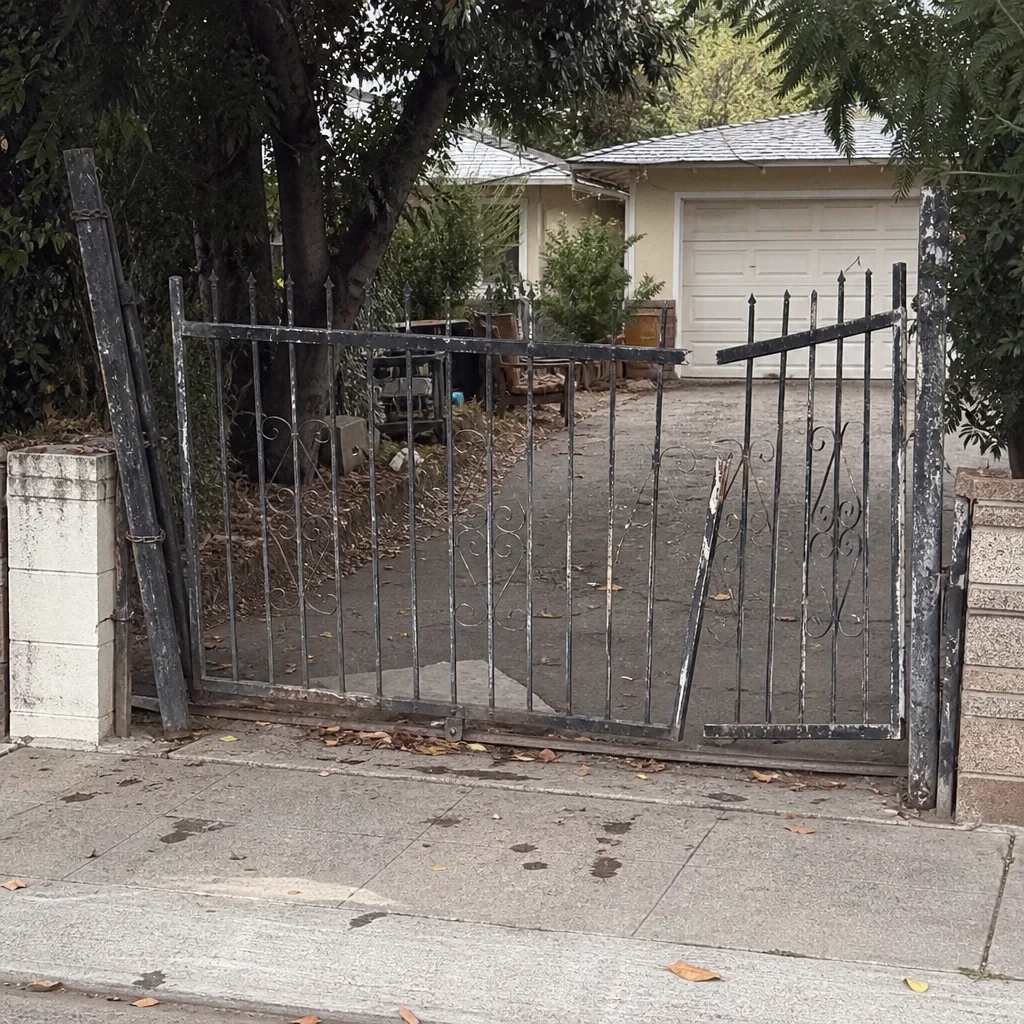
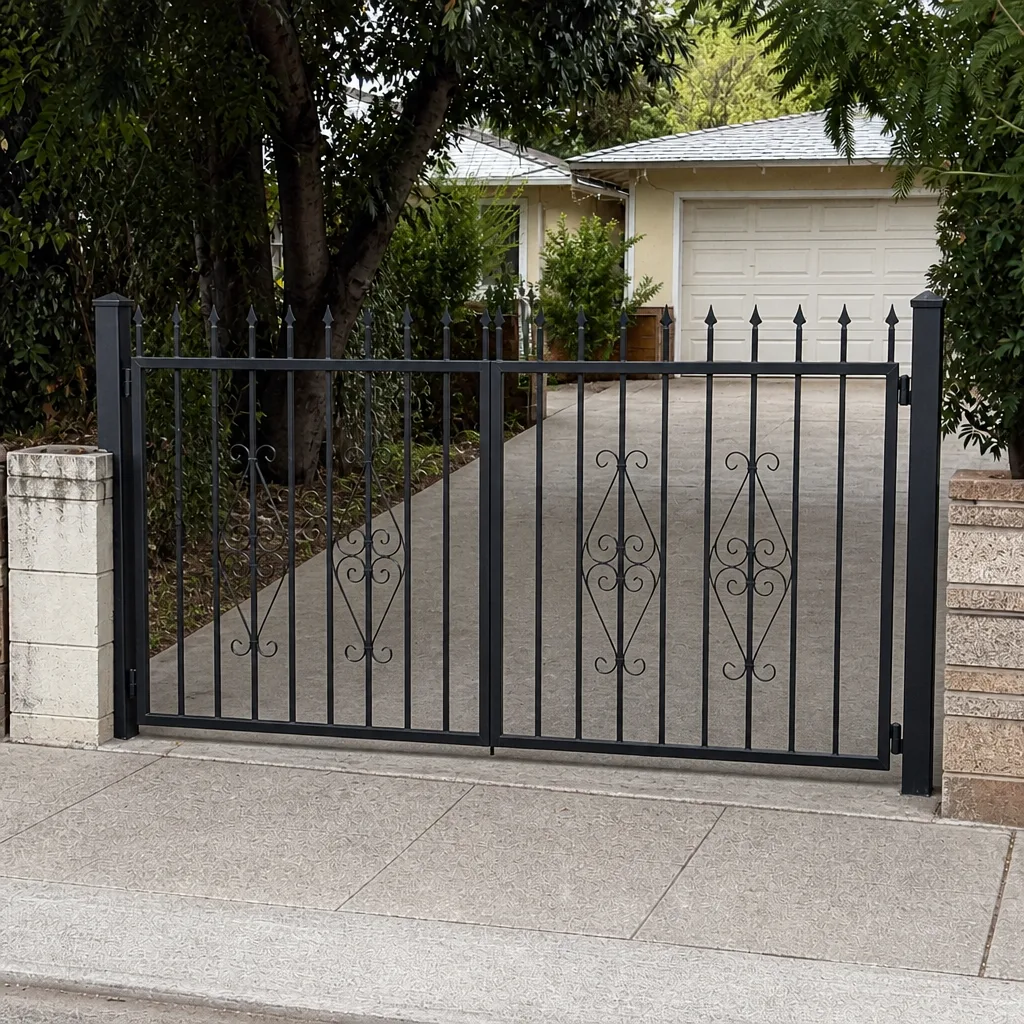
See the difference
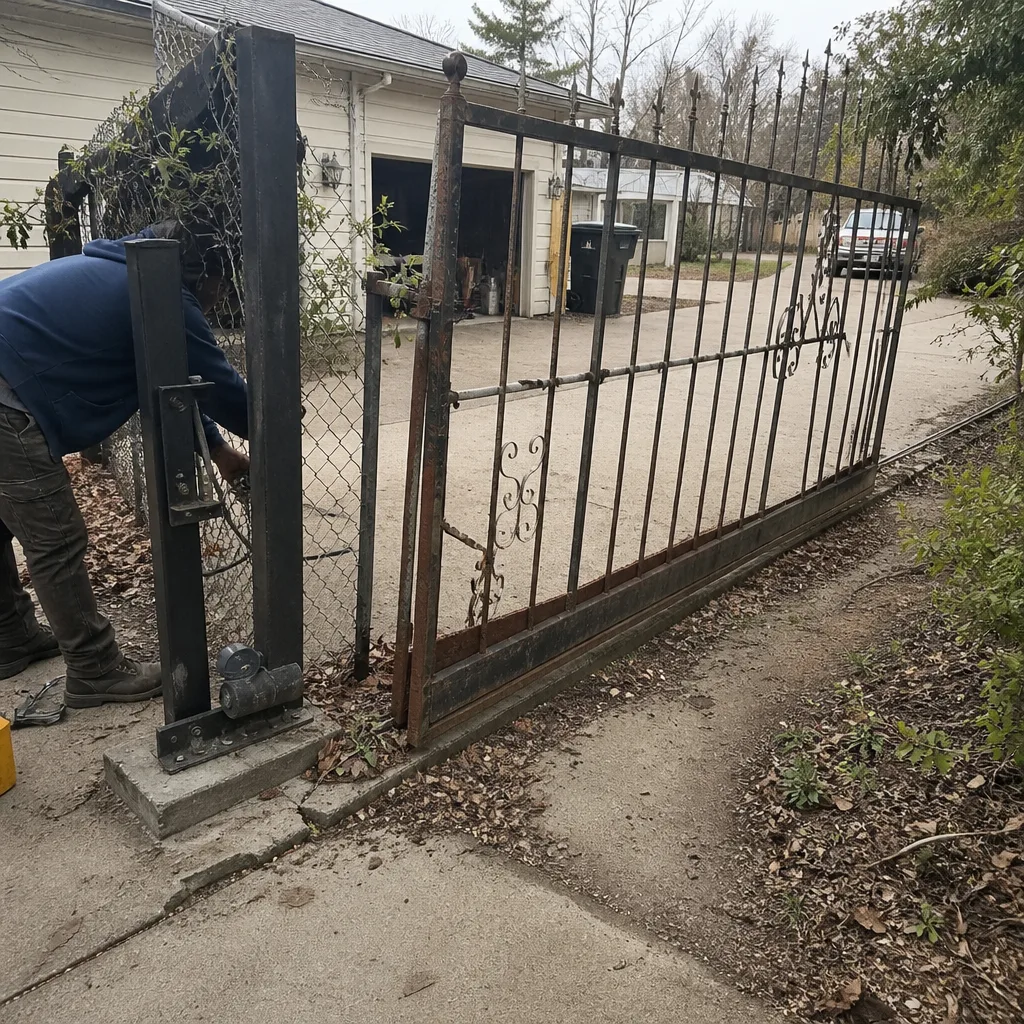 Before
 After
 Before
 After
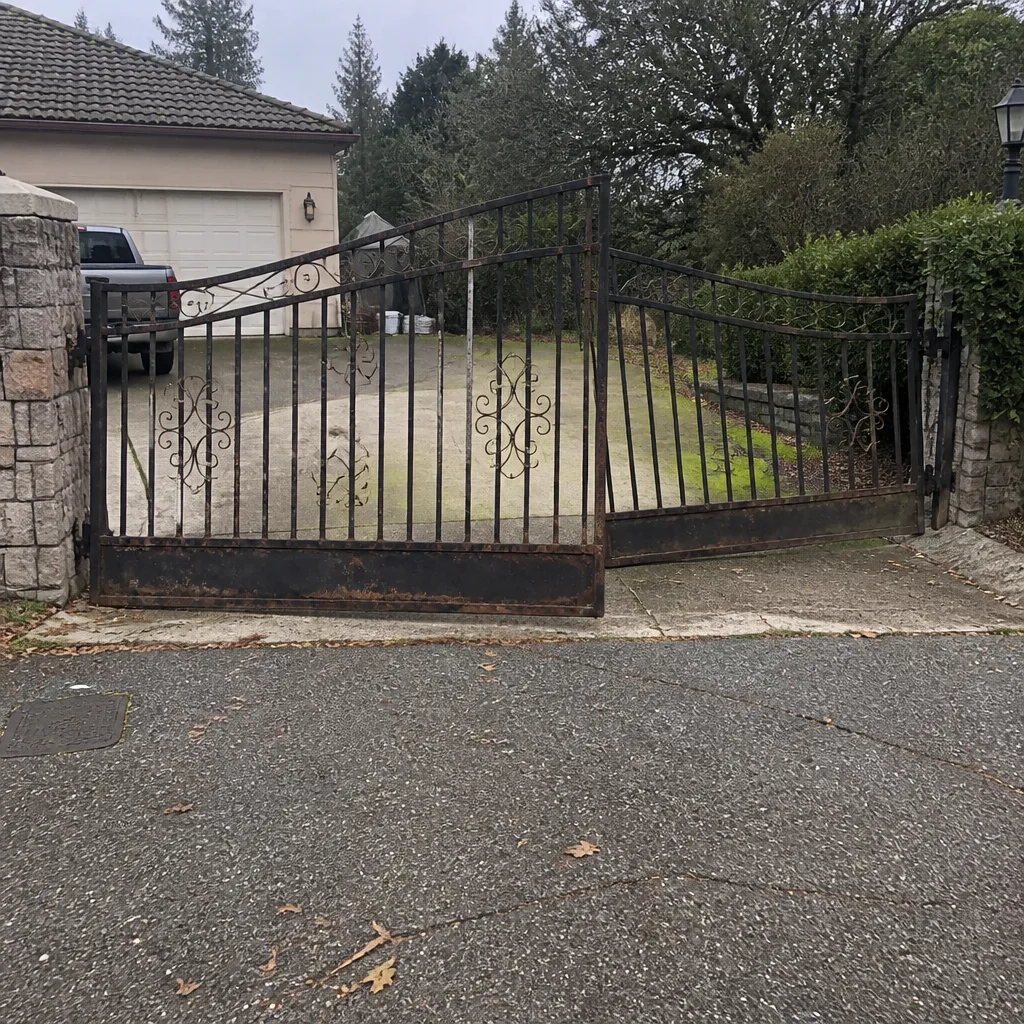 Before
 After