
Last updated November 4, 2026
 Wrought iron
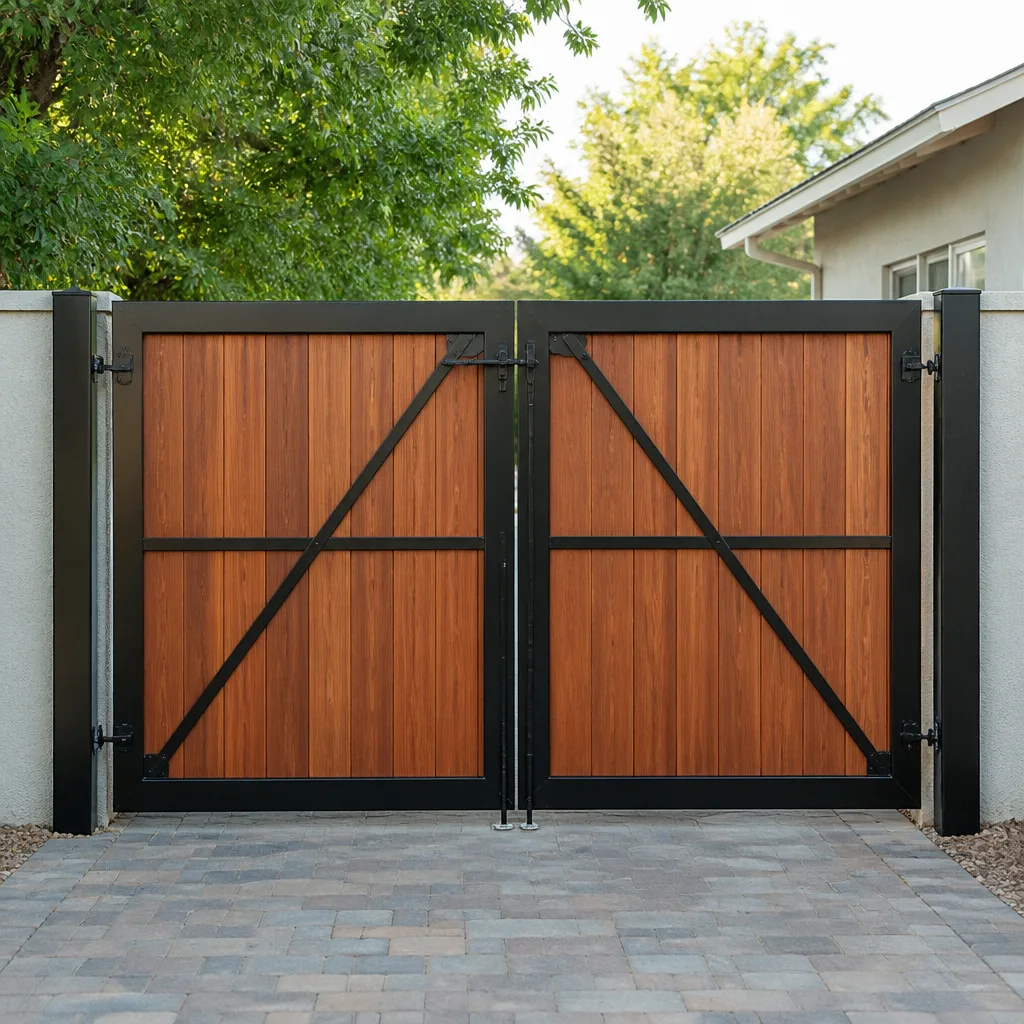 Wood & steel frame
 Farm & ranch
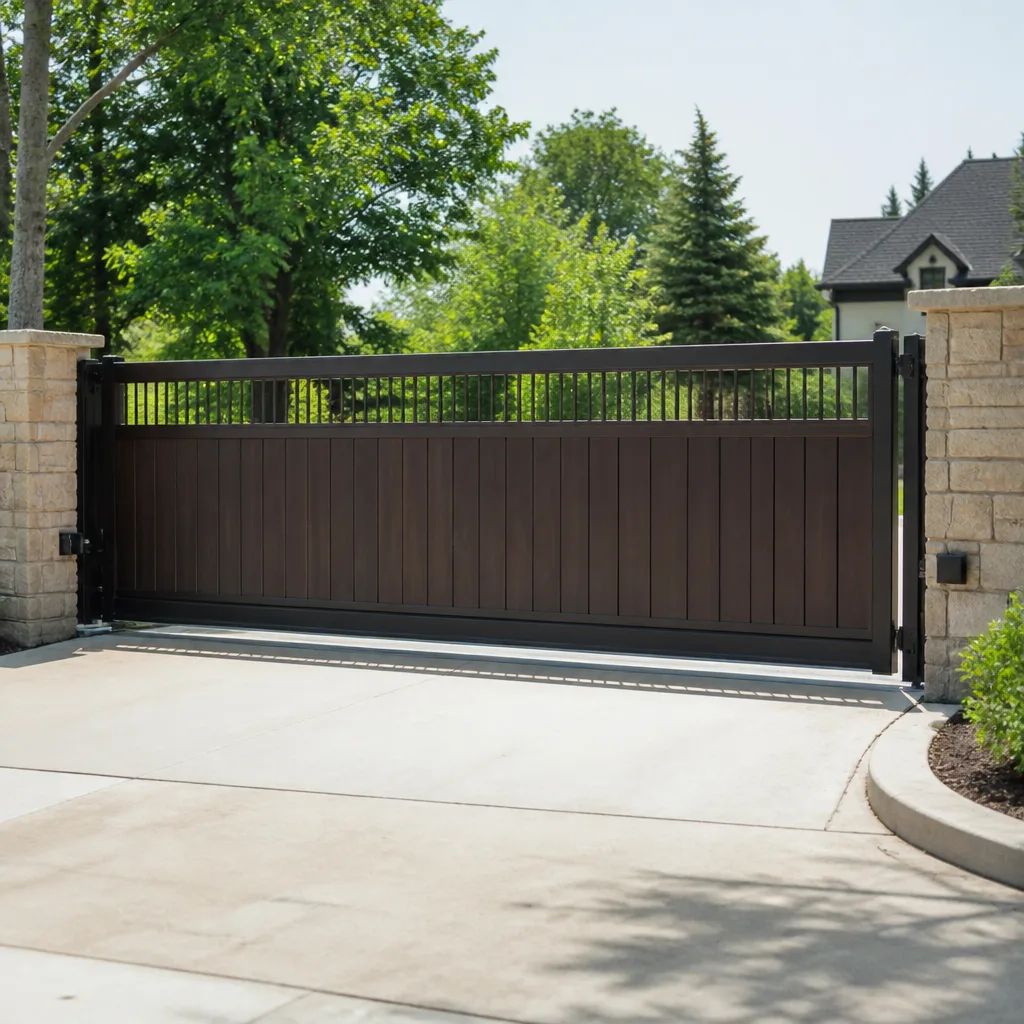 Sliding driveway gates
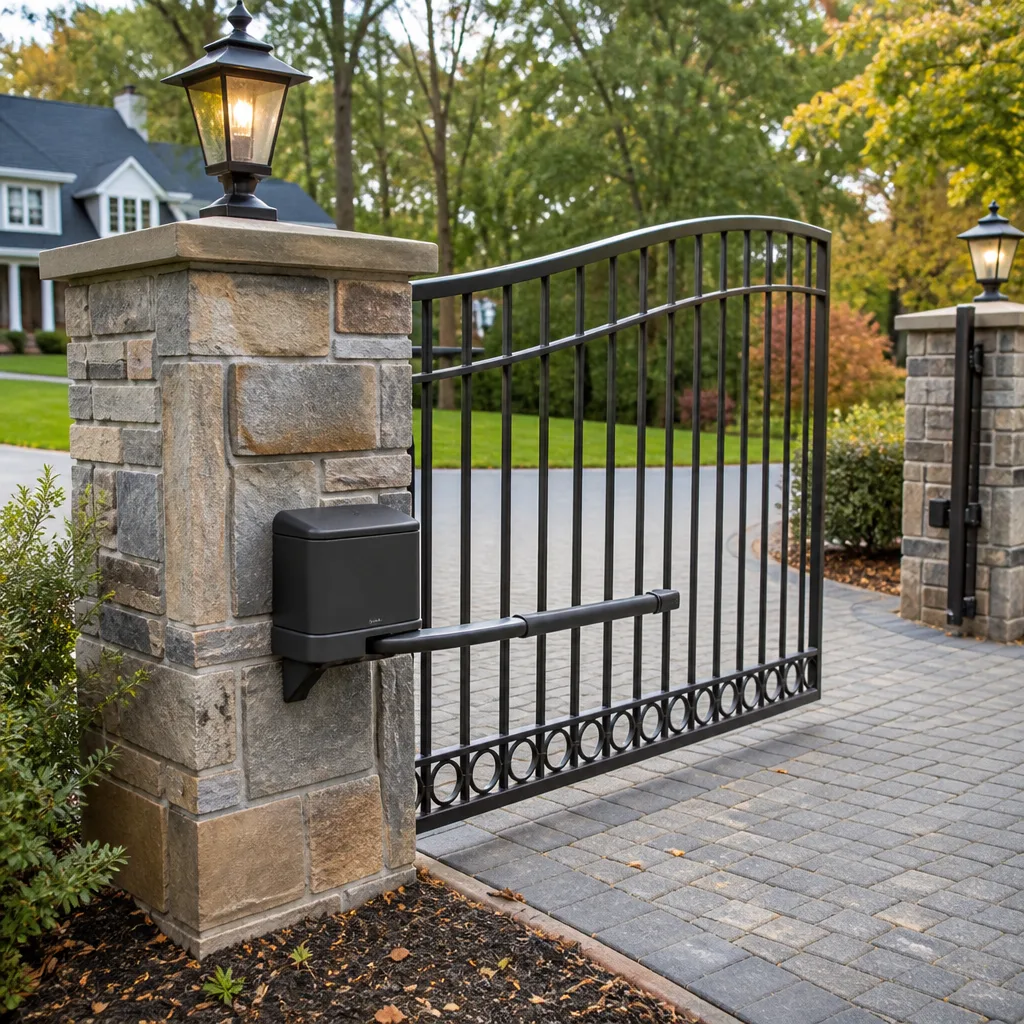 LiftMaster operators
Free on-site gate assessment - hinges, posts, and your LiftMaster or Nice gate operator checked before anything is quoted
The assessment is free and the quote is the invoice.
Get your free estimateGate Repair Troubleshooting in Evergreen: Common Problems and How to Fix Them
A gate that reverses before closing and a gate that won’t open at all look like different problems. In our experience, they’re often caused by the same misaligned safety sensor, and treating them as separate issues wastes hours. This guide maps each symptom you’ll see on an Evergreen driveway gate back to its real mechanical or electrical origin, so you can diagnose like a technician instead of guessing like a handyman. You’ll learn which fixes are safe to attempt yourself, which ones risk voiding a warranty, and which symptoms mean the gate needs a specialist before you touch another button.
Quick Answer
Most gate problems in Evergreen fall into four root causes: safety sensor misalignment, power or battery failure, hinge or track wear from oak debris and temperature swings, or a control board fault. Matching your symptom to the right category cuts diagnostic time in half. For anything involving wiring, heavy panels, or slide gates off their track, call Atlas Gate Repair at (833) 589-9356 before attempting a fix.
Styles & brands we work with
- Wrought iron
- Wood & steel frame
- Farm & ranch
- Sliding driveway gates
- LiftMaster operators
Table of Contents
- Symptom-to-Cause Mapping: What Your Gate Is Trying to Tell You
- Safety Sensor Problems: The Most Misdiagnosed Fault
- Power and Electrical Failures in Evergreen Homes
- Operator Faults vs. Structure Faults: Why the Difference Matters
- How Evergreen’s Climate Accelerates Specific Gate Failures
- What’s Safe to Fix Yourself, and What Isn’t
- Red-Flag Symptoms That Need a Specialist Immediately
- Common Mistakes to Avoid
- When to Call a Professional
- Frequently Asked Questions
Symptom-to-Cause Mapping: What Your Gate Is Trying to Tell You
A gate doesn’t fail randomly. Every symptom points at one of a handful of systems, and reading those signals correctly is what separates a five-minute fix from a three-hour tear-down. We’ve grouped the failures we see most often on Evergreen properties by their actual origin, not their surface behavior, because two visually different symptoms frequently share one cause.
Gate reverses before fully closing. The most common cause is a safety sensor that’s drifted out of alignment or has a dirty lens. Morning fog in Evergreen leaves moisture on sensor lenses, and that condensation scatters the infrared beam enough to trigger a false obstruction reading. Check sensor alignment and wipe the lenses before assuming the operator is failing.
Gate won’t respond at all. Start with power. A tripped GFCI outlet, a dead battery on a solar-charged system, or a transformer that’s overheated are the usual culprits. After that, look at the control board for visible scorch marks or swollen capacitors. Gate operators with Linear or Viking control boards sometimes show no external signs of failure, so if power is confirmed at the outlet and the gate still doesn’t move, the board itself is suspect.
Gate opens but stops partway. This is usually mechanical resistance, not an electrical fault. A hinge that’s binding from corrosion or debris, a wheel that’s worn flat, or a track that’s picked up a rock all force the operator to work harder than its torque limit allows. The operator senses the extra load and stops. Fixing the mechanical drag fixes the symptom.
Grinding or screeching when moving. Metal-on-metal contact somewhere in the system. It could be a dry bearing, a misaligned rack, or a slide gate that’s riding against its guide rollers because the post shifted. Lubricating the wrong component masks the noise for a week and lets the real problem get worse.
Gate jerks or hesitates at the same spot every cycle. That repetitive hesitation points to a specific mechanical obstruction: a bent section of rack, a flat spot on a wheel, or a hinge that only binds at one angle. The predictability is the diagnostic clue. Random jerking is electrical; consistent jerking is mechanical.
How Evergreen Amps Up Basic Gate Problems
Evergreen’s climate doesn’t create new gate problems. It accelerates existing ones. The morning fog keeps moisture on moving parts longer than a dry climate would. The hot afternoon sun bakes that moisture off and leaves mineral deposits behind, especially on aluminum hinges and sensor brackets. Oak leaves and acorns from the dense canopy collect under gates and inside track channels, adding debris load exactly where slide gates are most vulnerable. None of this is exotic. It just means wear that would take three years in a drier area often shows up in two here.
Safety Sensor Problems: The Most Misdiagnosed Fault
Safety sensors are the single most common source of phantom gate failures we see, and they’re also the most frequently misdiagnosed root cause across Evergreen. Homeowners replace operator arms, swap remote batteries, and sometimes call for a full gate repair before anyone cleans a lens or re-aims a beam.
Here’s how the system works. A photo eye sends an infrared beam across the gate opening to a reflector or receiver on the opposite post. If the beam is broken while the gate is closing, the operator reverses to prevent hitting a person, car, or pet. If the beam is “broken” by a dirty lens, a spider web, or a sensor that’s shifted a few degrees out of alignment, the gate behaves as if an obstruction is always present. It won’t close. Or it closes halfway and reverses. Or it opens fine but refuses to operate from one remote but works from another.
Signs Your Sensor Is the Problem
- The gate opens normally but refuses to close, or reverses immediately after starting to close
- The operator clicks or hums but the gate doesn’t move
- Symptoms started after heavy rain, fog, or wind
- One sensor LED is blinking, dim, or off while the other is steady
- Wiping the sensor lenses with a dry cloth temporarily fixes the issue
What You Can Safely Do
- Wipe both lenses with a clean, dry microfiber cloth. Fog residue in Evergreen is fine and accumulates slowly, so this is maintenance, not a repair.
- Check that both sensor housings point directly at each other. A bumped post, a kid on a bike, or a delivery truck can knock one out of alignment without leaving visible damage.
- Clear any vegetation that’s grown into the beam path since spring. Evergreen’s oaks and shrubs grow fast.
- Look for spider webs inside the sensor hood. A web can break the beam just like a physical obstruction.
- If the sensor still won’t hold alignment, call a technician. A loose mounting bracket that shifts daily needs a mechanical fix, not another cleaning.
One thing to know: adjusting sensor alignment on a Ghost Controls or DoorKing system is safe for a homeowner to attempt. Replacing a sensor or rewiring one is not. If the sensor itself has failed internally, it needs a matched replacement and proper wiring, not a hardware-store substitute.
Power and Electrical Failures in Evergreen Homes
Electric gates depend on a chain of components: the AC outlet or solar panel, the transformer or battery, the control board, the operator motor, and the safety circuit. A failure at any link stops the whole system. The trick is locating which link failed before replacing parts on speculation.
Step-by-Step Power Diagnosis
- Confirm power at the source. Check the GFCI outlet the operator plugs into. These outlets trip easily in wet conditions, which Evergreen sees regularly. Press the reset button firmly and test again.
- Check the battery if your system has one. Many Evergreen driveway gates, especially those far from the house, run on solar-charged battery systems. A battery that won’t hold charge after three or four years is done. Test the battery voltage with a multimeter if you have one.
- Inspect the transformer. Listen for a faint hum and check for heat. A transformer that’s hot to the touch or silent when it should be powered is suspect.
- Look at the control board. Scorch marks, melted wire insulation, or a swollen capacitor are visible signs the board failed. Some boards fail silently with no external signs.
- Test the operator motor directly. If the board sends power and the motor doesn’t turn, the motor or its capacitor is the fault. This requires a technician’s tools to confirm.
For electric gate repair on systems running Linear, Viking, or Ghost Controls, the diagnostic burden changes by brand. Linear boards tend to show visible damage when they fail. Viking systems often have diagnostic LEDs that blink in specific patterns. Ghost Controls prioritizes simple modular replacement. Knowing which brand you’re looking at tells the technician where to start, which is why brand fluency matters more than generic electrical knowledge.
Safety note: Gate operators run on line voltage. A transformer or control board repair involves live AC power. Unless you’re experienced with electrical work, limit yourself to checking outlets, resetting GFCIs, and visual inspection. Leave board replacement and motor testing to a trained professional.
Operator Faults vs. Structure Faults: Why the Difference Matters
A gate is two systems bolted together: the structure (posts, hinges, panels, track) and the operator (motor, control board, sensors, remote). Most gate failures are structure problems. Most gate repairs performed without a diagnosis are operator replacements. That mismatch is why some gates eat three operators in five years while their hinges stay untouched.
Here’s the tell. If your gate is hard to open by hand with the operator disengaged, the operator was never the problem. The structure is binding. And no new motor fixes a sagging hinge.
Structure Problems That Overload Operators
- Sagging gate panels. A wooden gate that’s absorbed years of Evergreen moisture and dried out in summer heat gets heavier and drops out of square. The hinges are the fix; the sag is the symptom.
- Worn or seized hinges. Steel hinges corrode, and when they seize, the operator works against metal friction on every cycle.
- Shifted posts. A post that’s moved a quarter inch changes the track alignment for a slide gate and the latch alignment for a swing gate. The operator strains until it faults out.
- Debris in the track. Acorns, oak leaves, and small rocks wedge into track channels and resist the gate’s movement. This is year-round in Evergreen, not just a seasonal issue.
- Flat-spotted wheels. A slide gate’s support wheels develop flat spots when the gate sits in one position for long periods. The bump every rotation tells the operator something’s wrong.
Operator Problems That Look Like Structure Problems
- Capacitor failure. The operator hums but can’t start the gate moving. It sounds mechanical, but it’s electrical.
- Control board failure. The gate behaves erratically: opening when told to close, stopping randomly, ignoring one remote but not another.
- Limit switch drift. The gate stops short of full open or full close, not because it’s binding, but because the operator’s internal positioning is off.
- Motor wear. A motor that’s run for years loses torque gradually. The gate gets slower and slower until the motor can’t complete a cycle.
The order of operations matters. Diagnose the structure first. If the gate moves freely by hand, the operator is worth investigating. If it doesn’t move freely by hand, fix the structure before touching the operator. That sequence saves money and prevents repeat failures.
How Evergreen’s Climate Accelerates Specific Gate Failures
Evergreen’s gate problems aren’t random; they concentrate in patterns defined by the local weather, the terrain, and the landscape. Understanding these patterns helps you predict what will fail next and intervene before a full breakdown.
Morning Fog and Sensor Drift
The heavy morning fog common in Evergreen settles on photo eye lenses and slowly builds a mineral film. That film scatters the infrared beam and reduces its effective range, so a sensor that worked fine at installation starts reading false obstructions months later. The failure is gradual: first intermittent reversal, then no close at all. The fix is simple cleaning, but without knowing fog accelerates it, most people assume the sensor has failed and replace a unit that just needed a wipe.
Temperature Swings and Metal Fatigue
Evergreen’s hot days and cool nights cycle metal components every twenty-four hours. Aluminum expands and contracts. Steel does the same at a different rate. Where two dissimilar metals meet, like an aluminum post bracket holding a steel hinge pin, thermal cycling slowly works the connection loose. One day the gate closes with a faint clunk where it didn’t before. That clunk is the first sign of a fastener backing out, and it deserves attention before the component fully separates.
Oak Debris and Track Wear
Evergreen’s oak canopy is beautiful and relentless. Acorns drop into slide gate tracks and get crushed by the gate’s wheels. Crushed acorn paste is abrasive, and it accelerates wear on wheel surfaces and track channels. Oak leaves collect in the same tracks and hold moisture against the metal, speeding corrosion. A once-a-quarter track cleaning is cheap insurance against a track replacement in a few years.
Dry Season Dust and Chain Lubrication
The warm, dry stretch through late summer and fall puts dust in the air and on every moving component. Chain-drive operators collect dust in their lubricated links, which turns the lubricant into a grinding paste. A chain that runs dry and dusty stretches faster and wears sprocket teeth unevenly. Annual chain service, with proper cleaning before re-lubrication, keeps the drive train healthy through Evergreen’s driest months.
None of these forces are Evergreen-specific in the abstract. Fog, temperature swings, oaks, and dust exist everywhere. But in Evergreen they combine at specific intensities and times of year, and a gate specialist who knows the local pattern works faster than one learning patterns on site.
What’s Safe to Fix Yourself, and What Isn’t
Some gate troubleshooting steps are genuinely safe for a homeowner to attempt. Others risk voiding a warranty, creating a safety hazard, or turning a simple fix into an expensive replacement. The line between them is consistent, and drawing it clearly protects both your gate and your hands.
Safe Homeowner Tasks
- Cleaning sensor lenses with a dry cloth when fog residue builds up
- Resetting a tripped GFCI outlet that powers the operator
- Clearing leaves, acorns, and rocks from slide gate tracks and swing gate paths
- Lubricating accessible hinges and wheels with a silicone-based lubricant
- Checking and tightening visible fasteners that are clearly accessible and not under tension
- Testing the gate manually with the operator disengaged to check for structural binding
Tasks That Need a Trained Technician
- Any wiring repair or replacement inside the operator, control box, or conduit
- Control board replacement or programming on systems from Linear, Viking, DoorKing, or Ghost Controls
- Motor replacement or capacitor testing on AC-powered operators
- Hinge replacement on a heavy gate panel that requires supporting the leaf safely during the swap
- Track realignment or post repair that involves moving the gate structure itself
- Safety sensor replacement that requires matching the new sensor to the existing system’s electrical specifications
The consistent theme: anything involving line voltage, structural load, or a heavy panel that could fall is a professional job. Cleaning, clearing, and checking are homeowner territory. The repair is not.
One warranty consideration matters more than most people realize. Gate operator manufacturers can void a warranty if unauthorized repairs are attempted and documented. A sealed board that’s been opened, wires that have been cut and spliced, or a motor that’s been disassembled all signal unauthorized work. If your system is still under any coverage, call first and let a technician handle it.
Red-Flag Symptoms That Need a Specialist Immediately
Some symptoms don’t deserve troubleshooting. They mean the gate has failed in a way that creates a safety hazard or indicates a structural problem that’s about to get worse. These are the ones to act on immediately.
The gate can be moved by hand without disengaging the operator. This means the operator’s internal brake or worm gear has failed. The gate can now be pushed open by anyone, which defeats the security purpose entirely. It also risks the gate rolling freely into a car, a child, or the street.
The gate sparks, smokes, or smells like burning plastic. That’s an electrical short or a failed component inside the operator housing. Cut power at the breaker and call. Don’t open the housing while it’s energized.
A slide gate has jumped its track or rides up on the guide rails. A slide gate off its track is a heavy, unstable object. It can fall over if pushed the wrong way. Keep people away and call for a repair; don’t try to lift it back onto the track by hand.
The gate opens unexpectedly on its own. This can be a receiver picking up a stray signal from a neighbor’s remote, but it can also be a failing control board sending false commands. A gate that opens by itself is a security breach, and until the cause is identified, the gate should be treated as unsafe to leave unmonitored.
Visible cracks at weld points or hinge attachment areas. A cracked weld on a steel gate or a split in a wooden hinge mount means the structure is failing. The gate could drop without warning. These repairs are structural, not mechanical, and they get worse every cycle.
Common Mistakes to Avoid
- Replacing the operator before checking the structure. A gate that binds on worn hinges will kill a new operator the same way it killed the old one. If the gate doesn’t move freely by hand, the operator was never the problem.
- Lubricating a failing part to quiet a noise. Grease hides a worn bearing for a week and makes the eventual repair messier. The noise is the diagnostic signal; don’t cover it up.
- Adjusting safety sensors without cleaning them first. A dirty lens mimics misalignment perfectly. Clean, then adjust. Doing it in reverse creates a new problem on top of the old one.
- Reprogramming remotes instead of checking the receiver. If all remotes stop working at once, the receiver is the fault. Reprogramming one remote won’t fix a board-level receiver failure.
- Ignoring intermittent symptoms. A gate that fails once every twenty cycles is still failing. Intermittent problems are always progressive. Catch them early and the repair is smaller.
- Buying generic replacement parts online. A knockoff sensor or limit switch for a DoorKing or Linear system often has slightly different electrical specs. It might work for a month before causing board damage. Matched parts are worth the cost.
When to Call a Professional
Call a professional when the problem involves line voltage, a control board, structural damage, or any repair you can’t complete confidently without opening the operator housing. Those jobs carry electrical and collapse hazards that a careful amateur shouldn’t shoulder. Atlas Gate Repair offers free estimates in Evergreen, and our technicians diagnose before they replace, so a repair call doesn’t automatically mean a big invoice. We repair first and recommend replacement only when the structure actually calls for it.
Frequently Asked Questions
A gate that reverses before closing is usually responding to a false obstruction signal from a misaligned or dirty safety sensor. In Evergreen, morning fog leaves a mineral film on sensor lenses that scatters the infrared beam and triggers the reverse. Clean both lenses with a dry cloth and check that the sensors point at each other before calling for service.
We answer 24/7, and fast dispatch runs from 7am to 7pm, Sunday through Friday. Same-day service is available when you call early enough in the day. Call (833) 589-9356 for current availability and a free estimate.
Gate repair costs vary by the system and the fault, which is why we provide a written estimate after diagnosing the actual problem. The estimate is free, and the price is agreed before any work starts. Call (833) 589-9356 to schedule a diagnosis.
If the keypad works but the remote doesn’t, the receiver is still receiving and the operator is still functional, so the issue is usually the remote itself: a dead battery, a lost pairing, or a damaged circuit board inside the remote. Reprogramming a working remote to the receiver usually restores function, and if it doesn’t, the remote has likely failed and needs replacement.
Yes, if the operator has a manual release lever and the gate moves freely when disengaged. Use the release, then push the gate slowly and watch for binding. If the gate won’t move by hand with the operator disengaged, stop pushing; the structure has a mechanical problem, and forcing it can cause damage.
We specialize in gate repair across nine major brands, including Linear, Viking, Ghost Controls, DoorKing, LiftMaster, FAAC, BFT, Elite, and Mighty Mule. Our focus on gates exclusively means our technicians already know your system before they arrive, which makes diagnosis faster and repairs more accurate.
Most automatic gates benefit from a service visit once a year, and in Evergreen, the oak debris, morning fog, and summer dust make that annual check more valuable. A technician can clean sensor lenses, clear track debris, lubricate moving parts, tighten fasteners, and catch hinge or wheel wear before it becomes a full repair. If your gate sees heavy daily use, consider checking the track and sensors yourself every quarter between service visits.
The Bottom Line
Most gate failures in Evergreen trace back to one of four root causes: safety sensor problems, power or electrical failures, structural wear, or control board faults. Matching your symptom to the right category is the fastest path to a fix, and checking the structure before blaming the operator saves money every time. Some maintenance is safely yours to do; wiring, boards, and structural repairs are not. When the gate needs a specialist, Atlas Gate Repair offers free estimates in Evergreen and a diagnosis-first approach that favors repair over replacement when repair makes sense. Call (833) 589-9356. We answer 24/7. Fast dispatch from 7am to 7pm, Sunday through Friday.
Written by the team at Atlas Gate Repair, serving Evergreen since 2017.
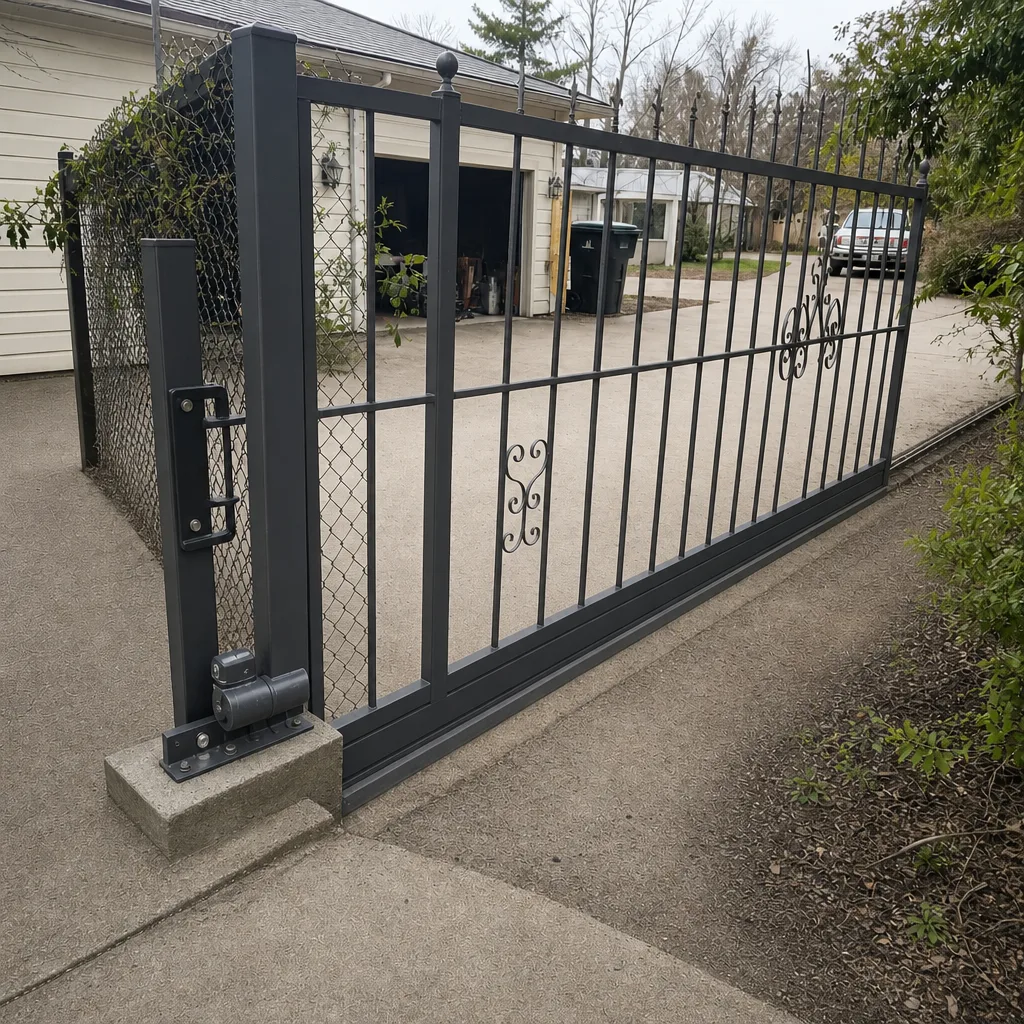
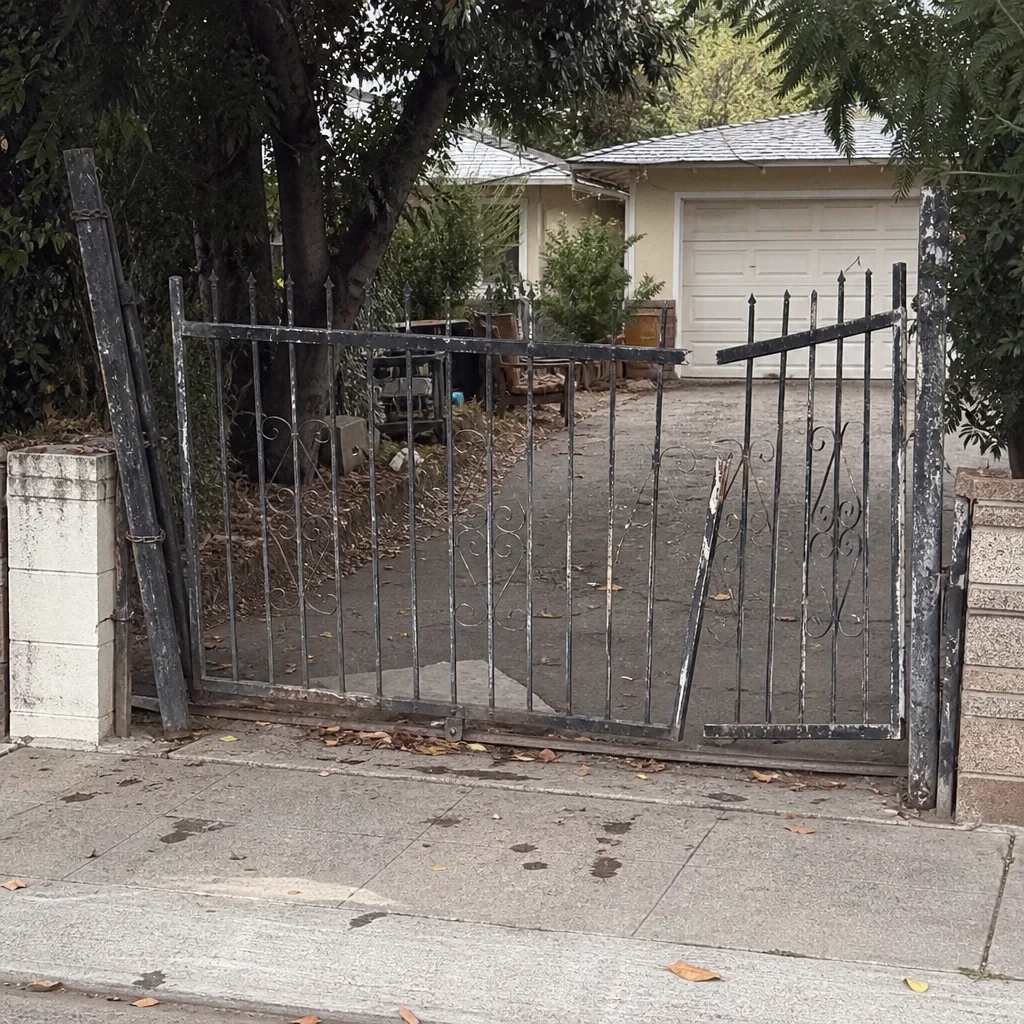
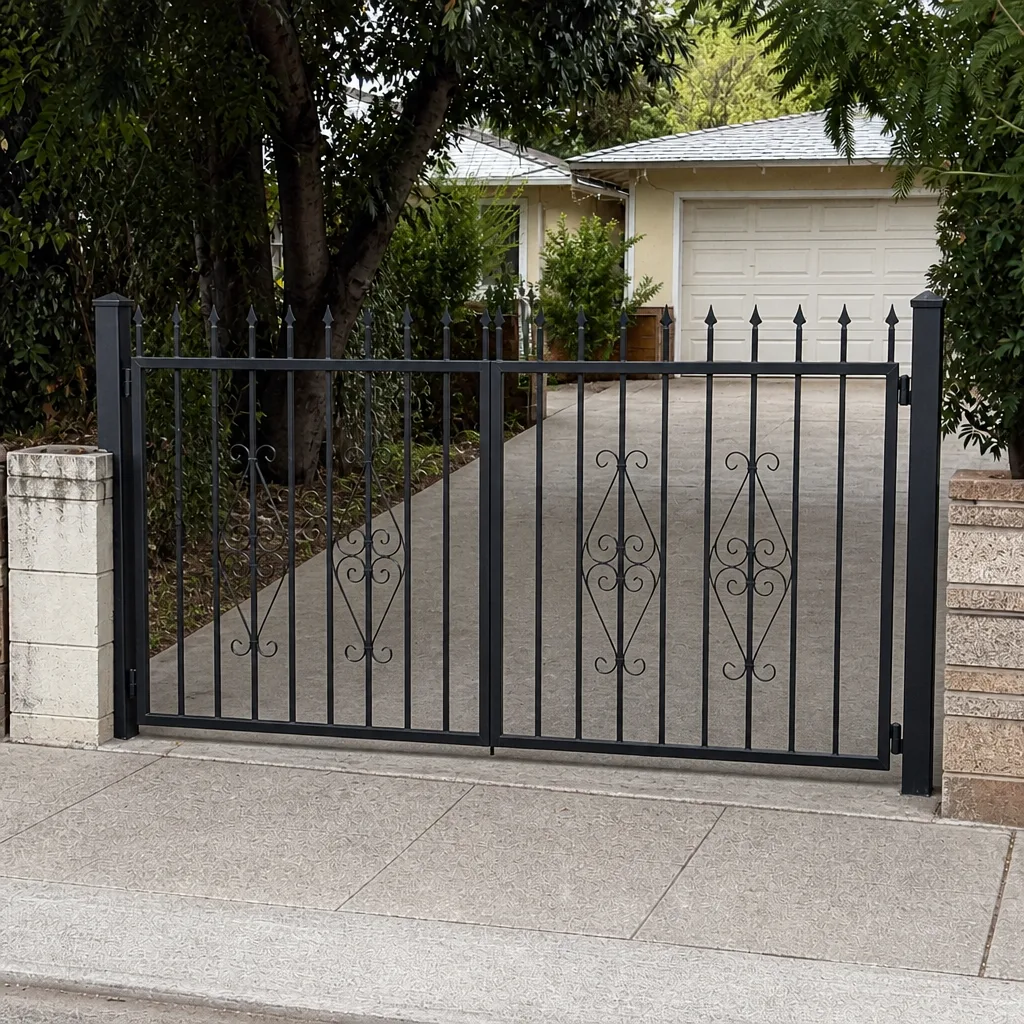
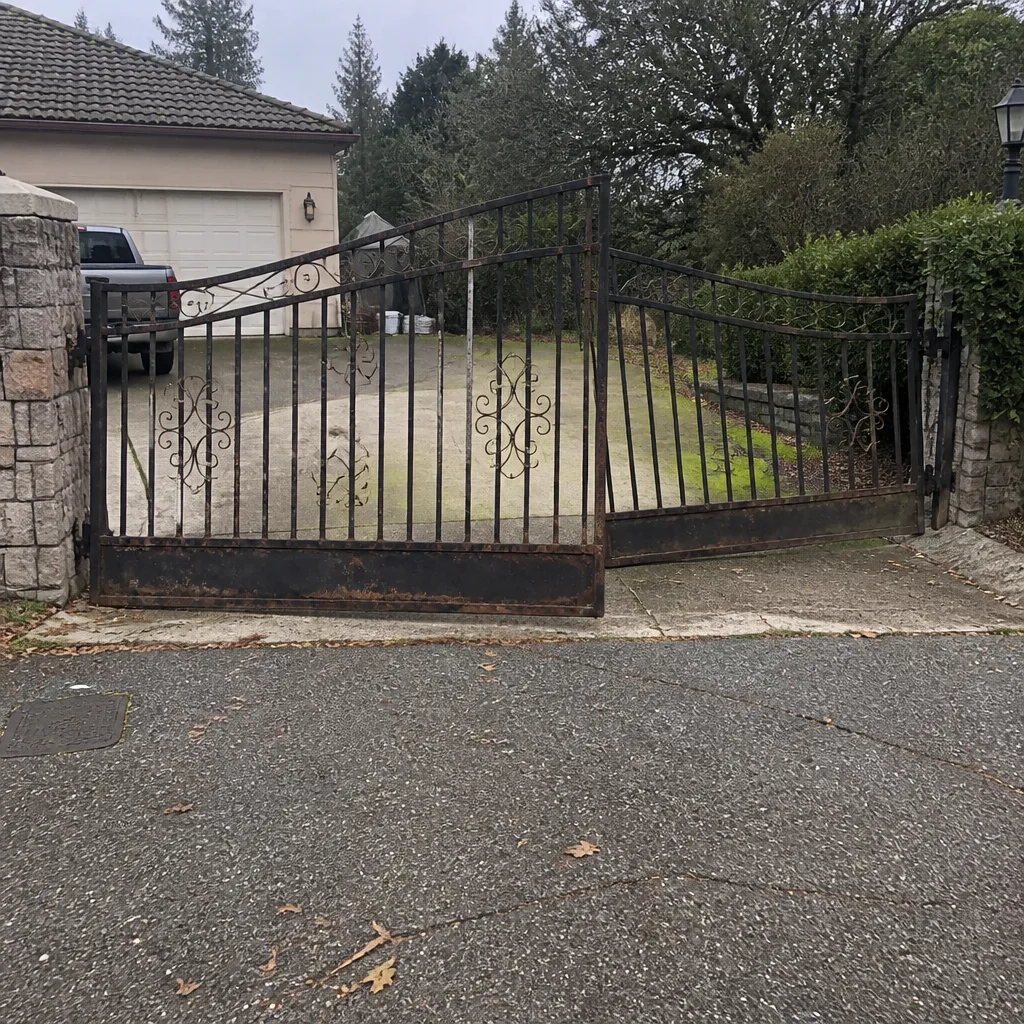
See the difference
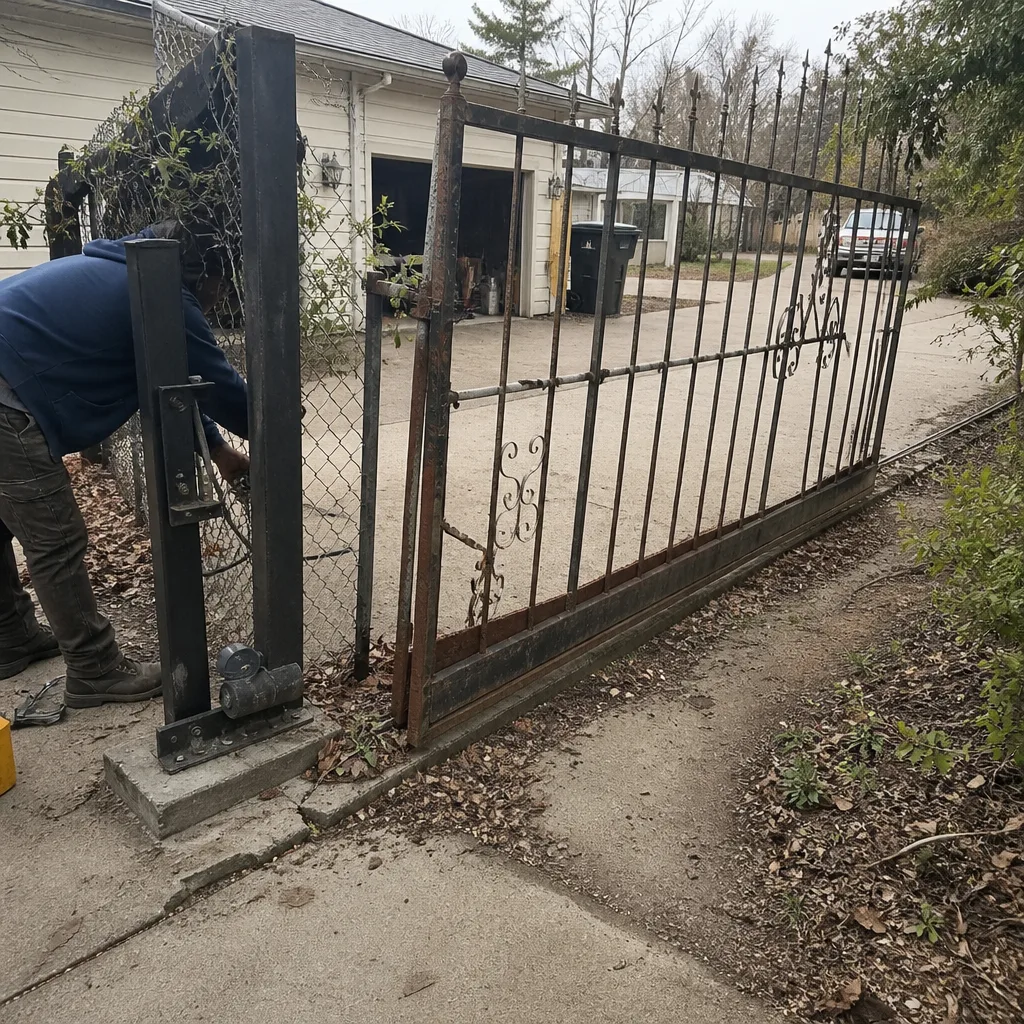 Before
 After
 Before
 After
 Before
 After